







In today’s healthcare field, clinical expertise and compassionate care remain the foundation of success. But to reach more patients and build trust, doctors also need strong communication and a credible digital presence. Together, these help ensure that your skills and care are visible to the people who need them most.
Today’s patients make informed choices. Before booking an appointment, many search online, compare profiles, and read reviews. They look for doctors who appear credible, approachable, and accessible. This shift has made a well-managed digital presence an essential part of modern medical practice.
Using digital platforms effectively takes more than just being present online. A website or social media profile is a great start, but without a clear strategy, they may not truly represent your expertise or connect with the right audience.
The following insights aim to help healthcare professionals strengthen their online presence, avoid common pitfalls, and build a growing practice grounded in trust, ethics, and patient satisfaction. In this blog, we’ve shared 17 practical tips based on our experience working with healthcare professionals and supported by research-based insights. These strategies can help you strengthen your online visibility, build credibility, and connect with patients in an ethical and effective way.
1. Building Your Online Presence
Many healthcare professionals still rely primarily on word-of-mouth referrals, trusting that reputation alone will sustain patient flow. However, research shows that nearly 77% of patients search online before booking a healthcare appointment.
If your clinic doesn’t appear when patients search “doctor near me” or “best clinic in [city]”, they may never find you, even if you’re the best in your field.
How to strengthen it:
- Build a professional, mobile-friendly website.
- Include doctor profiles and clear service details.
- Add a visible “Book Appointment” button.
- Keep your Google Business Profile accurate and updated.
- Use professional clinic photos to enhance credibility.
2. Managing Online Reviews
Online reviews are the new form of word-of-mouth. Many doctors hesitate to request feedback, worrying about negative comments, yet patients actively rely on these reviews when choosing a healthcare provider. Recent studies show that more than 70% of patients read online reviews before booking an appointment.
Consistent and authentic feedback not only builds credibility but also enhances trust and transparency in patient care.
How to strengthen it:
- Encourage satisfied patients to leave genuine reviews.
- Respond politely and professionally to all feedback.
- Avoid generic replies; personalise responses where possible.
- Monitor your online reputation regularly on key platforms.
3. Strong Patient Communication
We have worked closely with doctors, clinics, and hospitals across various specialties, and one insight stands out consistently: effective communication is essential for building strong patient relationships.
Many healthcare providers unintentionally lose potential patients not because of poor medical outcomes but because of communication gaps such as missed calls, delayed responses, or overly automated interactions. These small lapses can make patients feel disconnected or undervalued even before their first visit.
If you are looking for how to get more patients, start by improving how your clinic communicates. Prompt, warm, and consistent communication helps build trust, encourages referrals, and creates lasting patient loyalty.
How to strengthen it:
- Use patient management tools for timely reminders, confirmations, and follow-ups.
- Ensure every inquiry receives a polite and timely response.
- Add a human touch. Even a short message like “Hope you’re feeling better after your visit” helps patients feel genuinely cared for.
4. Optimising for SEO (Search Engine Optimisation)
From our experience working with healthcare professionals at Healthus.ai, we have seen that having a website alone is not enough to attract new patients. If your site does not appear in search results, it is like running a clinic that few people can find.
If your goal is to understand how to get more patients, SEO plays a central role. When patients search for specialists online, Google relies on how well your website is optimised to decide if you appear in those results. A well-structured, regularly updated site improves your visibility, attracts the right audience, and builds long-term trust.
How to strengthen it:
- Use relevant keywords such as “best pediatric clinic near me” or “dermatologist in [city name].”
- Keep your clinic’s name, address, and contact details consistent across all platforms and directories.
- Update your website regularly with accurate service information and helpful patient resources.
Remember, SEO is a long-term investment that works quietly for your practice every day.
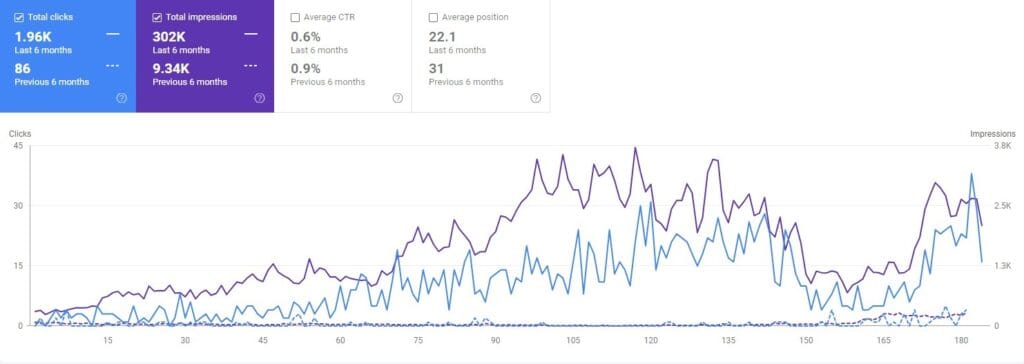
Real SEO Results Our Clients Achieve with Healthus.ai
This Search Console performance graph shows how one of our clients grew from just 86 clicks to 1.96K clicks and from 9.34K impressions to 302K impressions in six months through consistent SEO optimisation.
Their average ranking also improved significantly (from 31 to 22.1), making their practice more discoverable for relevant patient searches.
This is the impact a structured, well-executed SEO strategy can create, and we can help clinics achieve exactly this.
5. Underestimating the Importance of Local SEO
While general SEO improves overall online visibility, local SEO determines whether patients in your area can actually find your clinic when they search for care. When someone types “pediatrician in [city name]” or “physiotherapist near me,” your practice should appear in the local search results.
We have observed that many clinics focus on broader marketing but overlook local optimisation. Inconsistent or incomplete business details can reduce local rankings and make it difficult for potential patients to reach you.
If your NAP details are inconsistent across directories, or your Google Business Profile (GBP) is incomplete, potential patients may never find you.
NAP includes:
- Name
- Address
- Phone number
How to strengthen it:
- Keep your NAP identical across your website, Google Business Profile, and online directories.
- Optimise your Google Business Profile with updated hours, accurate categories, and photos.
- Use local keywords such as “[your city] dentist accepting new patients” in your website content.
- Encourage local patients to leave Google reviews that mention your city or area.
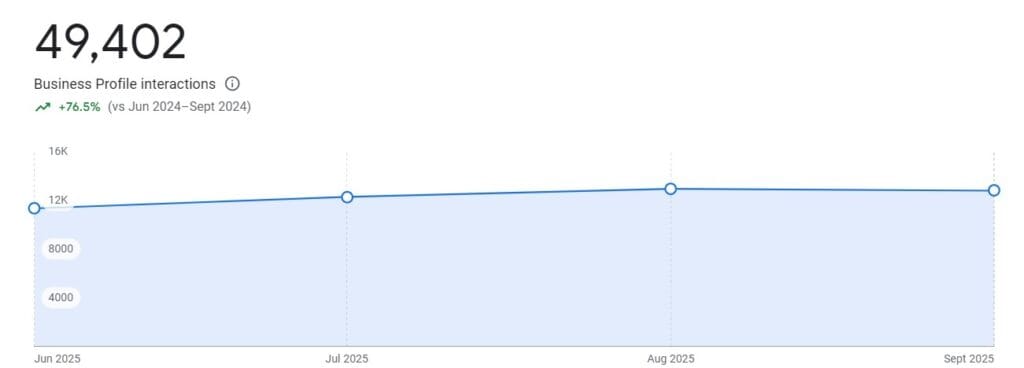
Real Results from Strong Local SEO
This image shows a 76.5% jump in Google Business Profile interactions for one of our clients after improving their NAP consistency and GBP optimisation. It’s a clear example of how the right local strategy drives patient visibility. We can help your clinic achieve the same impact.
6. Emphasising on the Patient Experience
Online visibility can help attract new patients to your clinic, but their in-person experience determines whether they return or recommend you to others. The real answer to how to get more patients often lies in what happens after they walk through your doors.
Long waiting times, rushed consultations, or unwelcoming staff can quickly undo the credibility built online. Research indicates that waiting more than 20 to 30 minutes is among the most common reasons for patient dissatisfaction and negative reviews.
How to strengthen it:
- Streamline appointment scheduling to reduce waiting times.
- Ensure the reception and clinical staff maintain professionalism and warmth.
- Create a calm, patient-friendly environment that reflects your brand’s values.
- Regularly collect patient feedback to identify and address service gaps.
7. Strong Communication and Organised Patient Acquisition Processes
We have often seen that when marketing efforts successfully generate inquiries but scheduling and follow-ups are not well coordinated, potential patients drop off before booking. Missed calls, delayed responses, or inconsistent communication create a poor first impression that can be difficult to recover from.
Research supports this observation. A retrospective study on appointment scheduling found that patients who booked online had significantly lower no-show rates and higher appointment utilisation compared to those who scheduled through traditional methods.
How to strengthen it:
- Integrate marketing, scheduling, and follow-up systems.
- Assign one person or team to handle patient inquiries.
- Automate appointment reminders and confirmations.
- Track inquiry-to-booking conversion data for improvements.
8. Make Appointment Scheduling Easy and Flexible
One of the most common friction points in patient acquisition is a rigid appointment process. Relying solely on phone calls limits accessibility and convenience. Patients today expect flexibility, they want to book appointments as easily as ordering online.
Research supports this: Health care clinics offering online booking systems report no-show rates as low as 1.6%, compared with 6.8% for traditional phone bookings.
If you’re trying to understand how to get more patients, simplifying your appointment system is one of the most effective steps. An easy, flexible scheduling process helps patients connect with you faster and reduces drop-offs caused by delays or long wait times.
How to strengthen it:
- Enable real-time online scheduling on your website and Google Business Profile.
- Keep phone booking as a secondary option for older patients.
- Send SMS and email reminders 24-48 hours before visits to reduce cancellations.
9. Focus on Patient Education and Clear Communication
Patients feel more confident and satisfied when they understand their treatment journey. Unclear communication before or after visits can increase anxiety, reduce compliance, and limit referrals. Research consistently shows a strong connection between effective communication, reduced waiting-related stress, and higher patient satisfaction.
How to strengthen it:
- Give clear pre- and post-visit instructions.
- Use plain, jargon-free language during consultations.
- Apply the teach-back method to confirm understanding.
- Provide short videos or handouts explaining common conditions or procedures.
10. Invest in Staff Training and Patient Interaction
Staff behavior significantly shapes how patients perceive your clinic. Even when clinical care is excellent, rushed conversations or indifferent attitudes can leave a lasting negative impression. Research from Wuhan, China, found that medical staff’s service attitude was the most influential factor in patient satisfaction, followed by service quality and hospital convenience.
How to strengthen it:
- Conduct regular training on empathy, communication, and service standards.
- Ensure front-desk staff clearly understand appointment flow, billing, and insurance.
- Set defined protocols for greetings, calls, and complaint handling.
- Acknowledge and reward staff who demonstrate consistent patient-centered care.
11. Actively Listen to Patient Feedback and Complaints
Many clinics underestimate how valuable patient feedback can be. Viewing feedback as an opportunity for improvement, rather than criticism, helps strengthen trust and service quality. A review study published in BMJ Quality & Safety analysed over 88,000 patient complaints and found that most were linked to treatment quality and communication issues.
For clinics focused on how to get more patients, feedback is a roadmap for improvement. Patients who feel heard are more likely to return, recommend your services, and build your reputation organically. When you address concerns promptly and transparently, you demonstrate genuine care, turning feedback into a powerful growth tool.
How to strengthen it:
- Use short feedback forms or QR-based surveys after visits.
- Monitor recurring themes and address them in regular staff reviews.
- Respond to complaints promptly, with empathy and transparency.
- Inform patients about improvements made based on their input, it builds confidence and loyalty.
12. Focus on Retaining Existing Patients, Not Just Attracting New Ones
We have observed that many clinics invest significant time and resources in attracting new patients but often overlook those they already serve. Retaining loyal patients generally costs far less and delivers greater long-term value. A study by Frederick Reichheld of Bain & Company found that increasing customer retention by just 5% can boost profits by 25% to 95%.
When thinking about how to get more patients in your clinic, it’s equally important to focus on the ones you already have. In healthcare, trust and continuity of care are key. In healthcare, this translates directly to trust and continuity of care. Patients who feel valued and well cared for are more likely to return, adhere to treatment plans, and refer others to your practice.
How to strengthen it:
- Stay connected through check-up reminders and health updates.
- Share preventive care tips or seasonal messages.
- Show appreciation with small gestures that make patients feel valued.
13. Building a Structured Patient Referral System
We have observed through our work with healthcare professionals that many doctors miss valuable opportunities for growth because they do not actively encourage referrals from satisfied patients. Often, this hesitation comes from the concern that asking for referrals might appear self-promotional. In reality, patients who trust your care are usually happy to recommend you when given the right channel and reminder.
If you’re exploring how to get more patient referrals, start by building a simple, structured process. When done thoughtfully, referral programs strengthen both reputation and patient loyalty while helping new patients find care through trusted recommendations.
How to strengthen it:
- Include a simple referral mention in post-visit messages or follow-up emails.
- Display a polite reminder in your clinic or website encouraging patients to refer others.
- Thank patients who share recommendations and keep the tone professional and appreciative.
A structured referral process helps convert patient satisfaction into steady, organic growth.
14. Consistent Branding Across Platforms
A BrightLocal (2023) survey found that 87% of patients check online reviews and clinic branding before booking an appointment. This highlights the importance of maintaining a unified brand image across your website, social media, and offline materials. Any mismatch in tone, design, or information can confuse potential patients and reduce credibility.
How to strengthen it:
- Use consistent colors, logos, and messaging across all platforms.
- Maintain a professional yet approachable tone in all communication.
- Please review your online listings regularly and update any outdated information.
Consistent branding reinforces trust and helps patients recognise your clinic as reliable and professional.
15. Use the Power of Patient Reviews Wisely
Reviews are today’s most influential form of word-of-mouth marketing. Many clinics hesitate to engage with reviews due to fear of negative feedback, but ignoring them can weaken credibility. According to BrightLocal (2023), 98% of consumers read online reviews for local services, and 46% trust them as much as personal recommendations.
When it comes to how to get more patients into your practice, positive online reviews can make a significant difference. They boost visibility, build trust, and serve as social proof that your care meets patient expectations. Consistent engagement with patient feedback also increases the likelihood of new referrals through shared experiences.
How to strengthen it:
- Encourage satisfied patients to share genuine feedback on Google, Practo, or Lybrate.
- Respond to all reviews professionally, with empathy and transparency.
- Express gratitude for feedback, whether positive or critical.
Managing reviews thoughtfully strengthens trust, improves visibility, and supports long-term patient relationships.
16. Tracking Key Performance Indicators (KPIs)
Many practices collect patient feedback but rarely analyse it consistently. Research shows that while hospitals aim to improve patient engagement, most lack proper tools to measure its real impact. This highlights the need for a structured approach to track performance and guide informed decisions.
Tracking key data helps you identify what’s truly working when focusing on how to get more patients and how to get more patient referrals. By analysing appointment volume, website traffic, referral rates, and patient satisfaction, clinics can fine-tune strategies that deliver measurable results and sustainable growth.
How to strengthen it:
- Review metrics such as appointment volume, cancellations, referral rates, and satisfaction scores monthly.
- Use analytics tools to track website traffic and ad performance.
- Let data insights drive operational improvements and patient experience strategies.
17. Prioritise Staff Well-being to Prevent Burnout
Many clinics focus on patient satisfaction but overlook the well-being of their own team. Burnout, stress, and lack of recognition can gradually affect performance and patient experience.
A study found that overall employee well-being predicts key outcomes such as productivity, job performance, and retention. In other words, when healthcare professionals feel supported and valued, both patients and the practice benefit.
How to strengthen it:
- Encourage regular breaks and realistic workloads.
- Recognise and appreciate staff contributions publicly.
- Keep open communication channels for feedback or concerns.
- Conduct brief wellness check-ins during team meetings.
- Offer opportunities for growth and skill development.
Conclusion
Growing a medical practice is not just about visibility. It is about connection, trust, and consistency. The 17 points discussed show what truly matters when it comes to attracting and retaining patients. These are insights we have gathered through our work with healthcare professionals and supported by research in patient behavior and healthcare marketing.
From our experience, even small, thoughtful changes such as refining your online presence or improving how you engage with patients can make a lasting difference. It is not about aggressive promotion but about communicating your care, credibility, and values clearly.At Healthus.ai, we work closely with doctors to help them strengthen their digital presence, streamline patient communication, and build sustainable growth strategies. You already provide excellent care. We simply help ensure more patients can find and trust you.
References:
- Paget, S. (2023, February 7). Local consumer review survey 2023. BrightLocal.https://www.brightlocal.com/research/local-consumer-review-survey-2023/
- Reputation. (2022, February 8). New research finds that over 70% of consumers read online reviews when considering a new doctor. Reputation. https://reputation.com/press-room/new-research-finds-that-over-70-of-consumers-read-online-reviews-when-considering-a-new-doctor/
- Alrasheedi, K. F., Al-Mohaithef, M., Edrees, H. H., & Chandramohan, S. (2019). The Association Between Wait Times and Patient Satisfaction: Findings From Primary Health Centers in the Kingdom of Saudi Arabia. Health services research and managerial epidemiology, 6, 2333392819861246. https://doi.org/10.1177/2333392819861246
- Kammrath Betancor, P., Boehringer, D., Jordan, J., Lüchtenberg, C., Lambeck, M., Ketterer, M. C., Reinhard, T., & Reich, M. (2025). Efficient patient care in the digital age: impact of online appointment scheduling in a medical practice and a university hospital on the “no-show”-rate. Frontiers in digital health, 7, 1567397. https://doi.org/10.3389/fdgth.2025.1567397
- Betancor, P. K., Jordan, J., Boehringer, D., Lüchtenberg, C., Lambeck, M., Ketterer, M. C., Reinhard, T., & Reich, M. (2024). Efficient patient care in the digital age: Online appointment scheduling in an ophthalmology practice. Digital health, 10, 20552076241287083. https://doi.org/10.1177/20552076241287083
- VARSHINI, A. M. R. U. T. H. A. A study on waiting time and out-patient satisfaction at Gujarat medical education research society hospital, Valsad, Gujarat, India. https://doi.org/10.18203/2394-6040.IJCMPH20170772
- Fang, J., Liu, L., & Fang, P. (2019). What is the most important factor affecting patient satisfaction – a study based on gamma coefficient. Patient preference and adherence, 13, 515–525. https://doi.org/10.2147/PPA.S197015
- Reader, T. W., Gillespie, A., & Roberts, J. (2014). Patient complaints in healthcare systems: a systematic review and coding taxonomy. BMJ quality & safety, 23(8), 678–689. https://doi.org/10.1136/bmjqs-2013-002437
- Reichheld, F. (2001, September). Prescription for cutting costs: Loyal relationships. Bain & Company. https://media.bain.com/Images/BB_Prescription_cutting_costs.pdf
- Gallo, A. (2014, October 29). The value of keeping the right customers. Harvard Business Review. https://hbr.org/2014/10/the-value-of-keeping-the-right-customers
- Dukhanin, V., Topazian, R., & DeCamp, M. (2018). Metrics and Evaluation Tools for Patient Engagement in Healthcare Organization- and System-Level Decision-Making: A Systematic Review. International journal of health policy and management, 7(10), 889–903. https://doi.org/10.15171/ijhpm.2018.43
- Sears, L. E., Shi, Y., Coberley, C. R., & Pope, J. E. (2013). Overall well-being as a predictor of health care, productivity, and retention outcomes in a large employer. Population health management, 16(6), 397–405. https://doi.org/10.1089/pop.2012.0114
- Zhao, P., Yoo, I., Lavoie, J., Lavoie, B., & Simoes, E. (2017). Web-based medical appointment systems: A systematic review. Journal of Medical Internet Research, 19(4), e134. https://doi.org/10.2196/jmir.6747
- Setyawati, B. O., & Ernawaty. (2024). Digital marketing strategies in healthcare services: Literature review. International Journal of Health Science and Technology, 6(2), 89–99. https://doi.org/10.31101/ijhst.v6i3.3690
- Koumpouros, Y., Toulias, T. L., & Koumpouros, N. (2015). The importance of patient engagement and the use of Social Media marketing in healthcare. Technology and health care : official journal of the European Society for Engineering and Medicine, 23(4), 495–507. https://doi.org/10.3233/THC-150918
Frequently Asked Questions (FAQs)
A BrightLocal (2023) survey found that 87% of patients check online reviews and clinic branding before booking an appointment. Keeping your Google profile, website, and reviews updated helps build trust and attract more patients.
Research shows that improving access and communication boosts patient flow. Using online appointment systems, reducing waiting times, and providing timely follow-ups enhance satisfaction and lower drop-offs.
Research shows that using digital marketing, like social media, SEO, and email campaigns, boosts visibility and patient engagement. Sharing blogs, success stories, and consistent updates builds trust and helps patients connect more easily
Research shows that using social media and digital tools helps clinics build trust and engage patients more effectively. Consistent online presence through SEO, social platforms, and local partnerships increases visibility and loyalty.
From our experience helping clinics grow, the best results come from targeted digital campaigns. A mix of Search Engine Optimisation (SEO), Google Ads, and patient-focused content builds steady, high-quality leads over time.