





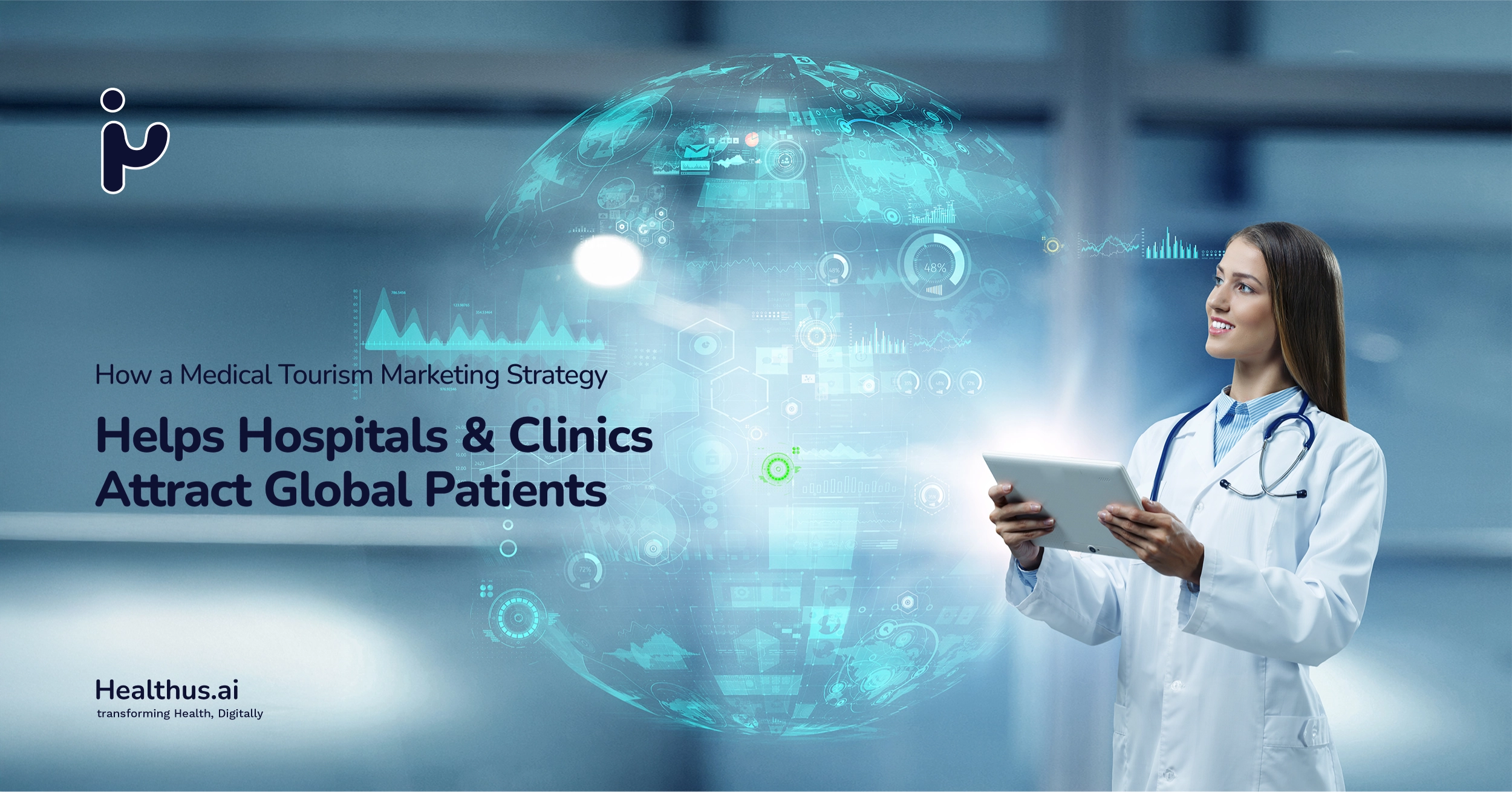
The global medical tourism industry continues to expand as more patients travel internationally for quality and affordable healthcare. Their first impression of a hospital is no longer made inside the building. It begins online. They compare hospitals digitally, evaluate clinical capabilities, and assess whether they can trust a medical facility before reaching out.
A strong digital presence has become a clinical expectation and a strategic advantage. A structured medical tourism marketing plan helps hospitals present their expertise clearly and guide international patients through each stage of their decision journey.
Why a Medical Tourism Marketing Strategy Matters More Than Ever
International patients behave differently from local patients. Their information search is longer, their anxiety heavier, and their decision-making more deliberate. They rely on data published by credible institutions, medical bodies, and regulatory authorities. They compare countries, outcomes, waiting periods, safety protocols, infection control standards, and rehabilitation expectations.
Research from multiple public health bodies consistently shows that patients trust institutions that share clear, structured, medically accurate information. Hospitals that recognise this pattern shape their communication accordingly. Hospitals that receive international patients operate in a highly competitive global environment. Multiple countries publish governmental and industry-backed reports showing rising cross-border patient movement, especially towards centres that combine clinical excellence, strong safety records, and clear communication. Visibility becomes an important part of this landscape. Hospitals with structured, well-presented digital information often make it easier for patients to understand their offerings, compare their care pathways, and build early trust.
When hospitals share accurate treatment information, doctor credentials, facility capabilities, and patient guidance in a clear manner, they allow international patients to engage confidently and make informed decisions.
Tips for Growing Medical Tourism
Successful hospitals do not use digital channels randomly. They combine them into a connected system. The following components form the foundation of an effective medical tourism marketing strategy.
1. SEO for global discoverability
International patients begin with questions:
- Where is the best treatment available
- Which hospitals are safest
- What is the success rate
SEO positions the hospital in front of those searches and ensures visibility across relevant geographies. When a hospital appears in trusted organic search results, it immediately gains authority.
2. Social media as a credibility builder
Social media is not for selling. It is for showing clinical quality and humanizing care. Hospitals and clinics that share:
- Short doctor-led educational reels or videos
- Recovery stories from patients
- Facility walkthroughs
- Post operative advice
This type of communication bridges the psychological distance patients feel when choosing care abroad and strengthens trust in your clinical environment.
3. Paid ads for immediate global reach
Paid campaigns allow hospitals to target:
- Specific countries
- High intent patients
- Specialties in demand (IVF, cardiac, oncology, orthopedics)
Instead of waiting for organic results, hospitals become visible at the exact moment a patient is choosing a destination.
4. Multilingual websites to reduce hesitation
Patients often do not exit websites because of lack of information. They exit because they do not understand it. Translating key information into languages like Arabic, Russian, Spanish or Mandarin increases clarity and communicates cultural readiness.
5. Video marketing as a trust signal
Video brings the hospital experience closer. It reassures patients by showing:
- Safety standards
- Doctor confidence
- Infrastructure and care systems
It converts abstract services into something real and familiar.
6. Reputation and reviews as proof of quality
International patients cannot rely on local recommendations. They depend on digital proof.
Platforms like:
- Google Business Profile
- Trustpilot
- WhatClinic
- RealSelf
serve as third party validation. Positive reviews are one of the strongest conversion factors in medical tourism.
7. Landing pages designed for international patients
A dedicated medical tourism page should include:
- Treatment options and cost ranges
- Visa and travel assistance
- Teleconsultation access
- Airport pickup or concierge services
These pages reduce doubt and provide a structured path to inquiry.
8. Email and WhatsApp for continuity
Medical tourists rarely make a decision in a single conversation. They need clarity, reassurance and ongoing communication. Email and WhatsApp allow hospitals to stay connected, answer questions as they arise and offer guidance that continues even after the initial inquiry.
9. Global partnerships and facilitator networks
Hospitals and clinics can expand their reach by collaborating with medical tourism facilitators, international patient coordinators and overseas referral partners. These relationships open access to new geographies, increase patient inquiries and strengthen credibility because decisions are supported by trusted third party recommendations.
Why Digital Matters More in Medical Tourism
International patients do not choose a hospital based on price alone. They evaluate:
- Doctor expertise and credentials
- Clinical outcomes and success rates
- Hospital safety standards and accreditation
- Surgical technology and quality assurance protocols
- Patient testimonials and care experiences
- Travel, accommodation and post treatment recovery support
Their entire risk assessment is digital. This is why digital marketing for medical tourism is an extension of clinical communication. It helps answer essential questions:
Is this hospital safe? Can I trust the institution? Will I receive responsible care?
The Digital Journey of a Medical Tourist
A patient seeking care abroad moves through multiple digital checkpoints:
- Searches for symptoms or treatment
- Compares hospitals and countries
- Examines doctor profiles and success rates
- Evaluates costs and travel logistics
- Validates reviews and real patient experiences
If any step feels unclear, the patient simply moves to another hospital without saying a word.
Places Where Hospitals Lose Patients
Hospitals rarely lose medical tourists because of medical capability. They lose them at points of digital uncertainty:
- Slow query response
- Outdated content
- Missing doctor information
- No multilingual support
- Poor online reviews
- No guidance on travel or recovery
A medical tourism marketing plan closes these gaps and creates a reliable digital pathway.
What Truly Influences International Patient Decisions
Trust is the strongest currency in medical tourism. Trust is built when the hospital communicates clinical confidence, ethical responsibility and patient centered information online. It leads to better collaboration between doctors, international patient teams and administrative workflows.
Digital systems do not replace medical excellence. They reveal it to the right audience.
Conclusion
The growth of medical tourism is driven not only by affordability but by clarity, safety and digital access to healthcare information. A well designed medical tourism marketing strategy allows hospitals to present their clinical strengths with confidence and support patients throughout their decision journey.
Digital marketing for medical tourism is not traditional promotion. It is a system that reduces uncertainty, increases trust and connects hospitals with patients across borders. When hospitals combine clinical excellence with strong digital communication, they become more accessible, more recognizable and better prepared for international patient care.
Reference
- U.S. Department of Health and Human Services, Office of the Surgeon General. (2021). Confronting health misinformation: The U.S. Surgeon General’s advisory on building a healthy information environment. U.S. Department of Health and Human Services. https://www.hhs.gov/sites/default/files/health-misinformation-advisory.pdf
Frequently Asked Questions (FAQs)
It gives patients clear treatment information, doctor insights, safety details, and simple ways to ask questions, helping them make confident decisions before travelling.
It should combine a strong website, healthcare SEO, GEO visibility, multilingual content, social engagement, PPC ads, and reputation management to guide international patients effectively.
Clear educational content explains procedures, recovery timelines, and expectations, helping patients understand care pathways and building early trust in the hospital.
Healthus.ai strengthens digital visibility, builds hospital branding, improves patient information flow, manages reputation, and supports structured enquiry handling for international patients.
It helps hospitals present accurate, organised information online, making it easier for international patients to compare options and choose the right clinical team.