





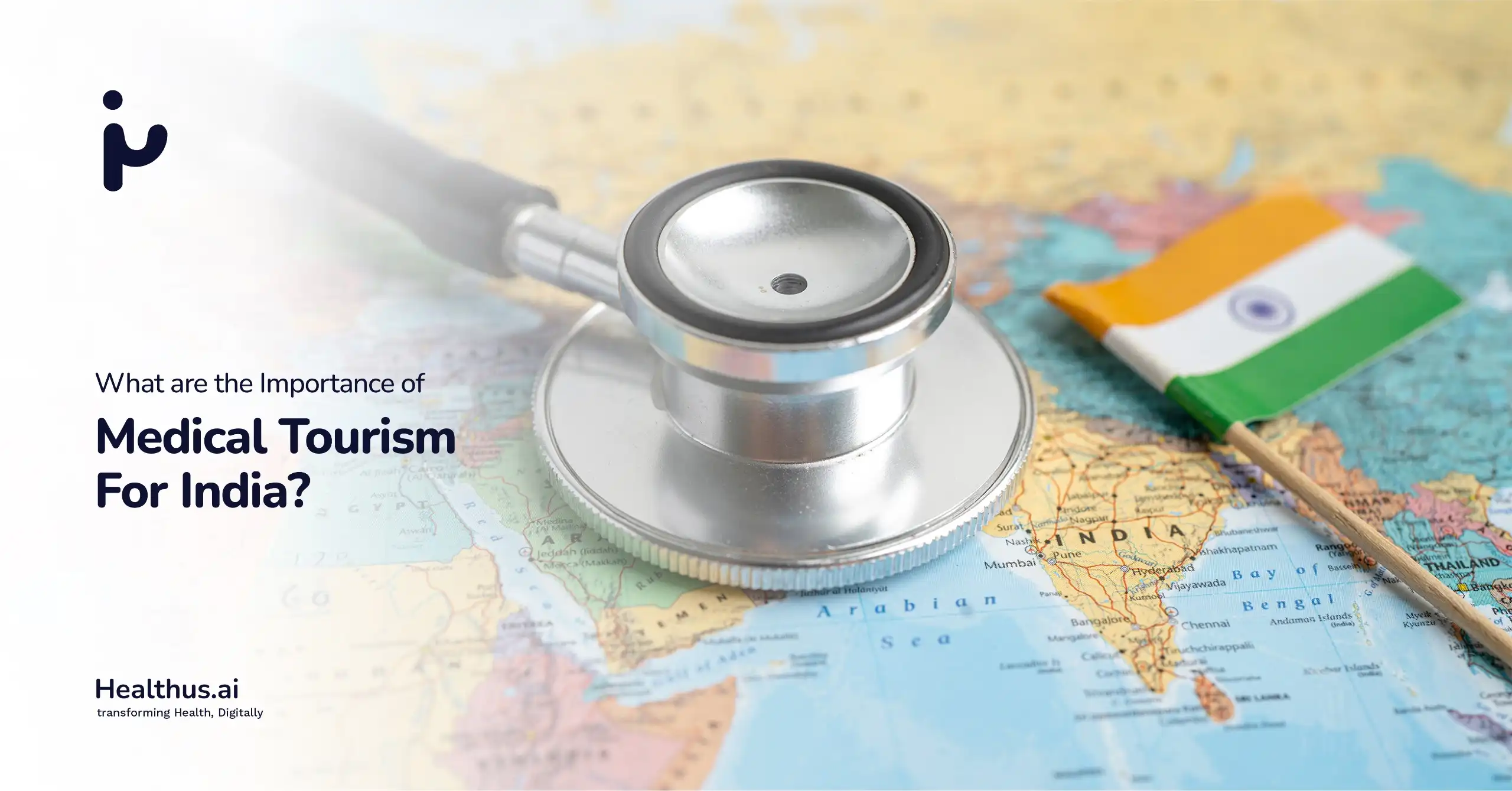
When patients travel abroad for care, they are seeking solutions that their local systems cannot deliver quickly, affordably, or reliably. For India, this choice by international patients represents far more than a clinical service. It is a strategic opportunity to lead the global healthcare stage. Under the government’s flagship “Heal in India” initiative, the country is positioning itself as the world’s primary hub for Medical Value Travel (MVT) by harmonising world-class technology with compassionate care.
According to the Ministry of Tourism, India recorded 131,856 foreign tourist arrivals for medical purposes from January to April 2025, accounting for approximately 4.1% of total foreign arrivals during that period. This data confirms a powerful trend: India is no longer just an alternative, it is a first-choice destination for complex treatments.
This blog explains why hospitals and clinics should actively invest in medical tourism. Using current data, it shows how medical tourism improves healthcare delivery, builds clinical expertise, supports the economy, and strengthens global trust in Indian healthcare organisations.
Why Is Medical Tourism Important for India?
Medical tourism refers to patients travelling to another country to receive medical treatment. People usually do this when care is expensive, delayed, or unavailable in their home country.
For India, medical tourism is important because it brings global patients into the healthcare system and improves how that system works.
When international patients choose India, hospitals strengthen clinical processes, improve documentation, and invest in better infrastructure. Doctors treat a wider range of cases and gain exposure that improves decision-making and outcomes. These improvements benefit Indian patients as much as international ones.
Medical tourism also supports the Indian economy. It brings foreign exchange into the country, creates jobs in healthcare and allied services, and supports sectors such as travel, accommodation, and logistics. Over time, this strengthens India’s position as a reliable healthcare destination.
This is why the importance of medical tourism for India goes beyond patient numbers. It affects healthcare quality, clinical growth, economic stability, and global trust in Indian medical expertise.
How Medical Tourism Benefits India’s Healthcare System?
Medical tourism pushes healthcare providers to elevate institutional processes, often beyond what local patient volumes alone require.
1. Improved clinical governance
Hospitals that treat international patients typically implement stronger clinical documentation, standard operating procedures, structured patient pathways, and enhanced infection control measures. This is because international patients and their referring partners expect transparency and accountability in treatment outcomes.
2. Standardisation of care
When hospitals receive patients from across the world, adherence to standardised protocols becomes essential. This leads to better infection control, consistent perioperative care, and rigorous quality checks that benefit every patient, not just medical tourists.
3. Technology and infrastructure upgrades
To meet global expectations, hospitals invest in advanced diagnostics, electronic medical records, and teleconsultation systems. These upgrades improve workflow and care quality for all patients. For doctors, it simply means less chaos and more time for care!
4. Cross-institution learning
Exposure to international patient expectations pushes hospitals to adopt clearer protocols, stricter quality checks, and recognised benchmarks.
In practical terms, this raises the quality of everyday care delivered to Indian patients, not just those travelling from abroad.
5. The Digital Front Door & AI Triage
By 2026, the international patient journey begins online, long before travel plans are made. Leading hospitals are adopting AI-powered digital front doors to respond to international enquiries quickly and accurately. AI-powered systems enable faster case assessment, structured medical record review, and language support. They also support early clinical triage to guide patients to the right specialist.
By reducing response times from days to minutes, healthcare providers can engage patients at the right moment, improve decision clarity, and build trust through timely and transparent communication.
How Medical Tourism Strengthens India’s Clinical Ecosystem?
Medical tourism does more than bring patients to India. It contributes to deeper clinical expertise, higher case diversity, and stronger multidisciplinary collaboration.
1. Increased clinical exposure
India receives patients from many regions, including Asia, the Middle East, Africa, and beyond. This diversity of cases exposes clinicians to a broader range of conditions and care requirements than they might encounter locally. For clinicians, this experience builds confidence that only real-world exposure can provide.
2. Specialisation growth
Specialist departments, such as cardiology, oncology, orthopaedics, nephrology, and fertility medicine, often grow faster when there is varied patient demand. This leads to more refined expertise and better outcomes in both routine and complex care.
3. Accreditation and quality frameworks
To attract and retain international patients, many Indian hospitals pursue national and international accreditations, such as NABH (National Accreditation Board for Hospitals & Healthcare Providers) or other recognitions, reinforcing structured clinical governance and quality. This is beneficial across the clinical ecosystem.
4. Talent retention and training
As patient inflow increases, hospitals have a stronger reason to retain experienced specialists and invest in ongoing training for doctors, nurses, and support teams.
When teams see complex cases regularly, they stay engaged, improve faster, and are less likely to leave for lack of growth or exposure.
How Medical Tourism Impacts India’s Economy and Global Standing?
Medical tourism is not only a healthcare opportunity. It is a significant economic driver with global relevance.
1. Economic value and growth projections
The India medical tourism market was valued at USD 8.71 billionin 2025 and is projected to reach USD 16.21 billion by 2030, growing at a compound annual growth rate (CAGR) of over 13%.
Globally, India is already ranked among the top medical tourism destinations, placed 10th out of 46 countries in the Medical Tourism Index, which makes this growth meaningful because it is occurring within an established and competitive global market.
2. Foreign exchange earnings and service revenue
International patients bring foreign exchange into India not only through hospital fees, but also through accommodation, local travel, food, and support services. This money flows beyond hospitals, supporting hotels, transport providers, and allied healthcare services, and strengthening the wider healthcare economy.
3. Job creation and allied sectors
Growth in medical tourism supports employment across the healthcare value chain, like in clinical staff, administrative teams, allied health professionals, hospitality workers, interpreters, and logistics staff.
4. Global healthcare reputation
When patients choose India over alternatives, it signals trust in clinical competence and system reliability. India was ranked 10th in the Medical Tourism Index among 46 global destinations for 2020-21, indicating recognition of its capabilities on the international stage. This strengthens India’s global healthcare brand!
The combined economic and reputational impact is why medical tourism matters deeply for India’s strategic growth.
Why Medical Tourism Matters Now for India?
Medical tourism is not an isolated niche anymore. It matters now for several reasons:
1. Rising international patient volumes
India’s inbound medical travel is growing steadily. Continued growth suggests that India is seen as a reliable care destination.
2. Policy support and infrastructure enhancement
The government has simplified medical visas and travel processes, making it easier for international patients to come to India for treatment. This allows hospitals to plan better, invest with confidence, and deliver care without unnecessary administrative delays.
3. Competitive global landscape
Medical tourism is growing in many countries, and several destinations now actively compete to attract international patients. To stay competitive, India must continue to deliver reliable treatment outcomes, smooth hospital processes, and clear patient care from consultation to recovery.
4. Post-pandemic healthcare mobility
International travel has resumed after the pandemic, and many patients who postponed treatment are now travelling abroad for care. India can meet this demand because it offers experienced doctors, affordable treatment, and hospitals that already care for international patients.
These factors make the importance of medical tourism not just relevant but urgent for India’s healthcare and economic strategies.
5. Aligning With the “Heal in India” Government Initiative
The Government of India has launched the Heal in India initiative to support medical value travel and international patient care. A centralised national portal now connects overseas patients with accredited Indian hospitals and doctors. For hospitals, aligning with this programme improves visibility, credibility, and patient trust.
The ‘Heal in India’ initiative also simplifies approvals and supports the development of medical travel hubs near major airports. In 2026, this framework is expected to make cross-border treatment more organised, transparent, and patient-friendly.
Conclusion
As India moves toward becoming the global hub for Medical Value Travel (MVT) under the ‘Heal in India’ banner, the importance of medical tourism is now a core pillar of our national healthcare identity. Medical tourism is important for India because it strengthens healthcare delivery at multiple levels. It helps hospitals and clinics improve clinical systems, gain wider exposure to complex cases, and invest in better infrastructure. At the same time, it supports India’s economy through foreign exchange earnings, job creation, and long-term growth across healthcare and allied services.
Globally, India already holds a strong position as a medical tourism destination, and continued growth reflects rising trust in Indian doctors, treatment quality, and healthcare outcomes. With increasing international patient movement, supportive government policies, and cost-effective care, medical tourism has become a meaningful part of India’s healthcare strategy rather than a niche opportunity.
For hospitals, clinics, and healthcare organisations, building a focused medical tourism vertical today is a strategic decision, not just a revenue opportunity. This is where the right guidance matters. Healthus.ai helps healthcare providers build a medical tourism strategy with clarity, ethical positioning, and measurable impact, aligned with India’s strengths and the real opportunities ahead.
References:
- Ministry of Tourism, Government of India. (2022). National strategy and roadmap for medical and wellness tourism.
https://tourism.gov.in/sites/default/files/2022-05/National%20Strategy%20and%20Roadmap%20for%20Medical%20and%20Wellness%20Tourism.pdf - Ministry of Tourism, Government of India. (2025). Foreign tourist arrivals for medical purposes (January-April 2025). Government of India.
https://tourism.gov.in - Medical Tourism Association. (2021). Medical tourism index (MTI) 2020–2021.
https://www.medicaltourismindex.com - Mordor Intelligence. (2024). India medical tourism market: Growth, trends, and forecast (2025–2030).
https://www.mordorintelligence.com/industry-reports/india-medical-tourism-market - National Accreditation Board for Hospitals & Healthcare Providers. (n.d.). NABH accreditation standards for hospitals.
https://www.nabh.co - Heal in India. Get The Best Indian Medical Health Care Services in India. Accessed December 24, 2025. https://healinindia.com/ Heal In India
- World Health Organization. (n.d.). Patient mobility and medical travel.
https://www.who.int
Frequently Asked Questions
Medical tourism supports healthcare growth, improves clinical standards, and boosts the economy by attracting international patients and foreign exchange.
India receives around 2 million international patients every year for medical, wellness, and IVF treatments. Patients travel to India from more than 70 countries, including the United Kingdom, the United States, Canada, Australia, China, and Russia, reflecting strong global demand for Indian healthcare.
Affordable costs, reliable quality care, shorter waiting times, and experienced doctors make India a preferred destination.
Indian doctors have strong clinical training, high patient exposure, and experience managing complex cases, which builds global confidence.
Success requires ethical communication, strong digital visibility, and structured patient acquisition systems that international patients can trust.