






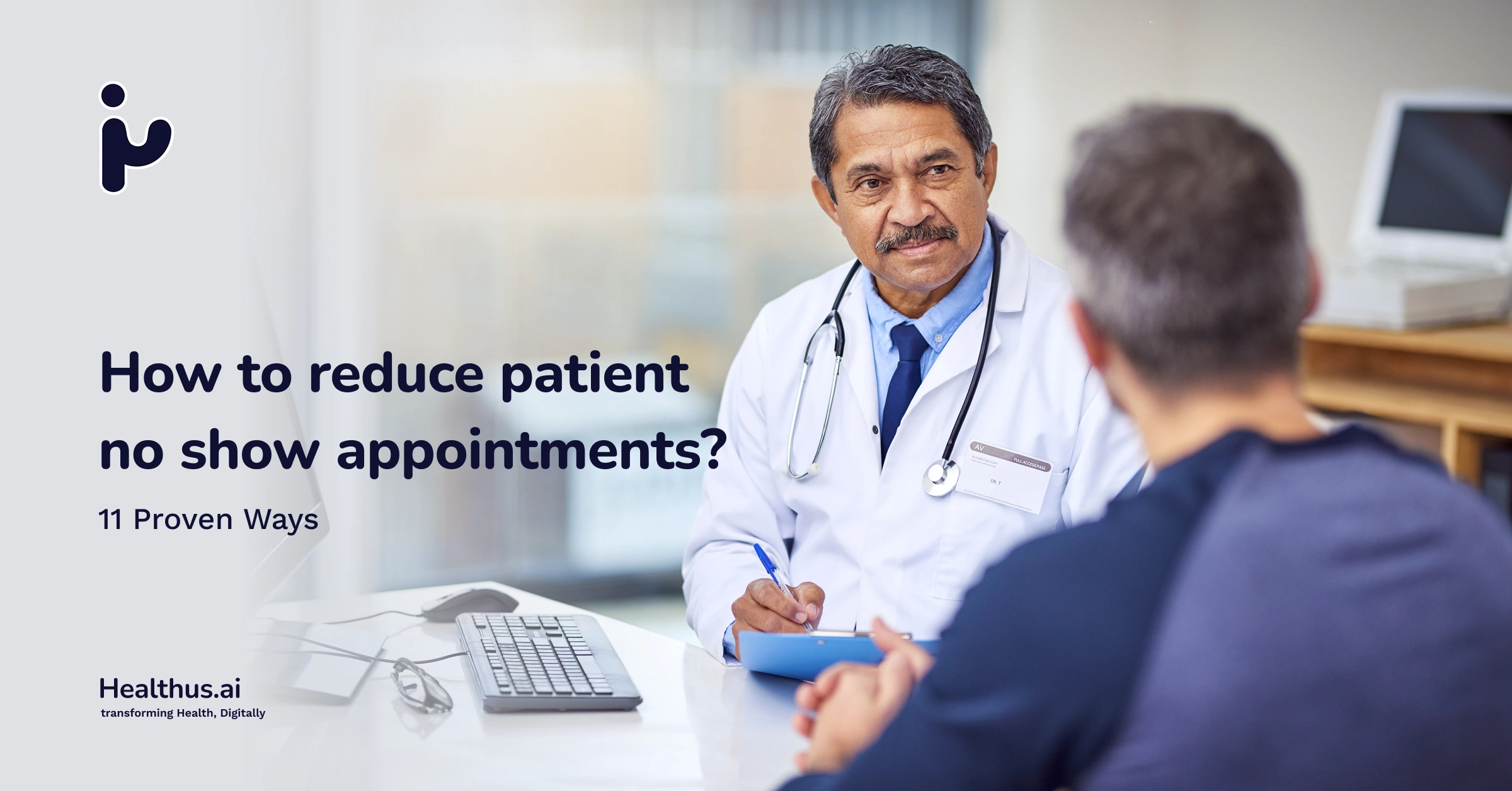
Patient no-show appointments are one of the most common and costly challenges faced by clinics, hospitals, and individual medical practices. Whether you run a dental clinic, physiotherapy center, specialty hospital, or multi-location practice, missed appointments directly affect revenue, staff efficiency, patient outcomes, and clinic growth.
Patient no-shows can be expensive and often pose operational challenges for the healthcare provider. Research indicates that the no-show rates are fluctuating, hovering around 23% on an average.
This issue often leads to inefficiencies, wasted resources and income loss.
But what if your practice could significantly cut the rate of no-show patients and create a smoother experience for both the healthcare provider and patient?
Here are 11 proven ways to reduce the rate of no-show appointments at your healthcare practice:
1. Automating Appointment Reminders (via emails, SMS and calls)
One of the most effective ways of reducing no-show patients is using automated healthcare reminders.
Why does this work?
More often than not, patients miss their appointments simply because they forgot. By sending reminders at key timings (e.g., 1 week, 2 days and a day prior to the appointment). These reminders help keep upcoming appointments a priority. Automated reminders have proven to reduce missed appointments dramatically.
2. Making Rescheduling or Cancelling Easy
Another common (and avoidable) reason patients do not show up for appointments is the friction and inconvenience caused when they are unable to either cancel or reschedule an appointment.
The process of cancelling and rescheduling can be:
- tedious
- time-consuming
- sometimes frustrating
Patients choose to take the least resistant path in such cases: not showing up for appointments altogether.
The simplest solution to this would be to provide patients with the convenience of one-click rescheduling or cancelling options via various platforms (e.g., SMS links or directly through your website).
Providing the patient with online self-scheduling and cancelling features through your website or mobile app that includes features like:
- timing selections
- rebooking slots
This can help the medical practitioner keep track of upcoming appointments and reduce revenue loss.
3. Offer Flexible Appointment Times
In today’s day and age, patients with busy work schedules or other heavy responsibilities tend to avoid appointments that don’t fit their schedule.
The solution? Offering flexible healthcare appointment timings, extending clinic hours for patient attendance or providing telehealth services can help retain patients.
4. Use Multi-Channel Communication
No two patients communicate the same way. If one prefers SMS and calls, another may prefer emails. Therefore, relying on a single channel for communication can translate to your message not being seen at all. In such cases, having an automated appointment system would not necessarily mean lower no-show rates.
Various communication channels you can use:
1. SMS/Text Messages
2. Emails
3. Phone Calls
4. WhatsApp or App push notifications
The likelihood of appointment reminders being opened, acknowledged and acted upon increases when patients are engaged through their preferred communication channels.
Healthcare organisations that adopt omnichannel engagement are better positioned to confirm appointments, reduce missed visits, and create a more responsive patient experience.
5. Educate Patients About the Value of Their Visit
Patients are more likely to show up for appointments when they clearly understand why their visit is important.
Explaining to the patient the value and purpose of the appointment makes it feel less optional, and they potentially will not show up at all.
Educating the patient and reinforcing the importance of:
- preventive care
- follow-up visits
can help the patient understand what the visit is for and what could happen if the appointment is missed.
This creates both clarity and motivation.
Patients who value their health and understand the importance of getting timely care are more likely to value their appointments.
Keeping the patients informed not only:
- reduces missed appointments
- builds trust
- strengthens relationships
- leads to better health outcomes
6. Shortening Wait Times and Improving the Patient Experience
Extensive waiting time is also one of the most common reasons patients may feel agitated before they even see the doctor.
Considering the hindrances, paperwork and/or uncertainties, patients are more likely to either disengage or avoid future appointments.
Reducing such friction is the first step to improving patient experience.
A few ways to cut down waiting time and help staff prepare ahead of time include:
1.Digital check-in tools
2.Pre-visit intake forms
3.Online appointment bookings
Implementing such aids can help streamline administrative work and save valuable time for both the patients and staff. When the patients realise that their time is taken seriously, they are more likely to show up for appointments and return for future care.
7. Implement Telehealth & Virtual Options
Patients often miss appointments for reasons that have nothing to do with a lack of interest.
Practical obstacles abound, including:
- trouble getting to the office
- limited mobility
- long commutes
- the demands of work and family
These factors can make it hard to attend in-person visits, even for those who genuinely need care.
This is where telehealth and virtual care options become essential.
Virtual visits offer patients the chance to connect with their healthcare providers without leaving home, improving:
- accessibility
- convenience
Telehealth is particularly useful for:
- routine follow-ups
- medication reviews
- managing chronic conditions
- mental health consultations
- non-urgent care
where a physical exam isn’t always required.
Resources such as Amenities Health underscore the advantages of virtual care, particularly its ability to eliminate obstacles and support consistent patient care.
8. Use Waitlists to Fill Open Slots
Last-minute cancellations are unavoidable, but actively managing and utilising these empty slots by introducing waitlists can help boost your revenue.
Implementing automated appointment waitlists and notifying patients via:
- SMS
- app push notifications
can make this experience hassle-free for both patients and healthcare providers.
In addition, one can also consider notifying patients with an existing appointment about the availability of these slots. Patients willing to move their appointments to an earlier slot can help accommodate other patients on the waitlist.
When a last-minute cancellation occurs:
- the system instantly notifies patients with prior appointments about the availability of the slot.
- if the slot remains unfilled, a patient on the waitlist is notified.
Such a provision offers:
- flexibility
- faster access to care for patients
while ensuring maximum productivity and maintaining a steady flow of appointments.
9. Personalise Patient Outreach
Unlike the generic appointment reminders, personalised and empathetic outreach to patients is less likely to get ignored. This makes the patient feel valued and seen, and the probability of them responding increases.
From a marketing perspective, personalised outreach increases confirmation rates, reduces no-shows, and enhances brand perception. When patients feel recognised rather than automated, they’re far more likely to keep appointments and return for future care.
10. Track and Analyse No-Show Patterns
Tracking appointment data and understanding the behaviours of patients helps identify patterns indicating:
- who are more likely to miss appointments
- under what circumstances
Clinics and healthcare providers can make smarter marketing and operational decisions by analysing metrics such as:
- appointment type
- patient history
- communication response rates
Turning guesswork into strategy using analytics can help optimise your practice.
11. Use Predictive Tools & AI-Based Systems
AI-driven scheduling tools and predictive analytics are powerful solutions to combat no-shows. These systems can be used to study and analyse the behaviours of patients, appointment patterns and overall history of patients.
If the system flags a patient, practices can proactively intervene by sending earlier reminders, offering telehealth alternatives or even providing options for easy rescheduling.
It was found that AI-based systems have statistically increased the attendance rates of patients. This in turn helps in preventing revenue loss.
Conclusion
Reducing the rate of no-show patients isn’t about policing patients but about creating systems that help support engagement, clear communication and increased convenience.
References:
Toker, K., Ataş, K., Mayadağlı, A., Görmezoğlu, Z. & Tuncay, I. (2024) A solution to reduce the impact of patients’ no-show behaviour on hospital operating costs: Artificial intelligence-based appointment system, Healthcare, 12(21), p.2161. doi:10.3390/healthcare12212161. PMCID: PMC11545362. (pmc.ncbi.nlm.nih.gov)
FAQs
Forgetfulness, scheduling conflicts, and long waits are all frequent culprits behind patients missing appointments. The challenge of rescheduling can also play a role.
Providers can cut down on missed appointments by implementing automated reminders, providing online rescheduling capabilities, offering telehealth services, and tailoring their communication with patients.
Automated reminders via SMS, email, and phone calls have proven effective in reducing the number of missed appointments.
Telehealth removes barriers like travel, mobility issues, and time constraints, making it easier for patients to attend visits.
AI and analytics can identify appointments that are likely to be missed, allowing for proactive outreach. This approach boosts attendance rates and minimises revenue losses.