





In today’s highly competitive healthcare ecosystem, attracting doctors, clinics, and hospitals to your platform or services requires more than generic digital marketing. Healthcare professionals are selective, data-driven, compliance-conscious, and deeply focused on trust and outcomes.
After analysing first-page Google results, top-ranking competitor blogs, and successful healthcare platforms, one clear pattern emerges.
The best-performing healthcare marketing strategies are trust-led, authority-driven, and growth-focused.
From our experience at Healthus.ai, the most effective healthcare marketing strategy is not aggressive promotion. It is a trust-first approach that explains value clearly, reduces uncertainty, and supports long-term relationships.
This blog explains what actually works when the goal is to attract healthcare service providers to a platform, and why each part of the strategy matters.
Why Marketing to Healthcare Providers Is Different?
Before discussing tactics, it is important to understand why a healthcare marketing strategy differs from regular B2B or SaaS marketing.
Doctors, clinics, and hospitals prioritise:
- Credibility and medical accuracy
- Ethical and compliant promotion
- Peer trust and professional reputation
- Long-term patient acquisition rather than short-term ads
- Measurable ROI and sustainable growth
Because decisions directly impact patient care and reputation, healthcare providers avoid exaggerated or sales-heavy messaging. This is why top-ranking competitors focus on thought leadership, SEO visibility, trust signals, and data-backed positioning instead of aggressive promotion.
1. Authority-Driven Content Marketing
Across page-one results, authority-driven content consistently ranks as the most effective healthcare marketing strategy for attracting providers.
This approach works because it educates doctors and hospital administrators instead of pushing immediate conversions. Providers want to understand how digital growth works before engaging with a platform.
What Works:
- Educational blogs written for doctors and healthcare administrators
- Industry reports, whitepapers, and healthcare case studies
- Clear explanations of patient acquisition methods such as Healthcare SEO, Healthcare PPC, and Medical tourism marketing
- Compliance-friendly content that avoids exaggerated claims
Why It Converts:
When content answers real provider questions and demonstrates expertise, trust develops naturally. That trust leads to engagement and long-term relationships.
2. Healthcare SEO as a Long-Term Growth Channel
Every top competitor invests heavily in healthcare SEO because it delivers consistent, compounding results over time. A strong healthcare marketing strategy treats SEO as a foundation, not an add-on.
Healthcare SEO improves visibility when doctors and hospitals actively search for marketing partners or growth solutions. Strong rankings signal expertise, stability, and reliability.
SEO Strategies That Attract Providers:
- Ranking for provider-focused keywords such as healthcare marketing agency and hospital marketing services
- Location-based pages that demonstrate regional expertise
- Service-focused pages that clearly explain value
- Medical blog clusters that build topical authority
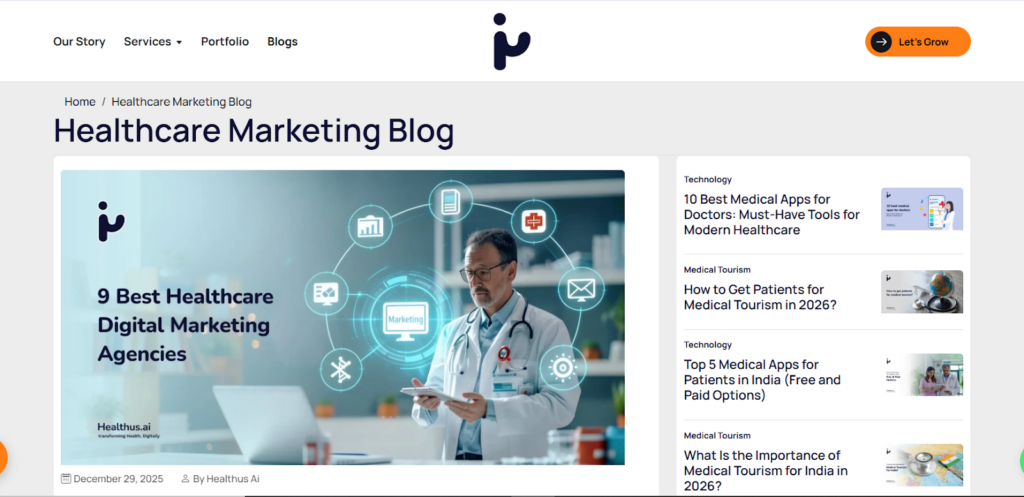
Medical blog clusters helps build topical authority. A healthcare marketing agency can cover topics like healthcare marketing, patient acquisition, SEO and topics related to your services.
Why Doctors Care:
We have seen that doctors already understand SEO as a patient acquisition tool. If a platform ranks well, they assume it can deliver similar results for them.
3. Trust-Led Brand Positioning
Trust is a core pillar of any effective healthcare marketing strategy. Doctors and hospitals are cautious about who they associate with, and generic branding quickly reduces credibility.
Competitor analysis shows that platforms with clear healthcare-only positioning convert better because their messaging aligns with provider expectations.
Essential Trust Builders:
- Clear focus on healthcare rather than general marketing
- Real case studies supported by numbers
- Authentic testimonials and recognisable client associations
- Transparent processes and communication
- A strong and credible About Us or Our Story presence
Trust-led positioning reassures providers that the platform understands healthcare-specific challenges.
4. Case Studies and Proof-Based Marketing
Almost every first-page competitor highlights case studies prominently because proof reduces uncertainty.
Healthcare providers want to see how a healthcare marketing strategy has worked in real-world settings before considering adoption.
What Converts Best:
- Before-and-after performance comparisons
- Growth in website traffic, enquiries, and appointment bookings
- City-wise or specialty-specific results
- Long-term improvements achieved over six to twelve months
Metrics Doctors Trust:
- Percentage increase in organic traffic
- Growth in consultation bookings
- Improved Google Maps visibility
- Reduced dependency on paid advertising
Clear data builds confidence faster than marketing claims.
5. Google-Centric Visibility and Local Authority
Google plays a central role in how doctors evaluate digital credibility. A platform’s presence across search, Maps, and reviews strongly influences perception.
A healthcare marketing strategy that prioritises Google visibility demonstrates real execution capability, not just planning.
High-Impact Practices:
- Optimised Google Business Profiles
- Regular updates through posts and FAQs
- Active review management
- Strong local SEO signals
Healthcare providers like doctors, clinics and hospitals are more likely to trust platforms that consistently appear in local and organic search results.
6. Performance Marketing Used Strategically
Paid advertising has a role within a healthcare marketing strategy, but it must be used carefully.
Top competitors use paid campaigns to support visibility and education rather than force immediate conversions.
What Works:
- Search ads targeting high-intent provider queries
- LinkedIn advertising aimed at hospital decision-makers
- Retargeting campaigns that promote educational content
What Does Not Work:
- Cold, sales-heavy messaging
- Generic SaaS-style creatives
- Overpromising patient numbers or outcomes
Paid marketing is most effective when it reinforces trust already built through organic channels.
7. Niche Positioning Over Broad Targeting
Doctors respond better to platforms that understand their specific context. Broad messaging often feels disconnected from real challenges.
Top-ranking competitors often specialise in areas such as dental marketing, oncology practices, hospital growth, or medical tourism to attract global patients.
A focused healthcare marketing strategy improves relevance, clarity, and conversion by speaking directly to the provider’s needs.
8. Education-Led Decision Journeys
Healthcare decisions take time. Providers prefer to evaluate before committing.
Education-led journeys respect this reality by offering insights, assessments, and guidance instead of pressure. Over time, this builds familiarity and confidence.
When providers finally engage, the decision feels informed rather than rushed.
Common Mistakes to Avoid
- Using generic marketing language
- Ignoring healthcare compliance and ethics
- Over-reliance on paid ads without organic presence
- Lack of proof or measurable results
- Targeting patients instead of providers
Avoiding these mistakes is essential for a sustainable healthcare marketing strategy.
What Actually Works
After reviewing competitors and proven healthcare platforms, the most effective healthcare marketing strategy for attracting doctors, clinics, and hospitals includes:
- Authority-driven content
- Strong healthcare SEO
- Trust-first brand positioning
- Case-study-backed proof
- Google-centric visibility
- Niche-focused messaging
At Healthus.ai, these elements come together in a single, scalable healthcare marketing strategy designed specifically for doctors, clinics, hospitals, and medical tourism brands.
How We Apply This at Healthus.ai
At Healthus.ai, we apply these principles by prioritising clarity and evidence over promotion. Instead of making broad claims, we share real healthcare work so providers can independently assess relevance, presentation, and credibility.
Testimonials are used to explain real situations and outcomes, not to persuade. The same clear, healthcare-focused communication is maintained across content, onboarding, and support, helping providers feel confident at every stage.
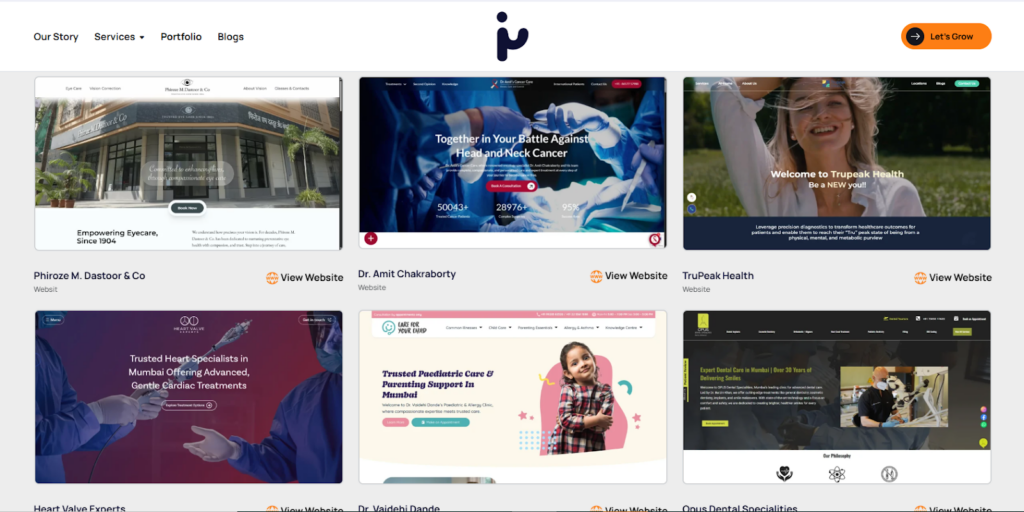
This approach allows trust to develop naturally and supports long-term relationships rather than quick conversions.
Conclusion
Attracting healthcare service providers to a platform is not about aggressive marketing or quick conversions. It is about clarity, trust, and relevance. Throughout this blog, we explored how a strong healthcare marketing strategy focuses on real outcomes, educates rather than sells, uses genuine proof, reduces adoption fear, and communicates ethically.
When platforms respect how healthcare providers think and work, adoption becomes a confident decision rather than a risky one. At Healthus.ai, this belief shapes how we approach healthcare marketing every day. Providers who feel understood and supported do not just join a platform. They stay, engage, and recommend it.
That is what sustainable growth looks like in healthcare.
Frequently Asked Questions
The most effective healthcare marketing strategy focuses on clear value, trust-building education, real-world proof, and relationship-driven outreach.
Provider marketing is B2B-focused and prioritises credibility, workflow impact, and long-term value, while patient marketing focuses on awareness and conversions.
Trust is essential because healthcare providers associate their professional reputation with any platform they choose to join.
Educational content supports informed decision-making by helping providers understand challenges and solutions without pressure.
Clear onboarding explanations, realistic setup timelines, and visible support help reduce adoption concerns.