






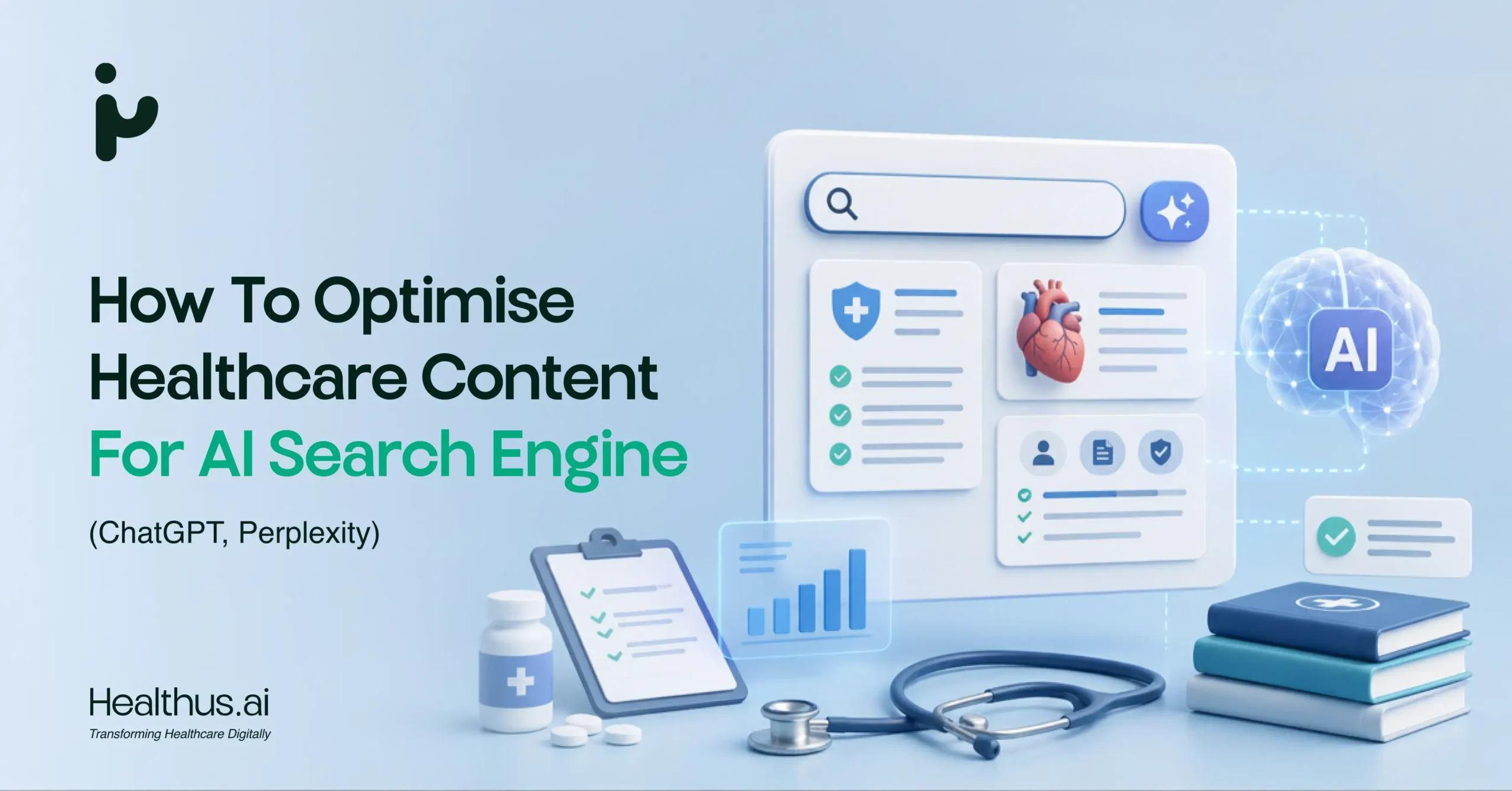
Search is evolving. Traditional search engines are no longer the only way people find healthcare information. Today, AI-powered platforms like ChatGPT and Perplexity are becoming trusted sources for medical queries, treatment options, and provider recommendations.
This shift is being driven by the rapid growth of artificial intelligence in healthcare, where content is no longer just ranked; it is now interpreted, summarised, and presented as direct answers.
For healthcare providers, this change means that the content strategies must evolve. Optimising for AI search engines requires a deeper focus on clarity, authority, and structured information. It is not just about keywords anymore; it is about being understood and trusted by AI systems.
What Makes AI Search Engines Different from Traditional Search?
AI search engines do not simply display a list of links. Instead, they generate direct answers by analysing multiple sources and presenting summarised insights.
Unlike traditional SEO, where ranking on the first page is the goal, AI search focuses on the following:
- Context and meaning rather than exact keywords
- Authority and credibility of content
- Clarity of explanations
- Structured and well-organized information
With the increasing use of AI in healthcare, these systems prioritise content that is easily interpreted and medically accurate.
Why Is Artificial Intelligence in Healthcare Changing Content Strategy?
The rise of artificial intelligence in healthcare is transforming how patients search for and consume information.
Patients are now asking conversational questions such as:
- “What are the early signs of glaucoma?”
- “Is LASIK safe for me?”
AI platforms respond with concise, evidence-based answers. This means your content must be designed to directly answer such queries.
Healthcare providers who adapt to this shift gain better visibility, especially as AI tools increasingly rely on high-quality artificial intelligence in healthcare articles for generating responses.
How Do AI Tools Like ChatGPT and Perplexity Select Content?
AI tools evaluate content differently compared to traditional search engines. They prioritise:
- Accuracy and factual correctness
- Clear, structured formatting
- Relevance to the query
- Trustworthiness of the source
For example, healthcare content optimized for ChatGPT queries should include direct answers, simplified explanations, and medically sound information.
AI systems are more likely to use content that demonstrates expertise and avoids ambiguity.
What Are the Best Practices for Healthcare Visibility in AI Search Engines?
To improve visibility, healthcare content must align with how AI systems process and present information.
Some of the best practices for healthcare visibility in AI search engines include:
- Writing clear and concise answers to common patient questions
- Using structured headings and logical flow
- Avoiding overly complex medical jargon
- Providing accurate and updated information
- Including context around conditions, symptoms, and treatments
These practices ensure that AI tools can easily extract and present your content as reliable answers.
How Should Content Be Structured for AI Readability?
Structure plays a critical role in how AI interprets content.
Well-optimised healthcare content should include the following:
- Question-based (Wh) subheadings
- Short paragraphs for readability
- Bullet points where necessary
- Clear definitions and explanations
AI models prefer content that is easy to scan and understand. This is especially important as generative AI healthcare systems rely heavily on structured inputs to generate accurate outputs.
Why Is Authoritativeness Important in AI-Driven Healthcare Content?
Healthcare is a sensitive domain where accuracy and trust are essential. AI systems prioritise content that demonstrates expertise.
To build authority:
- Include medically accurate information
- Reference clinical relevance where needed
- Maintain consistency across topics
- Ensure content is reviewed by qualified professionals
Many healthcare AI companies are building systems that filter out unreliable content, making authority a key factor in visibility. AI is important in healthcare content marketing, as it improves discoverability, enhances patient engagement, and supports better information delivery through AI-driven platforms.
How Can Conversational Content Improve AI Search Performance?
AI platforms are designed to respond to natural language queries. Content written in a conversational tone performs better because it mirrors how users ask questions.
Instead of writing, “Symptoms of cataracts include”
Use:
“What are the symptoms of cataracts?”
This approach aligns with how ChatGPT healthcare queries are structured and improves the chances of your content being selected as a response.
What Role Does Generative AI Healthcare Play in Content Discovery?
Generative AI healthcare systems create responses by combining information from multiple sources. This means your content must be:
- Informative enough to stand alone
- Clear enough to be summarized
- Accurate enough to be trusted
AI systems are less likely to use content that lacks clarity or depth.
As the use of AI in healthcare expands, content quality becomes a direct factor in discoverability.
How Can Healthcare Providers Create AI-Friendly Content?
Creating AI-friendly content requires a shift from keyword-heavy writing to value-driven communication.
Focus on:
- Answering patient intent clearly
- Simplifying complex medical concepts
- Maintaining logical content flow
- Updating content regularly
Healthcare providers who align their content with artificial intelligence in healthcare trends are more likely to appear in AI-generated responses.
How Does E-E-A-T Influence AI Search Visibility?
Experience, Expertise, Authoritativeness, and Trustworthiness (E-E-A-T) are critical factors in healthcare content.
AI systems assess:
- Whether the content reflects real-world expertise
- Whether the information is reliable
- Whether the source is credible
Strong E-E-A-T signals improve the chances of being referenced in artificial intelligence in healthcare articles and AI-generated answers.
What Mistakes Should Be Avoided While Optimising for AI Search?
Common mistakes include:
- Overloading content with keywords
- Writing vague or incomplete answers
- Using complex medical terminology without explanation
- Ignoring user intent
- Publishing outdated information
These issues reduce the effectiveness of content in both traditional and AI-driven search environments.
Conclusion
The rise of artificial intelligence in healthcare is reshaping how information is discovered, consumed, and trusted. AI search engines like ChatGPT and Perplexity are no longer just tools; they are becoming primary gateways for healthcare knowledge.
To stay visible, healthcare providers must move beyond traditional SEO and adopt a more structured, patient-focused approach to content creation. By following the best practices for healthcare visibility in AI search engines, focusing on clarity, and aligning with conversational search patterns, content can perform effectively in this new landscape.As generative AI healthcare continues to evolve, the ability to create accurate, trustworthy, and AI-friendly content will define which healthcare providers stand out. Contact healthus.ai to create authoritative, structured, and patient-focused content that ranks across platforms like ChatGPT and Perplexity while driving meaningful engagement and enquiries.
Frequently Asked Questions
Artificial intelligence in healthcare is used for diagnostics, patient data analysis, virtual assistants, and improving clinical decision-making.
Focus on clear structure, direct answers, conversational language, and medically accurate information.
Generative AI healthcare refers to AI systems that create responses, summaries, or insights based on existing medical data.
Yes, ChatGPT healthcare queries are widely used, but responses should always be verified with reliable medical sources.