





- A hospital website helps people discover services, understand care options and navigate the organisation.
- A patient portal gives registered patients secure access to personal health information and digital services.
- Many healthcare organisations may need both, but the first investment should address the most significant gap in the patient journey.
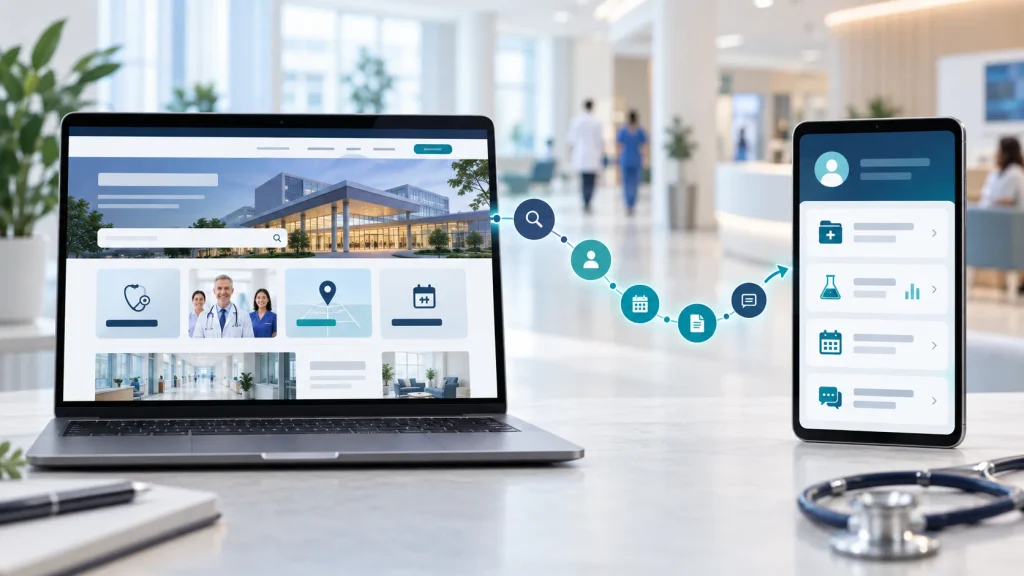
Digital access can break down at different stages of the patient journey. A prospective patient may struggle to find the right service or request an appointment. An existing patient may be able to find the hospital online but have no secure way to view results, access records or contact the care team.
This creates an important investment question: Should your healthcare organisation improve its hospital website, invest in a patient portal or develop both?
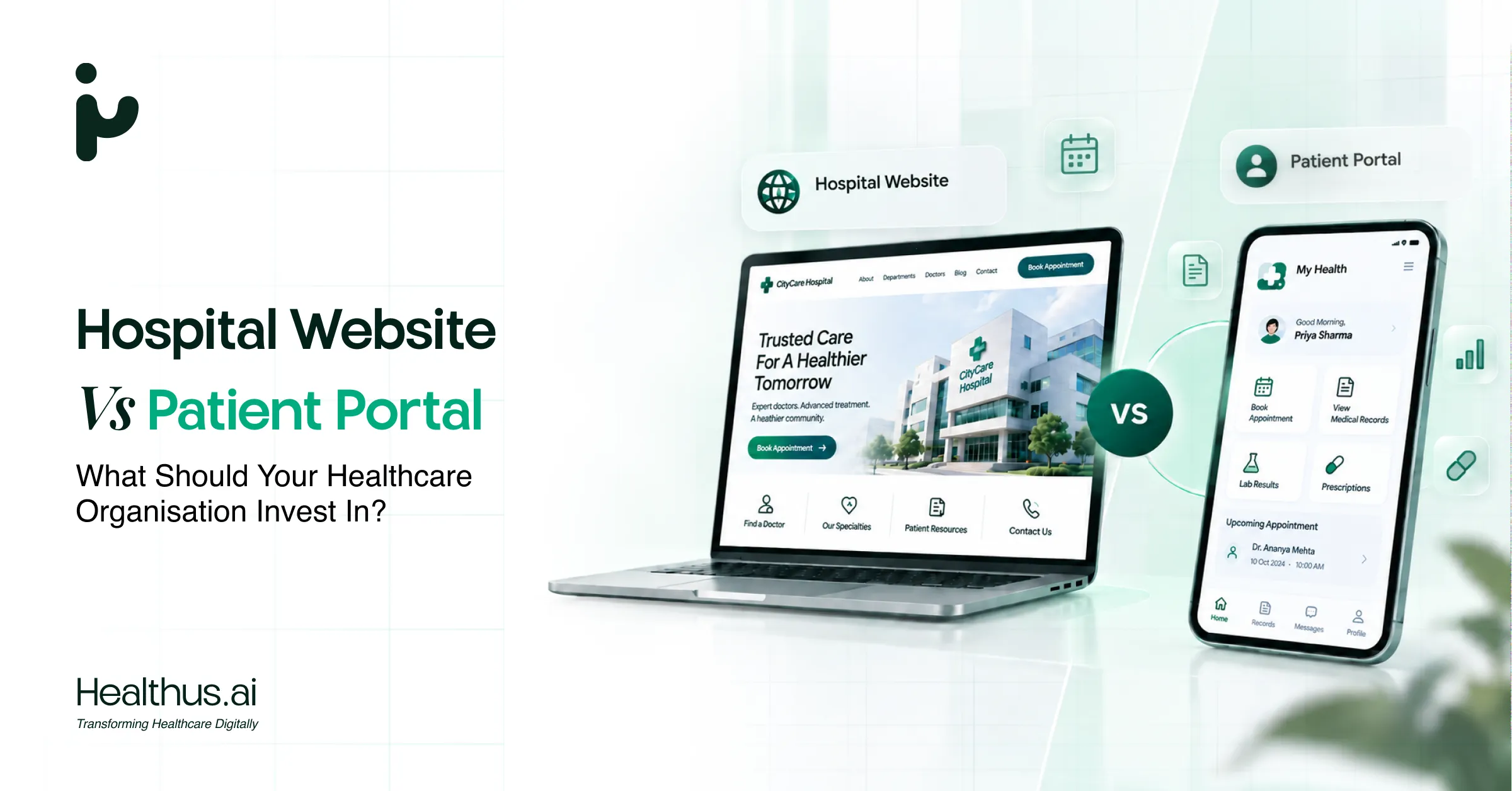
The two platforms perform different roles. A hospital website supports public discovery, information and navigation. A patient portal provides registered patients with secure access to personal information and selected digital services.
The right priority depends on where patients experience the greatest difficulty.
What Is a Hospital Website?
A hospital website is the organisation’s public digital presence. People can normally access its core information without logging in.
It may help people:
- understand the hospital and its services;
- find departments, specialties and doctors;
- locate facilities and contact details;
- access patient education;
- explore available treatments;
- find appointment or enquiry pathways;
- prepare for a hospital visit; and
- access the organisation’s patient portal.
The website serves prospective patients, caregivers, members of the public and existing patients seeking general information. It can support visibility, service discovery, patient education and navigation.
However, a public website is generally unsuitable for interactions involving personal clinical information. That is where a patient portal has a different role.
What Is a Patient Portal?
A patient portal is a secure digital system that gives registered patients access to personal health information and selected healthcare services.
Depending on the system, its functions may include:
- health records and laboratory results;
- medication information and refill requests;
- appointment scheduling;
- personalised educational materials;
- secure messaging;
- discharge information; and
- telehealth access.
A 2019 systematic review by Dendere and colleagues examined portals connected to electronic medical records in inpatient settings. The authors reviewed 58 studies and found considerable variation in portal design and functionality.
The central difference is straightforward. A hospital website helps people navigate the healthcare organisation, while a patient portal helps registered patients access and interact with their own healthcare information and services.
Hospital Website vs Patient Portal: Key Differences
A hospital may have a sophisticated patient portal while new patients still struggle to find the right specialist or request an appointment. Another organisation may have a clear public website but offer limited digital support once a person becomes a patient. Looking at the complete journey helps reveal which platform needs attention first.
| Area | Hospital website | Patient portal |
| Access | Generally public | Usually authenticated |
| Audience | Prospective and existing patients, caregivers and the public | Registered patients and, where supported, caregivers |
| Main role | Information, discovery and navigation | Personal information and patient services |
| Information | General health and service information | Individual patient information |
| Search visibility | Public pages may be indexed | Personal information is not intended for public search |
| Communication | General enquiries and access pathways | May support secure patient-provider messaging |
| Integration | May connect to booking and other services | Often linked to EHR, EMR or clinical systems |
| Privacy | Important where personal data are collected | Critical because identifiable health information may be handled |
An organisation can have an excellent portal while still making it difficult for a new patient to find the right service. Conversely, an effective public website cannot provide all the personalised functions of an authenticated portal.
Planning to improve your hospital website?
What Can a Patient Portal Improve?
Patient portals can support health knowledge, communication and self-management. However, their effects are not consistent across every outcome or patient group.
A systematic review by Han and colleagues examined 24 studies of patient portal interventions. The interventions were associated with improvements in health knowledge, self-efficacy, decision-making, medication adherence and preventive-service use.
However, effects on clinical measures such as blood pressure, glucose, cholesterol and weight were mixed. The authors concluded that there was insufficient evidence to support a general claim that patient portals improve clinical outcomes.
An earlier review by Kruse and colleagues reached a similarly cautious conclusion. Among 27 papers, 10 reported improvements involving medication adherence, disease awareness, self-management or preventive medicine. Benefits involving patient satisfaction were also reported, but evidence for improved medical outcomes was weak.
A portal should therefore not be justified simply by claiming that it will improve clinical outcomes. A stronger investment case defines the functions patients need, who is expected to use them and how they will fit into existing clinical and administrative workflows.
Portal Availability Does Not Guarantee Adoption
Developing a portal does not mean that patients will use it.
Fraccaro and colleagues conducted a systematic review and meta-analysis involving 40 studies. The overall mean portal adoption rate was 52%. However, adoption differed considerably by study setting.
Controlled studies involving actively recruited participants reported mean adoption of 71%, whereas real-world implementations reported only 23%. The researchers cautioned that results from controlled studies may not reflect routine clinical practice.
Healthcare organisations therefore need to consider:
- how patients will discover the portal;
- how registration and authentication will work;
- whether clinicians encourage portal use;
- which functions give patients a reason to return;
- whether patients need training or support;
- how the portal fits existing workflows; and
- whether the interface is accessible and easy to understand.
A technically sophisticated portal can still experience limited adoption if these practical issues are overlooked.
What Encourages Patients to Use a Portal?
The Dendere review identified access to information and patient-provider communication as facilitators of portal use. Privacy concerns and limited encouragement from healthcare professionals were among the barriers.
Patients were particularly interested in access to medical information, personalised health education and communication with healthcare teams.
Portal planning should therefore begin with a practical question:
What are patients trying to accomplish that requires secure, personalised digital access?
If patients regularly need laboratory results, medication information, appointment support or secure communication, the organisation can evaluate portal functions around those needs instead of starting with a long feature list.
What About Inpatient Portals?
Patient portals may also support patients and caregivers during hospitalisation.
A systematic review by Kelly and colleagues evaluated 17 studies of inpatient portals. Common functions included information about medicines, care teams, schedules, patient education and discharge planning. Many participants were interested in using the portals and considered them useful or easy to use.
However, evidence that inpatient portals improve engagement, knowledge, communication, quality or safety remains limited. Healthcare organisations should therefore distinguish between useful functionality and proven clinical impact when preparing an investment case.
When Should You Prioritise Your Hospital Website?
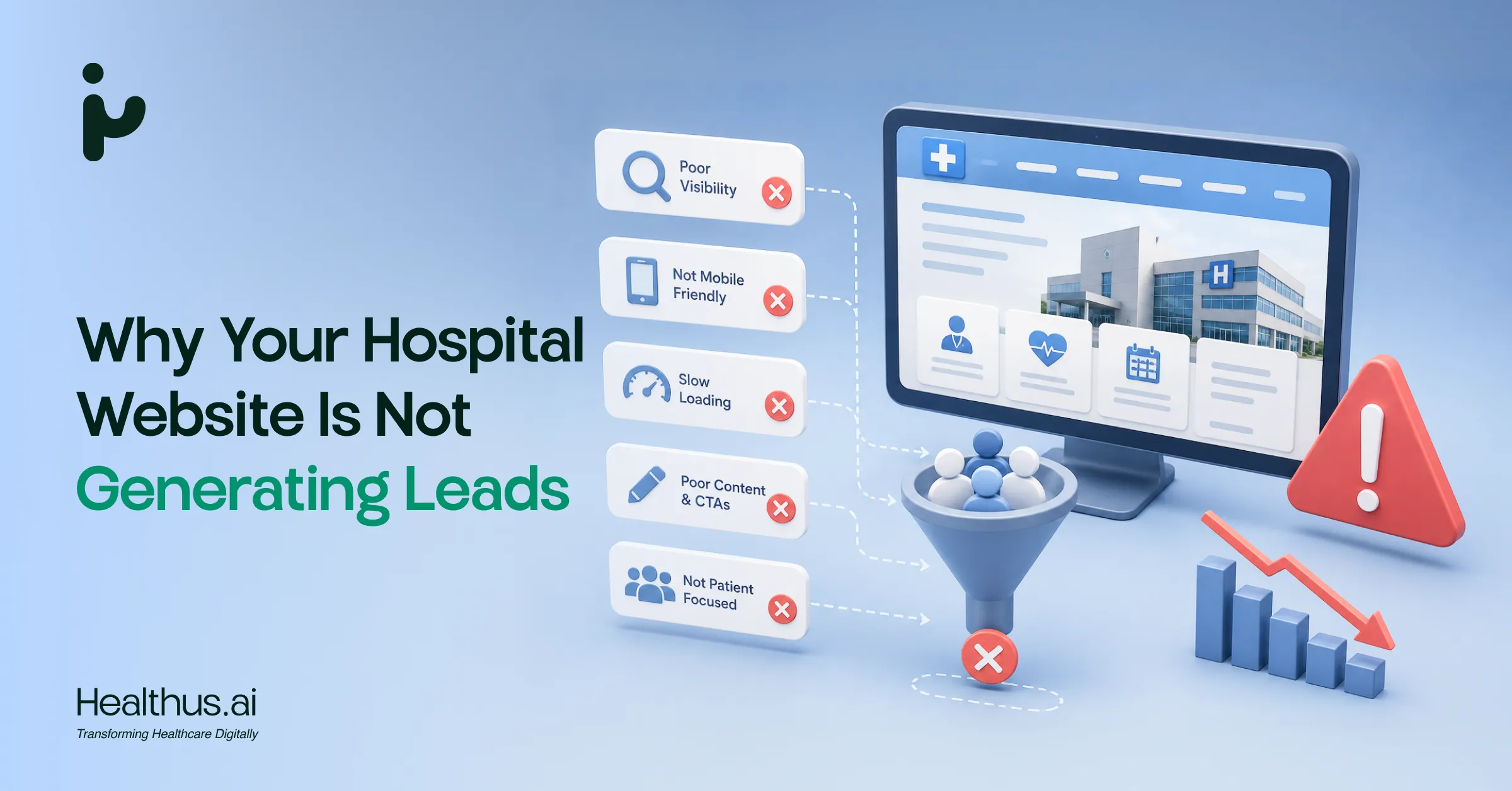
Investment in a patient-focused healthcare website may deserve priority when the main problems occur before patients enter the care relationship.
Common problems include:
- outdated or incomplete service information;
- difficulty finding doctors or departments;
- poor mobile usability;
- confusing navigation;
- inaccessible content;
- unclear appointment pathways; and
- missing location or contact information.
Before entering a care pathway, people may need to know which specialist to contact, whether the hospital offers the required service and how to request an appointment.
A patient portal cannot compensate for a website that fails to answer these basic questions.
When Should You Invest in a Patient Portal?
A patient portal becomes more relevant when existing patients need secure access to personal information and routine digital services.
Potential use cases include health records, laboratory results, medication information, appointments, educational materials and secure communication.
Implementation readiness also matters. A U.S. Department of Veterans Affairs evidence review found that evidence for effects on health outcomes, healthcare utilisation and efficiency was generally low-strength or insufficient.
Before investing, organisations should assess:
- technical and clinical-system integration;
- privacy and security requirements;
- patient authentication;
- clinical and administrative workflows;
- accessibility and patient support;
- adoption strategy; and
- ongoing portal governance.
A broader HealthTech growth strategy can help align the platform with user needs, clinical workflows, positioning and adoption planning.
Should Healthcare Organisations Invest in Both?
For many organisations, this is not ultimately an either-or decision.
The website acts as the public digital front door, helping people discover services and find an appropriate care pathway. The portal becomes the secure patient-service environment, supporting personalised access and interactions after the patient enters the healthcare system.
For hospitals, both platforms should form part of a connected digital growth strategy rather than operate as isolated systems.
Patients should be able to move from finding a service to requesting care, accessing information and managing later interactions without needing to understand the organisation’s technology architecture.
Technology alone will not create a connected patient journey. Website content, portal enrolment, staff responsibilities, patient support and clinical workflows also need to be coordinated. Clear ownership helps prevent the website and portal from becoming two separate systems that patients must navigate on their own.
How Should You Decide Where to Invest First?
Start by identifying where patients experience the most friction.
Prioritise the hospital website when people struggle to:
- find the right service or specialist;
- understand available care options;
- locate facilities or contact information;
- use the website on mobile devices; or
- move from information to an appointment request.
Prioritise a patient portal when registered patients struggle to:
- access results or personal health information;
- manage appointments or medication requests;
- receive personalised information;
- communicate securely with care teams; or
- complete routine tasks without calling the hospital.
When both sets of problems are present, develop a phased roadmap. Address the most significant barrier first, then connect the website and portal so patients can move between them without unnecessary friction.
Not sure which digital investment should come first?
Frequently Asked Questions
Can a patient portal replace a hospital website?
A patient portal cannot fully replace a hospital website because the two platforms serve different audiences. The website supports public discovery and navigation, while the portal provides secure services to registered patients.
Does launching a patient portal guarantee patient adoption?
Portal availability does not guarantee adoption. Registration, ease of use, clinician encouragement, digital accessibility, patient support and the practical value of available functions can all influence use.
Should a hospital invest in its website or portal first?
The decision should depend on where patients experience the greatest difficulty. Website investment may come first when public information and appointment pathways are unclear. Portal investment may take priority when existing patients need better access to personal information and routine services.
The Bottom Line
A hospital website and a patient portal serve different stages of the patient journey.
The website supports public discovery, information and navigation. The portal provides secure, personalised access and digital services for registered patients.
The first investment should address the point where patients experience the greatest difficulty. For many healthcare organisations, the long-term goal will be to connect an accessible public website with a secure, useful and well-supported patient portal.
Build a More Connected Digital Patient Journey
The right digital investment starts with understanding where patients face difficulty. Healthus can help identify gaps, improve public-facing patient pathways and develop a phased strategy connecting discovery, access and ongoing interaction.
References
- P. Fraccaro, M. Vigo, P. Balatsoukas, I. E. Buchan, N. Peek and S. N. van der Veer, ‘Patient Portal Adoption Rates: A Systematic Literature Review and Meta-Analysis’, Studies in Health Technology and Informatics, 245 (2017), pp. 79–83.
- H. R. Han, K. T. Gleason, C. A. Sun, H. N. Miller, S. J. Kang, S. Chow, R. Anderson, P. Nagy and T. Bauer, ‘Using Patient Portals to Improve Patient Outcomes: Systematic Review’, JMIR Human Factors, 6.4 (2019), e15038.
- R. Dendere, C. Slade, A. Burton-Jones, C. Sullivan, A. Staib and M. Janda, ‘Patient Portals Facilitating Engagement with Inpatient Electronic Medical Records: A Systematic Review’, *Journal of Medical Internet Research*, 21.4 (2019), e12779. Available at: [https://doi.org/10.2196/12779](https://doi.org/10.2196/12779).
- C. S. Kruse, K. Bolton and G. Freriks, ‘The Effect of Patient Portals on Quality Outcomes and Its Implications to Meaningful Use: A Systematic Review’, Journal of Medical Internet Research, 17.2 (2015), e44.
- C. L. Goldzweig, A. A. Towfigh, N. M. Paige, G. Orshansky, D. A. Haggstrom, J. M. Beroes, I. M. Miake-Lye and P. G. Shekelle, Systematic Review: Secure Messaging Between Providers and Patients, and Patients’ Access to Their Own Medical Record: Evidence on Health Outcomes, Satisfaction, Efficiency and Attitudes (Washington, DC: Department of Veterans Affairs, 2012).
- M. M. Kelly, R. J. Coller and P. L. Hoonakker, ‘Inpatient Portals for Hospitalized Patients and Caregivers: A Systematic Review’, *Journal of Hospital Medicine*, 13.6 (2018), pp. 405–412. Available at:[https://doi.org/10.12788/jhm.2894](https://doi.org/10.12788/jhm.2894).