





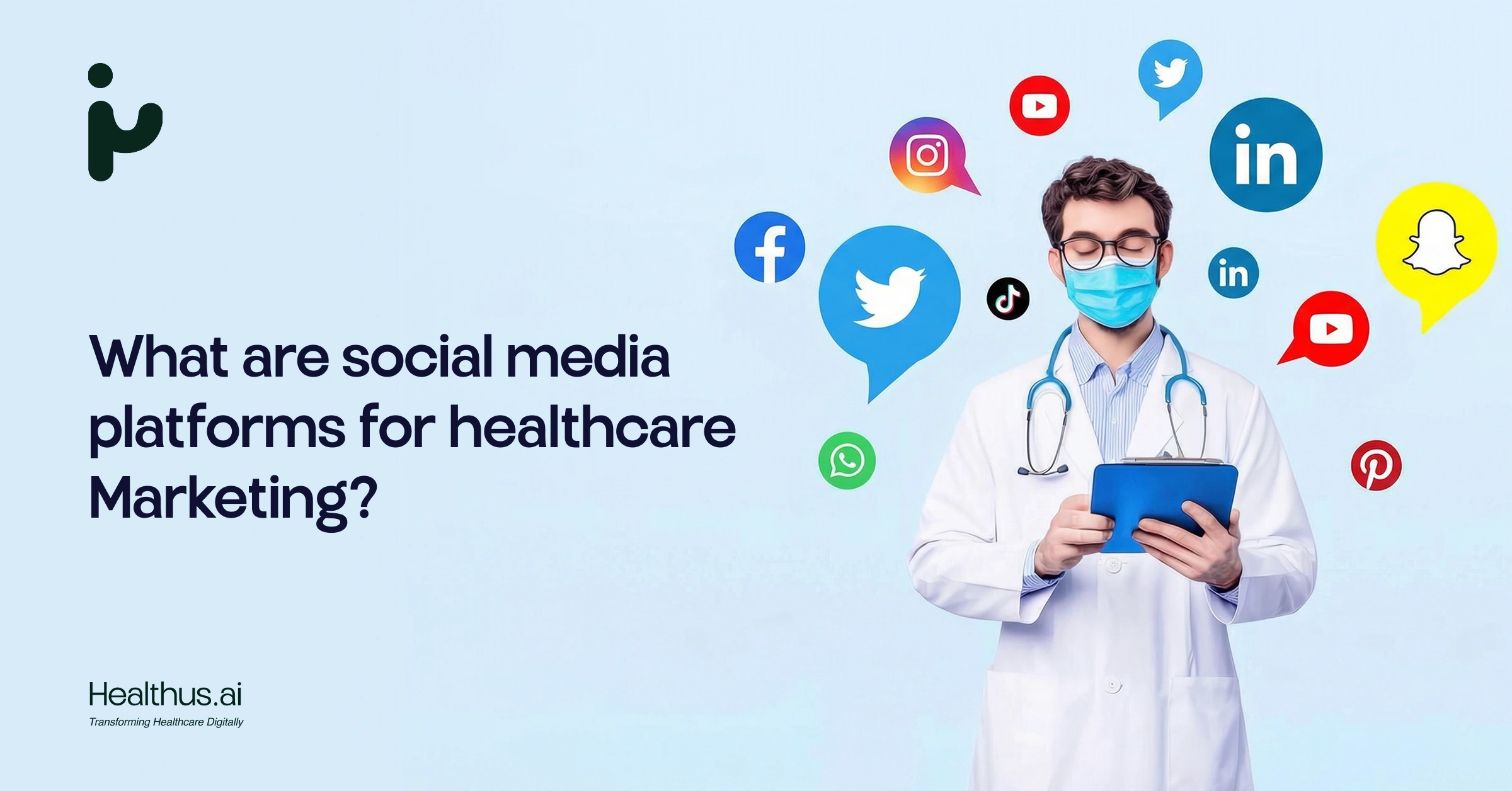
Social media has emerged as a crucial tool for healthcare marketing, shifting the way hospitals, clinics, and healthcare brands communicate with patients. These platforms are now necessary for modern healthcare communication, impacting every aspect from trust-building to visibility and patient engagement.
Unlike usual advertising methods, social media offers healthcare organisations a more personal and approachable means of educating, informing, and connecting with patients. When employed thoughtfully, social media can strengthen brand credibility, foster healthier patient relationships, and contribute to sustained growth.
This guide discusses the most effective social media platforms for healthcare marketing, their applications, and how healthcare organisations can select the platforms that best align with their objectives.
Why Social Media Matters in Healthcare?
Healthcare decisions are rarely impulsive. Patients today rely mainly on digital platforms and social media to research about conditions even before they visit a doctor. This includes searches ranging from symptoms and exploring treatment options to the best healthcare providers and patient reviews and testimonials.
Throughout this decision-making process of patients, social media provides healthcare brands a steady and accessible presence, which in turn benefits the brand greatly. This helps the patient with their careful evaluation and education.
Social media allows healthcare organisations to:
- Provide timely, informative health information to help people make smart choices.
- Showcase medical knowledge and build trust with your audience.
- Humanise the brand by highlighting doctors, care teams, and real experiences.
- Encourage patient engagement and build long-term community relationships.
- Assist with referrals, recruitment, and awareness campaigns.
Given the healthcare sector’s stringent regulations and its reliance on patient trust, social media is most effectively utilised as a platform for communication and education, rather than for direct sales. By prioritising clarity, precision, and the delivery of patient-centric value, social media can cultivate trust and foster enduring relationships.
Top Social Media Platforms for Healthcare Marketing
Every social media platform serves a different purpose and audience.
Understanding and strategically using each platform to increase your reach in a way that benefits your brand is key.
1. Facebook: Community Engagement and Awareness
Facebook, a foundation of social media, continues to be a worthwhile tool for healthcare marketing. Its extensive user base and adaptable content options make it a great asset.
Healthcare brands can use Facebook to:
- Establish an official business page, complete with clinic information and regular updates.
- Disseminate educational articles, infographics, and posts designed to raise health awareness.
- Advertise health camps, screenings, webinars, and other events.
- Interact with patients through comments and Facebook Groups.
2. Instagram: Visual Storytelling and Patient Connection

Instagram is a widely used social media platform.
Instagram has been shown to be a powerful platform for healthcare brands, especially those leveraging visual content and narrative techniques.
Clinicians can use photos, reels, and stories to:
- Showcase the clinic’s atmosphere and introduce the team.
- Share brief health advice and visual explanations of treatments.
- Use short movies to answer frequently asked patient questions.
- Connect with younger audiences and potential patients.
3. LinkedIn: Professional Networking and Thought Leadership
LinkedIn offers an ideal platform for healthcare organisations. It’s a space to establish professional credibility, disseminate research findings, and network with others in the field.
LinkedIn, unlike social media platforms aimed at consumers, places a priority on expertise and professional reputation. It’s especially beneficial for:
- Publishing medical articles and study summaries.
- Connecting with fellow clinicians and possible referral partners.
- Attracting healthcare professionals and collaborators.
- Highlighting organisational achievements.
4. Twitter (X): Real-Time Updates and Public Health Messaging

Twitter (rebranded as X) continues to be a valuable tool for immediate communication and interaction.
Healthcare organisations and professionals using the site to:
- Share quick health tips or alerts.
- Participate in wider health conversations by utilising hashtags.
- Post updates during health awareness campaigns.
- Amplify public health messages in real time
5. YouTube: In-Depth Video Education

YouTube, the globe’s second-largest search engine, also serves as a prime venue for in-depth instructional content.
Healthcare marketers have a unique opportunity to leverage YouTube for several key purposes:
- Publish videos that explain and educate patients about diseases, conditions, procedures and treatments.
- Host doctor interviews or Q&A sessions.
- Share a chronic care management series that helps educate patients.
- Provide wellness and preventive care guidance.
6. WhatsApp: Direct and Personal Patient Communication
In countries like India, where mobile-first communication is prevalent, WhatsApp Marketing plays a distinctive role.
Although it differs from typical social media, its broad use makes it a crucial tool for patient participation and communication about healthcare.
Healthcare providers are increasingly turning to WhatsApp to stay connected with patients during their treatment. This approach allows for quick updates, helps bridge communication divides, and leverages a platform that patients are already comfortable with.
It is widely used by healthcare providers to:
- Appointment confirmations, reminders, and follow-up messages are essential.
- Sharing visit instructions, test report notifications, and care updates keeps everyone informed.
- Providing opt-in instructional content about treatments or recovery can be beneficial.
- Supporting basic coordination between patients and care teams is also important.
Given the sensitive nature of healthcare information, WhatsApp is usually employed with patient approval and well-defined communication parameters. When implemented carefully, it can improve the patient experience, streamline operations, and bolster digital marketing strategies, all without supplanting established medical systems.
While these platforms aren’t generally used for widespread patient marketing, they offer significant benefits for professional networking and visibility.
How to Choose the Right Social Media Platforms
| GOAL | BEST PLATFORMS |
| Patient Education | Youtube, Instagram |
| Local Patient Acquisition | Facebook, Google Business Profile |
| Brand Credibility | |
| Direct Communication | |
| Visual Engagement |
Given the fact that not all social media platforms may be fit for every healthcare brand, while planning your social strategy, you must consider:
- Target audience
- Content capability
- Resource availability
- Compliance and ethics
Best Practices for Healthcare Social Media Marketing
Healthcare social media marketing should focus on educating patients, building trust, and maintaining ethical standards rather than direct promotion. To truly leverage your social platforms:
- Prioritise educational and informative content:
Patients are more likely to trust brands that communicate health information in a way that’s easy to grasp. - Engage with your audience thoughtfully:
Respond to comments and questions professionally. - Use visuals and video:
Engaging, appealing visuals are what platforms such as Instagram and YouTube favour. - Leverage analytics:
rack performance to understand what resonates and refine your strategy over time.
Conclusion
Social media has become a vital part of healthcare communication, significantly influencing how patients obtain information, compare medical providers, and build trust before they visit a physician.
When used strategically, these platforms allow healthcare organisations to educate, involve, and support patients in ways that traditional marketing methods cannot.
Success isn’t about spreading yourself thin across every platform; it’s about selecting the ones that resonate most with your audience, for your available resources, and support your communication objectives.
Healthcare brands can cultivate trust, deepen patient connections, and establish valuable digital interactions by focusing on education rather than hard sells, adhering to ethical guidelines, and consistently providing content that offers real value.
At its foundation, profitable healthcare social media marketing depends on connection, clarity, and compassion, leveraging digital channels to educate, comfort, and empower patients, all while fortifying their trust in your brand.
FAQs
YouTube and Instagram are useful platforms for sharing educational videos and visual content that clearly explains health subjects to patients.
Yes. LinkedIn excels at fostering professional connections, facilitating the exchange of research, and supporting career advancement.
Yes, with the patient’s consent, it’s a useful tool for sending reminders, providing updates, and sharing educational content.
Quality over quantity. Strive for consistent posting, focusing on delivering valuable and accurate content.
Yes. Sharing reliable, useful health information on social media fosters credibility and, over time, cultivates patient trust.