






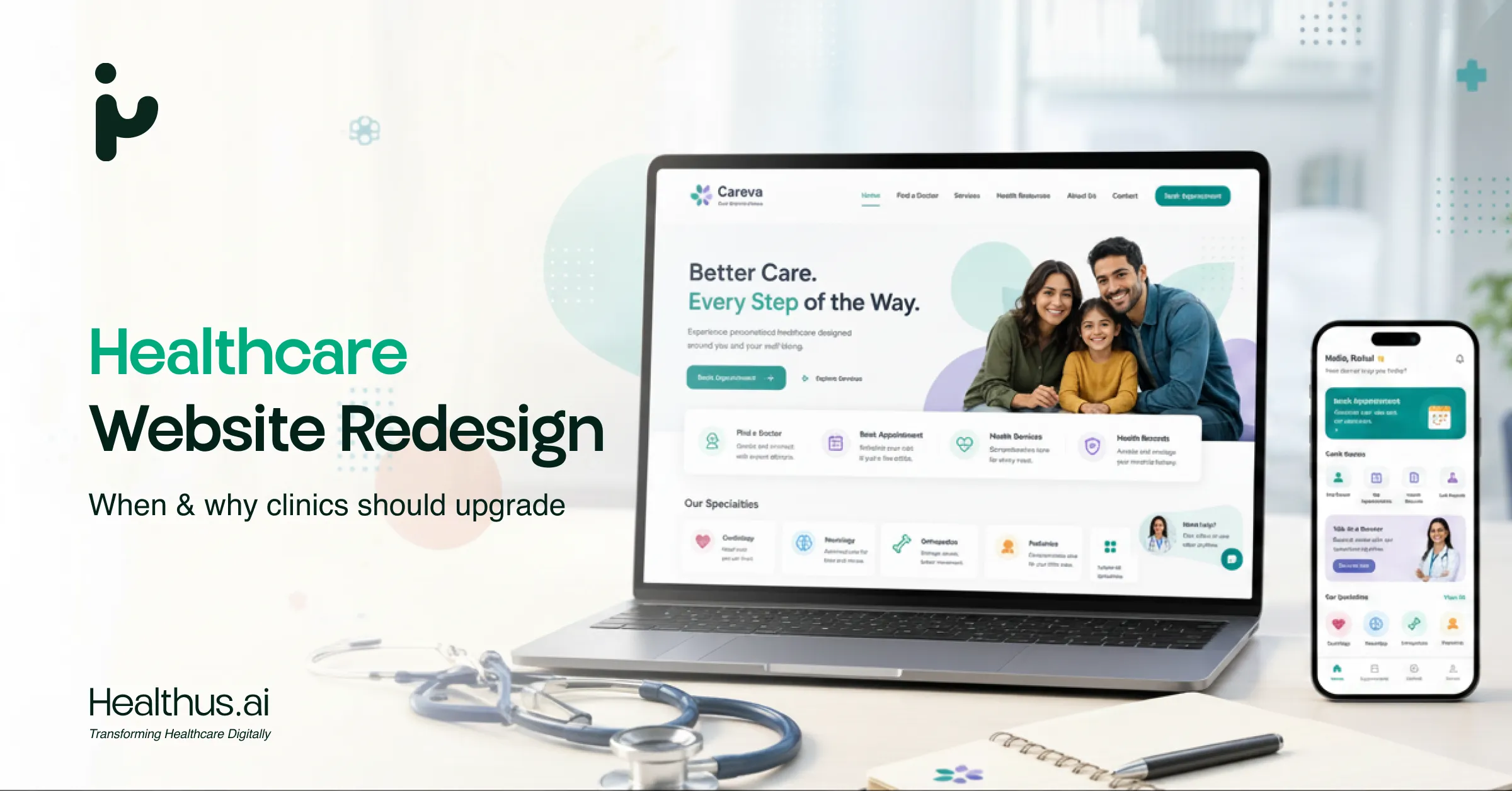
In today’s patient-first digital landscape, a clinic’s website is no longer just an online brochure; it is often the first point of contact between a patient and a healthcare provider. With rising expectations around speed, accessibility, and trust, healthcare website design has become a critical part of modern clinical success.
A well-planned healthcare website redesign not only improves aesthetics but also supports operational efficiency, patient engagement, and long-term growth. As the healthcare industry moves deeper into healthcare digital transformation, clinics that delay upgrading their websites risk losing relevance in an increasingly competitive space.
What Is Healthcare Website Redesign and Why Does It Matter?
Healthcare website redesign refers to the process of upgrading an existing medical website to improve its structure, functionality, user experience, and performance. This goes beyond visual changes and often includes backend improvements, mobile optimisations, security upgrades, and integration with digital tools.
A modern healthcare website design ensures patients can easily find information, book appointments, access reports, and trust the credibility of the clinic. In the era of healthcare digital transformation, websites act as the central hub connecting patients, doctors, and digital services.
Signs Your Healthcare Website Needs a Redesign
Recognising the right time for a medical website redesign is essential for avoiding patient drop-offs and digital inefficiencies. Clinics should consider upgrading their websites when they notice the following:
- A high bounce rate or declining traffic
- Poor mobile responsiveness
- Slow loading speed
- Outdated visuals or branding
- Difficulty in online appointment booking
- Lack of SEO visibility
If a clinic’s website feels outdated compared to competitors, it is usually a strong indicator that a redesign is needed. With rapid shifts in healthcare digital transformation services, patient expectations evolve quickly, making timely updates essential.
Why an Outdated Website Reduces Patient Trust
Patients often judge the credibility of a healthcare provider based on their online presence. An outdated website can unintentionally signal poor service quality or lack of technological adoption.
Modern healthcare website design plays a direct role in building trust through:
- Clean and professional interface
- Easy navigation for elderly and first-time users
- Secure patient data handling
- Clear communication of services
In a competitive environment influenced by the digital transformation in the healthcare market, trust is a major deciding factor for patients choosing between clinics.
How Digital Transformation Improves Healthcare Websites
Healthcare digital transformation encompasses not only internal hospital systems but also the online interactions between patients and healthcare providers.
A well-executed transformation improves website performance through:
- Integration of online booking systems
- Telemedicine capabilities
- AI-powered chat support
- Automated reminders and follow-ups
- Centralized patient records access
When combined with a structured healthcare website redesign, these upgrades create a seamless digital experience that improves both efficiency and patient satisfaction.
Benefits of Healthcare Website Redesign for Clinics
A medical website redesign delivers multiple advantages beyond visual improvements. Clinics can expect:
- Improved patient engagement
- Higher conversion rates for appointments
- Better search engine rankings
- Enhanced mobile usability
- Stronger brand credibility
Additionally, optimised healthcare website design supports faster communication between doctors and patients, reducing administrative burden and improving care delivery.
How Does Website Design Influence Patient Experience?
Patient experience is now a major benchmark in healthcare quality. A poorly structured website can create confusion, frustration, and loss of trust.
Effective healthcare website design improves experience by ensuring:
- Simple appointment scheduling
- Clear service categorization
- Accessible contact information
- Fast-loading pages
- Multi-device compatibility
When patients can easily interact with a clinic online, it reflects positively on the overall care experience.
What Role Does SEO Play in Healthcare Website Redesign?
Search visibility is a critical factor for attracting new patients. Without proper optimisation, even the most visually appealing websites may remain undiscovered.
A healthcare website redesign improves SEO by:
- Enhancing site structure and navigation
- Optimizing page speed
- Improving mobile usability
- Strengthening keyword architecture
- Updating outdated content
This is particularly important as competition grows within the healthcare digital transformation ecosystem, where clinics are actively competing for online attention.
How Digital Transformation Improves Healthcare Websites
Professional healthcare digital transformation services help clinics modernise their digital infrastructure beyond just site design.
These services often include:
- End-to-end website redevelopment
- Cloud-based patient systems
- Data security enhancements
- Automation of administrative tasks
- Integration of digital marketing strategies
By aligning technology with patient needs, these services ensure that healthcare providers stay relevant in a rapidly evolving digital environment.
What Trends Are Shaping Digital Transformation in the Healthcare Market?
The digital transformation in the healthcare market is expanding rapidly, driven by patient demand and technological innovation. Key trends include:
- Rise of telemedicine platforms
- AI-driven diagnostics and support tools
- Mobile-first healthcare experiences
- Personalized patient journeys
- Increased focus on cybersecurity
These trends are directly influencing how healthcare website design is approached, making adaptability a key requirement for clinics.
How Often Should a Healthcare Website Be Redesigned?
There is no fixed rule, but most healthcare websites should be evaluated every 2–3 years. However, redesign may be required sooner if:
- Technology becomes outdated
- Patient behavior shifts significantly
- Competitors offer better digital experiences
- Compliance requirements change
Regular updates ensure the website remains aligned with standards for healthcare digital transformation and evolving patient expectations.
Risks of Not Updating Your Healthcare Website
Failing to invest in a medical website redesign can lead to several challenges:
- Reduced patient inquiries
- Lower search rankings
- Decreased trust and credibility
- Poor mobile experience
- Security vulnerabilities
In a highly competitive digital healthcare space, neglecting website updates can directly impact patient acquisition and retention.
Conclusion: Upgrade Your Healthcare Website for Growth
A healthcare website redesign is no longer optional—it is a strategic necessity for modern clinics aiming to grow and stay competitive. As healthcare digital transformation continues to reshape patient expectations, clinics must ensure their digital presence reflects efficiency, trust, and accessibility.
From improving patient experience to strengthening online visibility, an upgraded healthcare website design plays a central role in long-term success. By embracing medical website redesign at the right time and leveraging healthcare digital transformation services, clinics can position themselves strongly within the evolving digital transformation in the healthcare market.
Your website shouldn’t hold your clinic back; it should drive growth, build trust, and convert visitors into patients. If your current site feels outdated, slow, or fails to reflect the quality of care you provide, it’s time to rethink your digital presence.Ready to upgrade your healthcare website? Choose Healthus.ai to create a high-performing, patient-centric website that supports your clinic’s growth, enhances user experience, and keeps you ahead in today’s digital-first healthcare landscape.
Frequently Asked Questions
It is the process of upgrading a clinic’s website to improve design, functionality, performance, and patient experience.
It helps build trust, improves usability, and ensures patients can easily access healthcare services online.
It enhances efficiency, improves patient communication, and integrates digital tools like telemedicine and online booking.
When the website is outdated, slow, not mobile-friendly, or failing to attract patient enquiries.
These are solutions that help healthcare providers modernise their systems, including websites, patient management tools, and automation.