





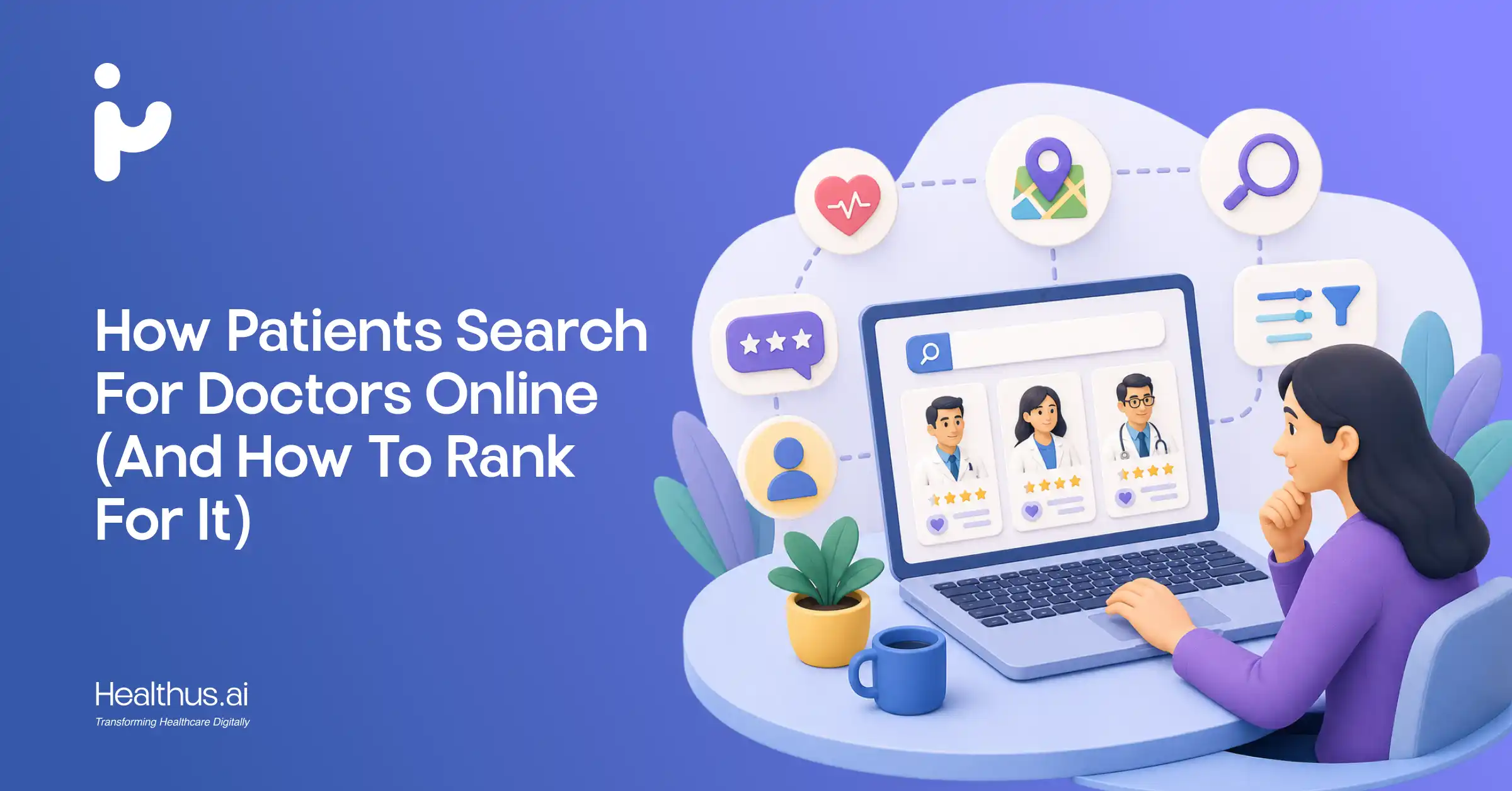
The modern patient journey starts with a search bar. It starts with googling symptoms and ends with finding a specialist for their specific struggle. While many doctors may focus on patient care alone, the evolving landscape demands going digital now more than ever. Relying on word of mouth alone is no longer enough to grow your medical practice.
Understanding how patients behave when searching for healthcare online is the secret to ranking highly in search results and gaining high-intent leads. While ranking alone may not be what sets your healthcare practice apart from competitors, it can be beneficial for building patient trust and retention and even for increasing credibility online.
This guide explains how patients search for doctors online and outlines the SEO strategies healthcare professionals can use to rank higher on Google.
How Patients Search for Doctors Online
Patients usually search with a combination of:
- Symptoms
- Specialties
- Location
- Treatment names
- “Near me” searches
- Doctor reviews
These searches often happen on mobile devices, especially during urgent situations.
Some common search examples include:
- Best cardiologist in Mumbai
- Dentist near me
- Thyroid cancer specialist in Bangalore
- Paediatrician in Prabhadevi
- Knee replacement surgeon with good reviews
- Hospital for cancer treatment near me
Google then shows:
- Google Business Profiles
- local map listings
- clinic websites
- review platforms
- hospital directories
This is why local SEO and website optimisation are critical for healthcare providers.
Understanding Patient Search Intent
To rank effectively, doctors must understand patient intent.
- Informational Searches
Patients looking for health information:
- Symptoms of thyroid cancer
- Causes of back pain
- Signs of heart disease
These users are often researching before consulting a doctor. Create educational blog posts that answer common patient questions.
- Transactional Searches
Patients ready to book:
- Dentist near me
- Best oncologist in Mumbai
- ENT specialist appointment
These are high-conversion keywords. Optimise service pages with speciality keywords, city/location keywords, and appointment CTAs.
- Navigational Searches
Patients searching for a specific doctor or clinic:
- Dr Amit Chakraborty reviews
- Cura Hospitals’ contact number
Optimise branded searches, doctor profile pages, and Google Business Profile as an SEO strategy for navigational searches.
- Commercial Investigation Searches
Patients comparing doctors, treatments, or healthcare providers before making a decision:
- Best oncologist in Mumbai
- Root canal vs dental implant
- Knee replacement cost in Bangalore
- Top cardiologist near me
- Best dental clinic for Invisalign
These users are evaluating their options. Build comparison pages, treatment guides, pricing pages, doctor profiles, patient testimonials, case studies, and reviews to help them make an informed choice.
Why Local SEO Matters for Doctors
Healthcare searches are highly location-based. Patients usually prefer nearby clinics and hospitals.
Google prioritises:
- Proximity
- Relevance
- Trust
- Reviews
That’s why searches like “cardiologist near me”, “dentist in Bandra West”, and “child specialist in Mumbai” generate strong local intent.
How Google Ranks Doctors
- Optimise Your Google Business Profile
Your Google Business Profile is often the first impression patients see.
Make sure your profile includes:
- Accurate clinic name
- Address
- Phone number
- Timings
- Services
- Website
- Patient reviews
- Updated photos
Regularly posting health tips, announcements, and treatment updates can also improve visibility.
- Use the Right Keywords
Keyword research is the foundation of healthcare SEO.
Include:
- Specialty keywords
- Treatment keywords
- Location keywords
For example, “best dermatologist in Mumbai”, “thyroid cancer treatment in Bangalore”, and “dental implants in Lower Parel”. Use these naturally in page titles, headings, content, image alt text, and meta descriptions
- Create Helpful Medical Content
Educational blogs help establish authority and improve rankings.
Topics patients commonly search include symptoms, treatment options, recovery time, surgery benefits, and prevention tips
Examples:
- Is Stage 1 Thyroid Cancer Curable?
- Benefits of Root Canal Treatment
- What Is Scarless Thyroid Surgery?
Consistent blogging improves organic traffic, trust, and keyword rankings
- Focus on Mobile-Friendly Website Design
Most healthcare searches happen on mobile devices.
A good medical website should:
- Load quickly
- Be easy to navigate
- Have click-to-call buttons
- Include appointment forms
- Display services clearly
Slow or outdated websites can increase bounce rates and reduce patient trust.
Reviews strongly influence healthcare decisions.
Positive reviews improve trust, local rankings, and click-through rates. Encourage satisfied patients to leave reviews on Google, Practo, and in hospital directories. Respond professionally to reviews whenever possible.
- Build Service-Specific Pages
Many clinics make the mistake of placing all services on one page. Instead, create dedicated pages for each service that you offer. This helps Google understand your expertise better.
- Use Medical Schema Markup
Schema helps search engines understand your website content. Healthcare websites should use:
- Local Business Schema
- Physician Schema
- FAQ Schema
- Medical WebPage Schema
- Review Schema
Schema can improve rich snippets, visibility, and click-through rate
- Optimise for “Near Me” Searches
“Near me” searches continue to grow rapidly.
To rank better:
- include city names naturally
- optimise Google Business Profile
- build local citations
- maintain NAP consistency (Name, Address, Phone)
Example:
Use “Dental Clinic in Lower Parel” instead of only “Dental Services”.
- Improve Website Trust Signals
Patients trust websites that show:
- Doctor credentials
- Awards
- Certifications
- Testimonials
- Before-after results
- Media mentions
Adding these elements can improve both SEO and patient conversion rates.
What Causes Healthcare Sites To Drop In Rankings?
- Keyword Stuffing: Avoid repeating keywords unnaturally.
- Duplicate Content: Every service page should have unique content.
- Ignoring Local SEO: Many clinics lose patients because their local presence is weak.
- No Blog Strategy: Without educational content, ranking becomes difficult.
- Poor Website Speed: Slow websites reduce rankings and patient engagement.
The Future of Healthcare SEO
Patient behaviour is evolving rapidly, as follows:
- Voice search
- AI-generated search results
- Mobile-first browsing
- Video-based healthcare education
Doctors who invest in the following:
- Quality content
- Local SEO
- Patient experience
- Trust-building
will continue to dominate search rankings.
Patient search behaviour is dynamic, blending local maps, AI answer engines, and deep review vetting. Ranking for it requires a balance of medical accuracy, informational/educational content, and technical execution.
If your name does not appear among the first few results when a patient searches for ‘best doctor near me’, and you are struggling to gain visibility, what should you do? Connect with the healthcare digital marketing specialists at Healthus.ai for a comprehensive SEO diagnostic audit today!
Frequently Asked Questions
A Google Business Profile is critical because healthcare searches are highly location-based. When patients search for terms like “dentist near me” or “cardiologist in Mumbai”, Google prioritises local map listings. An optimised profile ensures your accurate clinic name, address, phone number, hours, and patient reviews appear right at the top of search results, making it easy for patients to find and trust your practice.
Informational searches happen when patients are researching symptoms, causes, or treatments before booking an appointment (e.g., “Symptoms of thyroid cancer” or “Causes of back pain”). Doctors can rank for these by creating educational blogs. Transactional searches happen when a patient is ready to book an appointment (e.g., “dentist near me” or “best oncologist in Mumbai”). You should target these high-conversion keywords on optimised service and location pages, with clear calls to action (CTAs).
Putting all your services on one page makes it difficult for search engines like Google to understand your specific areas of expertise. Instead, you should create dedicated, individual pages for each treatment or speciality (e.g., a separate page for dental implants and another for root canals). This allows you to use specific keywords and structured medical data (schema markup) to rank higher and provide a clearer, more organised experience for the patient.