





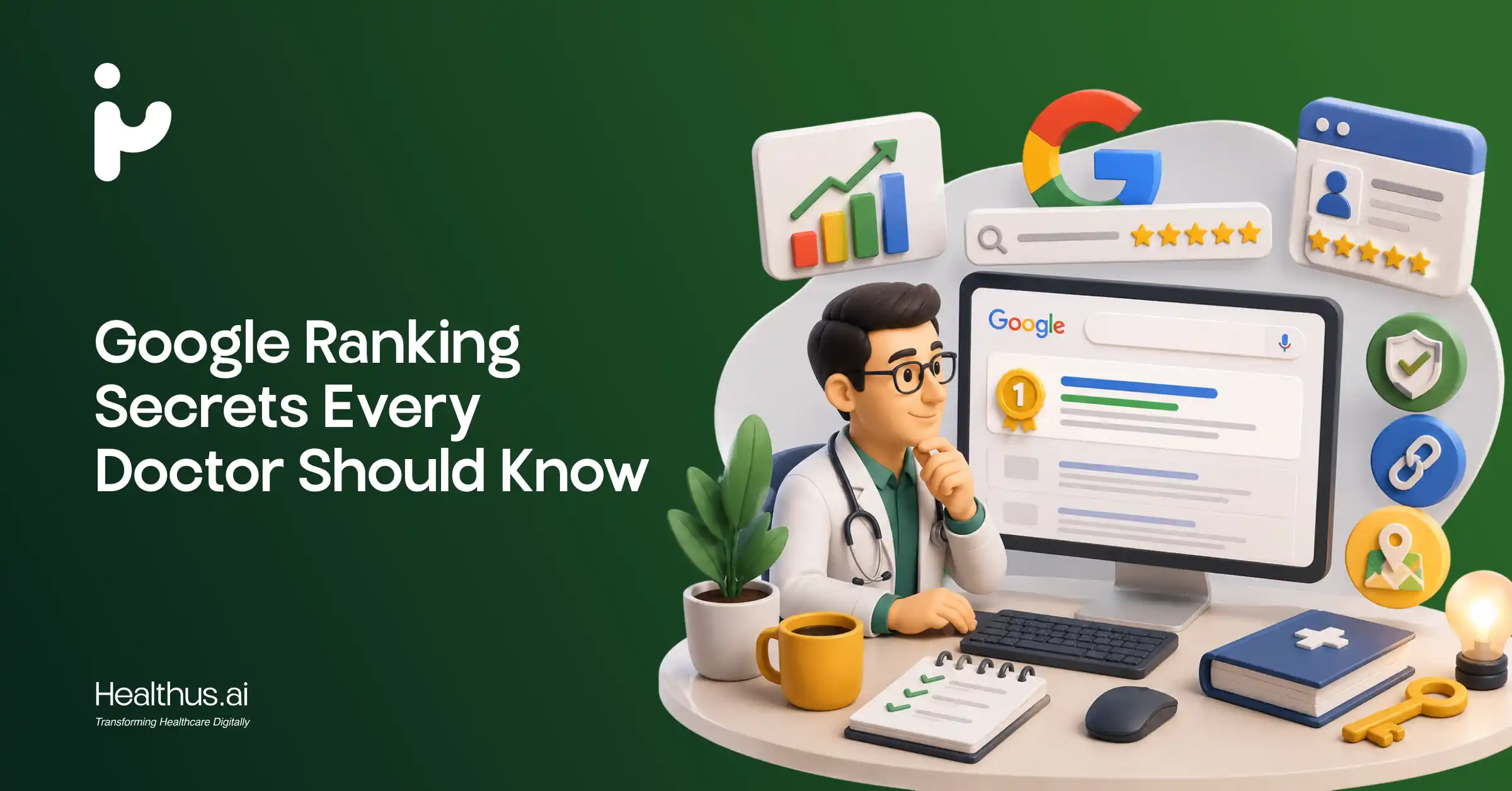
The gap between a thriving medical practice and a struggling one is increasingly digital. Patients today do not ask their neighbours for doctor recommendations the way they once did. They open Google, type a few words, and choose from what they see on the first page. If your name is not there, you simply do not exist for that patient.
Most doctors understand this concept in theory. Far fewer know the specific levers that influence Google. If you’ve ever wondered, “Why is my clinic not ranking on Google?” This blog discusses simple ways that can help you rank better on Google with healthcare SEO services.
What Google Is Really Evaluating
Before diving into tactics, it helps to understand how Google thinks. When someone searches for a doctor or specialist, Google is trying to answer three fundamental questions:
- Is this provider relevant to what the patient needs?
- Is this provider located close enough to be practical?
- Is this provider trustworthy?
Every ranking factor you will read about below ties back to one of these three pillars. Google is not mysterious; it is methodical.
Secret #1: Your Google Business Profile Is a Ranking Asset, Not Just a Directory Listing
Most doctors treat their Google Business Profile as a static business card, something to set up once and forget. In reality, it is one of your most powerful SEO tools, and Google actively rewards those who treat it that way.
An optimized profile does far more than just display your address. It signals to Google that your practice is active, accurate, and patient-focused.
If you wish to get more patients from Google searches, here’s what to prioritise:
- Keep your clinic name, address, and phone number (NAP) consistent with every other listing online
- Fill in every service category Google offers; do not leave fields blank
- Upload current, high-quality photos of your clinic, staff, and reception area
- Post regular health updates, seasonal advisories, or treatment spotlights directly on your profile
- Monitor and respond to every patient review, including negative ones
Doctors who post weekly to their Google Business Profile and maintain a steady flow of reviews consistently outrank those who do not, even when an inactive competitor may have a more impressive website.
Secret #2: Keywords Are About Patient Language, Not Medical Language
A common SEO mistake doctors make is writing for peers instead of patients. Your website may be technically impeccable and clinically precise, but if patients do not use those terms in their searches, Google will not connect them to you.
Patients search for the way they speak. They type:
- “Knee pain doctor near me”, not “orthopedic specialist for gonarthrosis”.
- “Thyroid lump treatment Mumbai”, not “thyroid nodule excision consultation”.
- The best skin doctor for acne scars in Pune is not a dermatologist for atrophic acne scarring.
How to find the right keywords:
Research what your patients actually type. Tools like Google’s autocomplete, the “People also ask” section, and platforms like Practo can give you direct insight into real patient language. Build your website content, headings, and page titles around those phrases, not the clinical terminology you use with colleagues.
One important note: Use keywords naturally. Cramming them into every sentence signals spam to Google and erodes patient trust the moment someone lands on your site.
Secret #3: Service Pages Trump General “About Us” Pages Every Time
Many clinics build a single page that lists every service they offer: joint replacement, sports injury, spine surgery, and arthritis treatment, all in one long block. While it may seem comprehensive to you, Google sees it as unfocused and vague.
The way Google evaluates expertise is through depth and specificity. When you create a dedicated page for each service, you give Google a clear signal: this doctor is a specialist in this specific treatment. It also gives you space to use relevant keywords, answer common patient questions, and build genuine authority around each topic.
For each service page, include:
- A clear description of the condition or treatment in patient-friendly language
- Who the treatment is for and what symptoms indicate they might need it
- What the procedure or consultation involves
- Recovery, outcomes, or what to expect
- A visible appointment booking call-to-action
A clinic with twelve well-crafted service pages will nearly always outrank a competitor with one dense “services” page, even if the competitor is more experienced.
Secret #4: Educational Content Builds Rankings and Referrals Simultaneously
Ranking on Google is not just about your service pages. A significant portion of patient searches are informational, people researching symptoms, seeking second opinions, or trying to understand a diagnosis they just received.
By creating educational blog content that answers these questions, you accomplish two things at once: you rank for high-volume informational search terms, and you build trust with patients before they have even booked an appointment.
Topics that consistently perform well in healthcare:
- Condition explainers: “What causes chronic lower back pain?”
- Procedure guides: “What to expect during a colonoscopy?”
- Comparison pieces: “Laser therapy vs. surgery for kidney stones”
- Recovery timelines: “How long does recovery take after rotator cuff surgery?”
- Myth-busting: “Common misconceptions about chemotherapy”
Publishing one well-researched, genuinely helpful blog post per week can, over six to twelve months, transform your website into a trusted medical resource and a consistent source of new patient appointments.
Secret #5: Reviews Are a Ranking Signal, Not Just a Vanity Metric
Doctors often feel uncomfortable actively requesting reviews. It can feel transactional or self-promotional. But patient reviews serve a dual purpose that goes beyond optics: they directly influence where Google places your clinic in local search results.
Google uses the volume, recency, and sentiment of reviews as a proxy for trustworthiness. A practice with 200 reviews averaging 4.6 stars will outrank a practice with 40 reviews averaging 4.9 stars in most cases. Recency and volume matter as much as rating.
A practical approach to gathering reviews:
- Train your reception team to mention reviews briefly during checkout for satisfied patients
- Send a follow-up SMS or email after appointments with a direct link to your Google review page
- Make it a 10-second process for the patient; making it a long process will discourage patients from leaving a review.
- Respond to every review. When you thank positive reviewers and professionally address concerns, you show Google (and prospective patients) that you are engaged and accountable.
Do not underestimate the power of responding to negative reviews well. A thoughtful, empathetic response to a complaint often impresses prospective patients more than the five-star reviews surrounding it.
Secret #6: Technical Health Is the Foundation Everything Else Sits On
You can have the best content, the most reviews, and an optimized Google Business Profile and still rank poorly if your website has technical problems. Google will not prominently recommend a website that frustrates users.
The non-negotiables for a healthcare website in 2026:
- Page speed: Your site should load in under three seconds on mobile. Google’s Core Web Vitals directly factor into rankings. Slow sites are penalised.
- Mobile responsiveness: The majority of healthcare searches happen on smartphones. If your site is hard to use on a small screen, you lose both rankings and patients.
- Secure HTTPS connection: An unsecured website is a red flag to both Google and to patients sharing personal information.
- Clear navigation: Patients searching for a specific service should reach that page in one or two clicks, not five.
Run your website through Google’s PageSpeed Insights tool. If your mobile score is below 70, you have technical work to do before your content strategy reaches its full potential.
None of these strategies will produce overnight results, and any agency that promises otherwise should be treated with scepticism. Healthcare SEO services are a compounding investment. A well-optimized Google Business Profile, paired with consistent reviews, service-specific pages, and regular educational content, builds authority over months.
The doctors who dominate local search results in competitive cities like Mumbai, Bangalore, and Delhi did not get there by chance. They committed to digital visibility as a practice growth strategy, not an afterthought.
Struggling to understand where your practice currently stands in Google’s eyes? The team at Healthus.ai offers comprehensive SEO for healthcare services in India and abroad and diagnostic audits to help you know exactly what to fix, what to build, and where your biggest opportunity lies.
Frequently Asked Questions
Most practices begin to see measurable movement in local rankings within three to six months of consistent effort. Competitive markets may take longer, but the trajectory is reliable when the fundamentals are done well.
Directly, social media does not influence Google rankings. Indirectly, it can drive traffic to your website and generate branded searches, both of which are positive signals for Google.
Your Google Business Profile is critical for appearing in the local map pack, but it works best when paired with a well-optimized website, consistent reviews, and local citations. Treating it as your only channel limits how far your ranking can go.
Claim and fully complete your Google Business Profile if you have not already. Then build a habit of requesting patient reviews after every positive appointment. These two actions alone can move the needle significantly within a matter of weeks.