






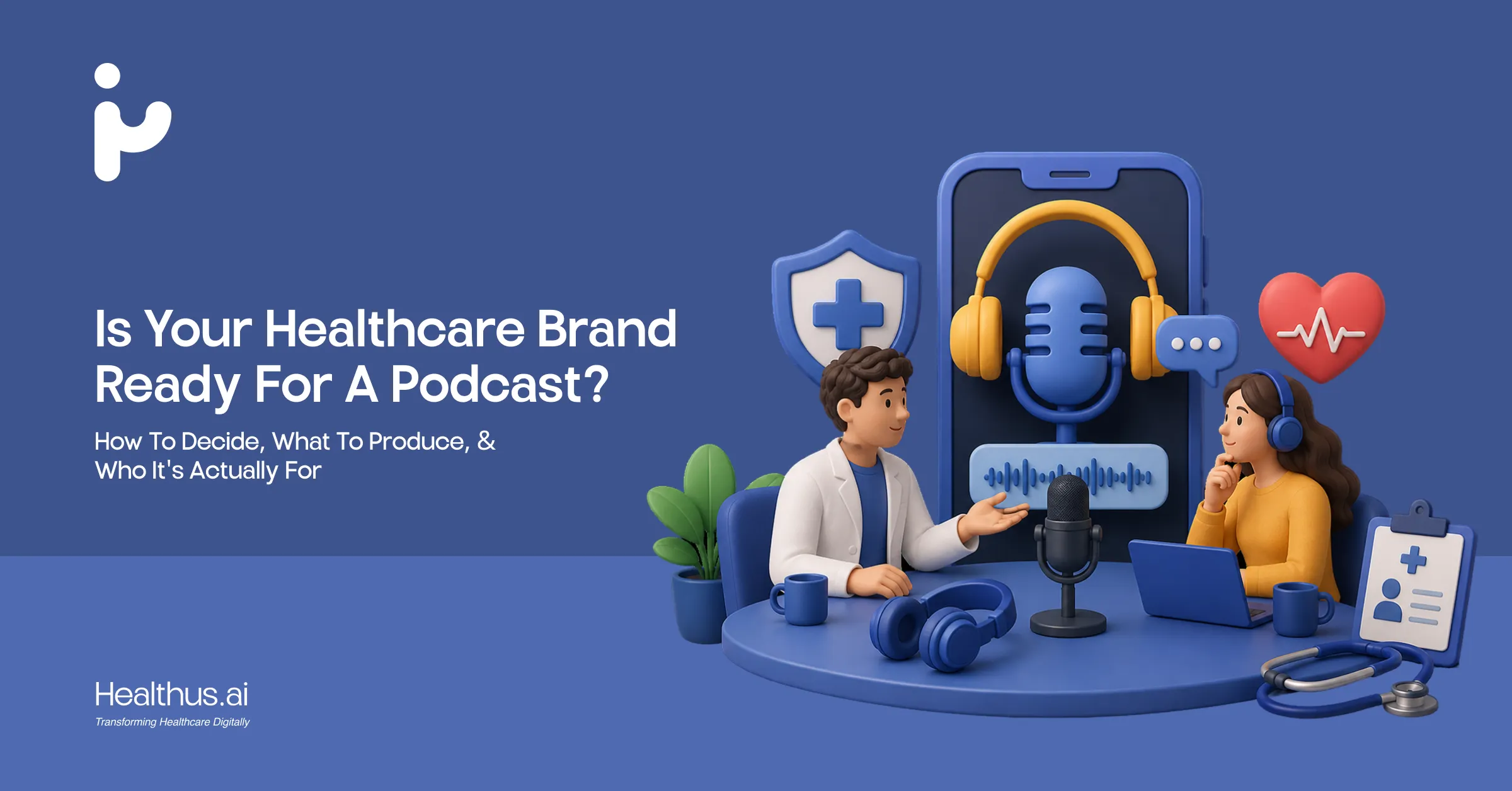
Are you a doctor, a healthcare professional, or a healthcare brand thinking of starting a new podcast? Podcasts are all the rage in today’s digital world. They’re bite-sized pieces of content easy for the audience to consume.
But before you hit “record”, you need to ask yourself: is your brand actually ready for the mic?
Launching a show takes more than just a good microphone and a passion for medicine. To stand out in a sea of medical podcasts, you need a clear strategy, a defined audience, and a deep understanding of what it takes to keep listeners coming back.
Here is how to decide if you’re ready, what you should talk about, and who you should actually be targeting.
How to Decide: Is Your Brand Actually Ready?
The podcast market is booming, and some of the best healthcare podcasts out there succeed because they treat the medium like a long-term commitment and not a passing trend.
Before diving in, ask your team these three questions:
1. Do we have the bandwidth?
Consistency is key. Producing a high-quality show requires scripting, interviewing, editing, and compliance checks (hello, HIPAA).
2. What is our unique angle?
The world doesn’t need another generic health advice show. You need a specific niche, whether that’s cutting-edge biotech, patient advocacy, or the business of healthcare podcast style that dissects industry trends and management.
3. How will we measure success?
If you’re looking for immediate ROI or millions of downloads overnight, podcasting might disappoint you. If you’re looking to build deep brand authority and trust, you’re in the right place.
Sounds exhausting? Meet Creative Labs at Healthus.ai. We do everything for you, from scripting to deciding who will be the next guest on your podcast!
Who It’s Actually For: Defining Your Audience
One of the biggest mistakes healthcare brands make is trying to talk to everyone. To cut through the noise of mainstream healthcare podcasts, you must pick a specific side of the stethoscope.
The Consumer/Patient Audience
If your goal is to build community trust or drive patient acquisition, your content should be accessible, empathetic, and jargon-free. Think “Wellness 101”, dismantling medical myths, or deep dives into living with specific chronic conditions.
The B2B/Industry Audience
If you are a healthcare B2B brand, a hospital network executive, or a medical device company, your audience isn’t the general public. It’s peers, stakeholders, and providers. This is where you focus on macro trends, policy changes, and the financial ecosystem of medicine, essentially creating a staple in the business of healthcare podcast space.
What to Produce: Choosing Your Format
Once you know who you are talking to, you need to decide what you’re going to give them. The most successful medical podcasts usually fall into one of three formats:
The Expert Interview: Hosting conversations with industry leaders, researchers, or specialised clinicians. This builds immense network authority and keeps your content fresh.
The Narrative/Deep-Dive: Solo or co-hosted episodes that take a complex medical topic (e.g., “The Future of AI in Radiology”) and break it down into an engaging, story-driven narrative.
The Q&A / Case Study: Answering real questions from patients or discussing anonymised, fascinating case studies that highlight your team’s clinical problem-solving skills.
The Legal Checkup: Navigating Compliance and Regulation
Before you hit the record button, there is one non-negotiable hurdle every healthcare podcast must clear: compliance. Unlike a standard business or entertainment podcast, talking about medicine online requires strict adherence to legal and ethical boundaries.
To ensure your show doesn’t accidentally land your brand in legal trouble, keep these three things in mind:
- The HIPAA Hurdle (Patient Privacy): Even if you are sharing a fascinating clinical case study, you must ensure all patient data is completely anonymised. De-identifying data goes beyond just changing a name; ensure no specific dates, rare combinations of symptoms, or geographic markers can inadvertently identify a real patient.
- The “Education, Not Advice” Disclaimer: Every single episode should feature a clear audio and written disclaimer. Listeners need to know that your podcast is for educational and informational purposes only and does not constitute formal medical advice, diagnosis, or a doctor-patient relationship.
- FDA and Off-Label Rules: If your brand represents a pharmaceutical company or a medical device manufacturer, you must be incredibly cautious about how products are discussed. Mentioning “off-label” uses for drugs or devices on a public broadcast can trigger massive regulatory penalties.
Pro Tip: Establish a streamlined compliance workflow from day one. Run your episode outlines and final audio edits by your legal or medical review team before scheduling publication. At Creative Labs by Healthus.ai, we handle all of this for you!
The Diagnosis: Should You Press Record?
If you have the time to dedicate, a unique perspective to share, and a clear understanding of your target listener, then your healthcare brand is absolutely ready for a podcast.
Podcasting allows you to show the human voice behind the clinical, sterile walls of medicine. It builds unmatched loyalty and positions your brand as a forward-thinking thought leader in today’s digital health ecosystem. So, grab that mic, your audience is waiting to listen.
The future of medical podcasts is here! Reach out to Creative Labs at Healthus.ai to start your medical podcast and be the next celebrity healthcare professional.
Frequently Asked Questions
Becker’s Healthcare Podcast is widely considered the top choice for industry executives, while The Huberman Lab leads global charts for general health and wellness consumers.
The global charts are dominated by The Joe Rogan Experience, Crime Junkie, The Daily, Call Her Daddy, and SmartLess. These are closely followed by Stuff You Should Know, Dateline NBC, This Past Weekend w/ Theo Von, MrBallen Podcast, and New Heights.
Industry leaders highly recommend Healthcare Executive Podcast and The Business of Healthcare, while clinicians often tune into The Curbsiders. For general health and consumer wellness, Chasing Life with Dr Sanjay Gupta and The Peter Attia Drive are excellent choices.
The 3 C’s represent the core ethical and legal pillars of patient care: Consent, Capacity, and Confidentiality. They ensure patients are legally capable of making decisions, provide voluntary permission, and have their private medical information protected.
The 4 P’s define the modern, proactive framework of healthcare: Predictive, Preventive, Personalised, and Participatory. This approach uses data to anticipate risks, stop illnesses early, tailor treatments to unique biology, and encourage patients to actively manage their own health.