






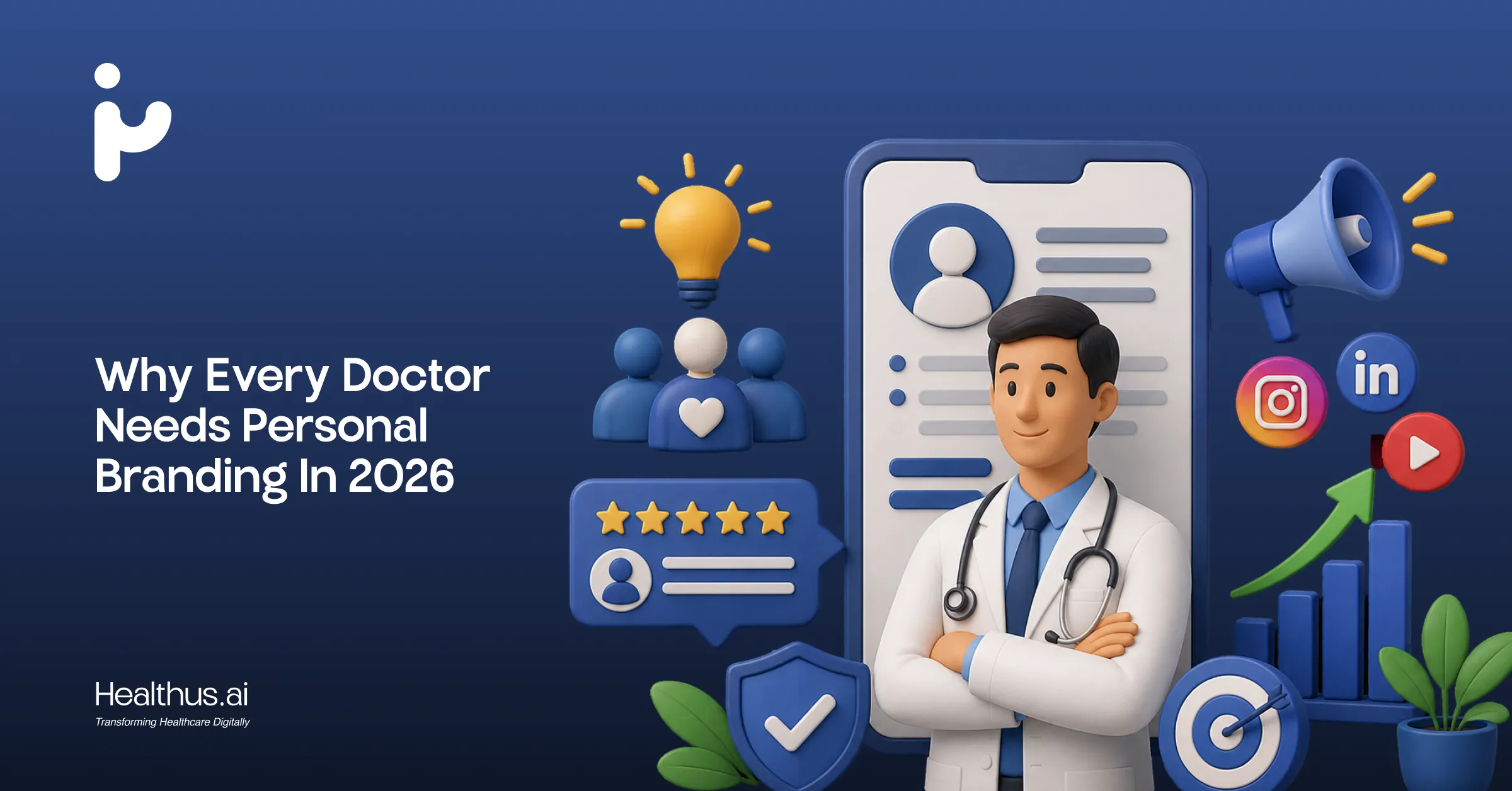
Almost nobody walks into a clinic without checking the doctor online first, even when a friend has already referred them. What that search shows them is how they decide whether to book the appointment or not.
This is what personal branding for doctors actually comes down to: being visible, searchable and trustworthy before the patient even walks in.
What Is Personal Branding, and Why Does It Actually Matter for Doctors?
Personal branding is how a doctor comes across before a patient ever meets them and what people see, read, and feel when they look the doctor up online. For most people, that is what they find first: a website, a few reviews, maybe a social media post explaining something confusing in plain language. Long before a consultation begins, that is already shaping whether they trust you.
For doctors specifically, this matters more than in most professions. Patients aren’t choosing a product but deciding who to trust with something personal, often their own body; their family’s health; and sometimes a diagnosis that changes how they live. They are making that decision based mostly on what they can find online.
That is the real importance of personal branding in medicine: it is not about visibility for its own sake; it is also about being trusted with something that actually matters.
Not Promotion, Just Education
Most doctors avoid personal branding because it feels like bragging. That discomfort mostly disappears once the goal shifts from “Look how good I am” to “Here is something useful you should know.”
A short explanation of a common condition, a myth corrected in plain language, a clear answer to a question patients ask all the time; none of that is self-promotion. It is just a doctor doing the same thing they do in the clinic, but publicly.
Done consistently, this is what actually builds trust. You are not claiming to be the best, just being helpful enough that patients start noticing.
Where Doctors Should Actually Show Up
That is the most common question a doctor has when they think of personal branding. You don’t have to show up everywhere. Every platform you add is one more thing you have to stay consistent with, so you don’t need to start four things at once.
Pick one or two platforms that match how you communicate and where your patients already are, and the right platform usually depends on your speciality:
| Channel | Target Specialties | Key Value Proposition / Why It Works |
| Cardiology, oncology, nephrology | Best for academic-adjacent fields where peer-to-peer referrals are just as critical as patient trust. | |
| Practice Blog | General practitioners, physiotherapists, dentists | Strengthens local SEO over time, capturing high-intent patients searching for a “doctor near me”. |
| YouTube | Surgeons, paediatricians, gynaecologists | Face-to-face video explanations (especially in local languages or Hindi) humanise the doctor, easing patient anxiety. |
| Dermatologists, wellness clinics, fertility centres | Visual-first content and quick tips perfectly engage a younger, highly visual, urban demographic. | |
| All medical practices (Universal) | Delivers near-instant open rates for direct patient communication, appointment reminders, and quick health tips. |
Whatever channels you choose, one thing is not optional: a solid, well-designed website. It is often the first thing a patient checks to confirm credibility, no matter which platform brought them there.
Building a Brand That Sounds Like You
Once you know where you are showing up, the next is what you will actually say and whether it still sounds like you, not a generic template. Here is what you should begin with:
Start with an audit
- Search your own name in an incognito window
- Check for your listings, old contact details, and reviews for your hospital/clinic
- Fixing what is already visible is more important than adding anything new
Find content in your own week
Do not blindly follow an Instagram guru or AI-driven strategy; start with:
- The questions patients ask repeatedly
- The misconceptions you have to keep correcting
- A short explanation of something you keep repeating several times a week
Keep it sustainable
- An hour or two a month is usually enough, batching a few posts or short videos at once
- Share the knowledge and the general scenario. Never anything that could identify an actual patient, unless you have their explicit, informed consent to share it.
Handle reviews with the same discipline
- Thank people for good reviews without over-explaining
- For a bad one, respond once, calmly, and if the situation needs more explanation, have your office follow up directly
- Never argue with a review in public
What You Actually Gain From Personal Branding
The real payoff is not about the number of followers or likes. The real gain shows up slower, but it stays longer.
- Referrals convert faster
- You stop being limited to your immediate radius
- You start getting invited to events, panels, conferences and more
- Trust compounds over time
None of this comes from one good post. It is what happens when being visible and useful is kept up long enough that patients stop needing convincing.
Should You Do This Yourself or Work With a Personal Branding Agency?
For most doctors, the limiting factor to personal branding isn’t willingness; it is usually a lack of time. Between clinic hours, patient calls, and everything else that keeps them occupied, they fail at being consistent in sharing the content.
It is not a priority problem; doctors know personal branding matters. It is a time problem, because nothing about it feels urgent enough.
This is usually where a personal branding agency, like Healthus.ai, is worth considering, not to replace your voice, but to keep it showing up consistently without it becoming one more thing you have to manage yourself.
Common Mistakes Doctors Make
The instinct to post something, and then anything to fill the week’s quota, is where most personal branding efforts go wrong. A few patterns show up again and again:
- Posting inconsistently, then disappearing for months: A profile with three posts from a year ago might sometimes work less in favour of your work than no profile at all.
- Copying a template voice: Generic, overly polished captions don’t sound like a real doctor, and patients notice the difference.
- Ignoring reviews entirely: Silence on a bad review often reads as guilt, even when nothing was actually wrong.
- Trying to be on every platform at once: Being unable to handle multiple platforms usually means it gets more and more difficult to put out content in time.
- Treating it as a one-time project: A brand isn’t built in a single weekend. It takes regular effort, and it has to keep going to actually hold up.
None of these are difficult to avoid on their own. The pattern connecting them is the same: branding treated as an occasional task instead of something built into how you already practise.
Conclusion
A personal brand doesn’t replace good medicine; it just makes sure patients can actually find and trust the doctor behind it before they ever walk in for a consultation.
Not sure where to start? Don’t have the time to keep it consistent? We understand.
Book a strategy call with Healthus, and we will help build a brand that sounds like you.
Frequently Asked Questions (FAQs)
Anything a patient sees, reads, or hears about you outside the clinic, your website, your reviews, or a post explaining something in plain language. It is less about a polished image and more about what patients already find when they look you up.
Video does tend to work best right now; patients trust a face more than text. But it’s not the only way in. Regular, updated blogs, a thoughtful LinkedIn post, or simply keeping your reviews and profile accurate all still work. Do what you can actually keep up with; something consistent will always beat nothing at all.
Dermatologists, cosmetic practices, and wellness clinics tend to see the most engagement on Instagram, since quick before-and-after context and visual tips travel faster than long-form writing. The right platform follows the speciality, not a fixed formula.
Not if it’s done right. Most of what builds a genuine presence, answering common questions and sharing a quick insight, comes from things you are already saying in the clinic. You are not creating new content; you are just writing or recording what you already know.
You almost certainly do. The questions patients ask you every week and the misconceptions you keep correcting; that is the content. It doesn’t need to be original in a clever sense, just genuinely useful.