





Search behaviour in healthcare is changing faster than in almost any other industry.
Patients are no longer just typing “dentist near me” or “cardiologist in Mumbai”. They are asking full questions:
- “Why does my chest hurt at night?”
- “Which doctor should I see for knee pain?”
- “Is tooth pain normal after a filling?”
- “Who is the best paediatric dentist near me?”
And increasingly, those questions are being asked not just on Google but on AI-driven platforms like voice assistants, generative search results, and healthcare-focused AI tools.
This shift is why AEO has become a critical layer of local SEO for healthcare services. Clinics that still rely only on traditional keyword ranking risk becoming invisible, especially to patients who are actively seeking answers, not ads.
What Is AEO (Answer Engine Optimisation)?
Answer Engine Optimisation (AEO) is the practice of structuring content so that search engines and AI platforms can directly extract, understand, and surface answers to user questions.
In healthcare, AEO focuses on:
- Clear, medically accurate answers
- Question-based content
- Structured formatting (FAQs, headings, schema-ready sections)
- Local relevance and trust signals
Unlike traditional SEO, which aims to rank pages, AEO aims to be the answer.
Why AEO Matters More in Healthcare Than Other Industries
Healthcare searches are fundamentally different from retail or lifestyle searches.
Patients:
- Search during moments of anxiety or uncertainty
- Want reassurance, not marketing language
- Trust clear explanations over promotional claims
- Often search locally because care must be accessible
This makes healthcare uniquely suited to answer-first optimisation.
When a platform like Google, a voice assistant, or an AI system chooses one answer to show, it prioritises:
- Clarity
- Authority
- Relevance
- Local credibility
That is exactly what AEO is designed to deliver.
AEO vs Traditional Local SEO in Healthcare
Traditional local SEO focuses on:
- Google Business Profile optimisation
- Location-based keywords
- Citations and reviews
- Map pack visibility
AEO builds on this foundation and answers a different question:
“When a patient asks a health-related question, will your clinic be the one providing the answer?”
Both are essential, but AEO is what future-proofs healthcare visibility.
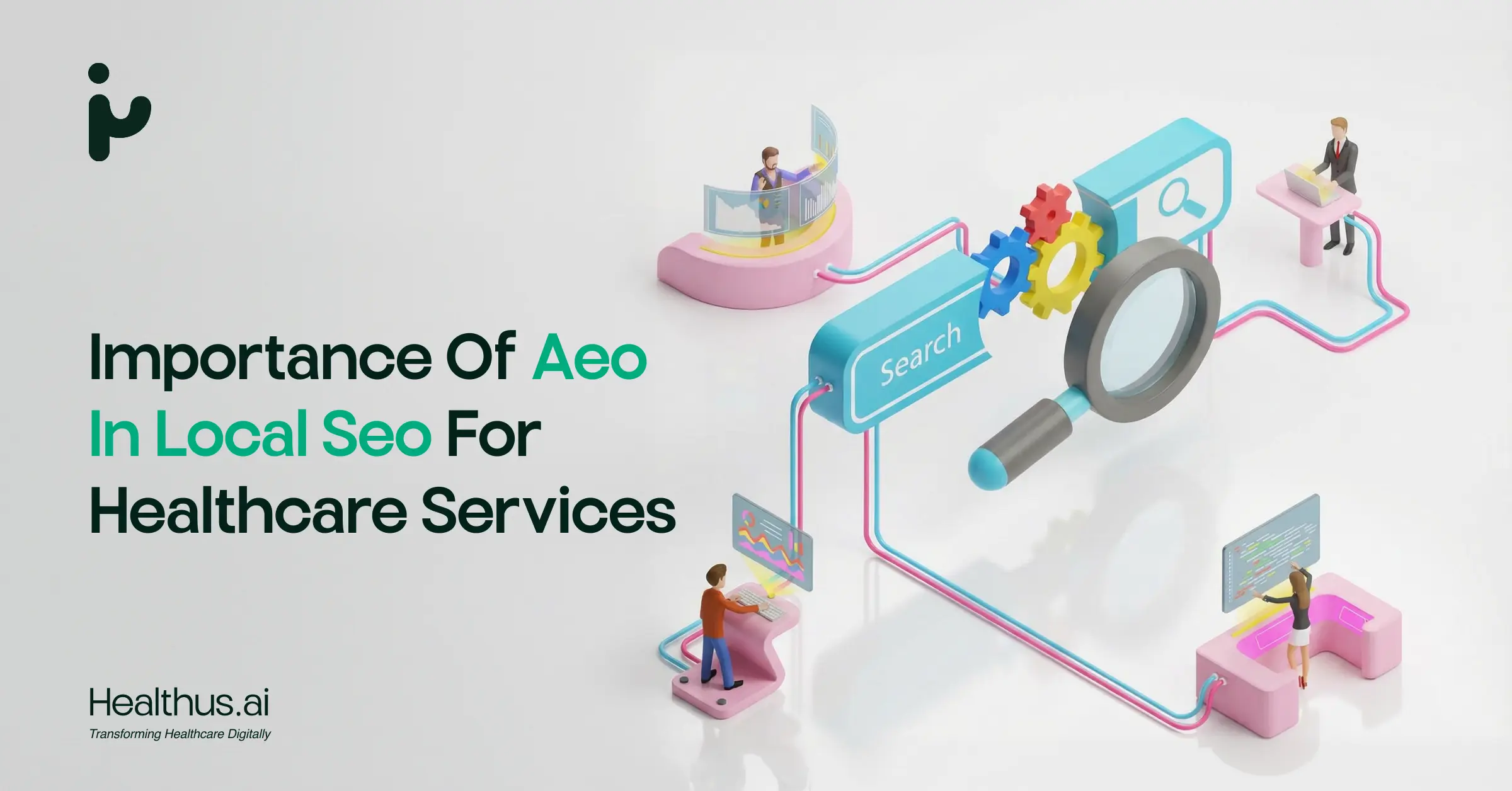
Importance of AEO in Local SEO for Healthcare Services
1. Patients Search With Questions, Not Keywords
Healthcare queries are naturally conversational.
Instead of:
- “ENT Mumbai”
Patients ask:
- “Why do I keep getting ear infections?”
- “Which doctor treats chronic sinus problems?”
AEO helps healthcare websites:
- Match these natural-language questions
- Provide direct, trustworthy answers
- Appear in featured snippets, voice search, and AI summaries
2. AI Platforms Are Becoming Primary Discovery Channels
AI-driven systems increasingly guide patients toward:
- Conditions
- Specialists
- Next steps
This is where medical practice SEO for AI platforms becomes critical.
AI systems favour:
- Well-structured educational content
- Explicit question-and-answer formats
- Clear attribution to medical professionals
- Consistent local signals
If your website isn’t optimised for AEO, AI platforms may summarise healthcare information without ever referencing your practice.
3. Local Intent + Medical Intent = High-Value Traffic
Local healthcare searches have strong intent:
- The patient is concerned.
- The patient is seeking care.
- The patient wants nearby solutions.
AEO ensures that when patients ask:
- “When should I see a cardiologist near me?”
- “Is tooth pain serious enough to see a dentist?”
Your clinic becomes the trusted local answer, not just another listing.
4. AEO Builds Trust Before the First Consultation
In healthcare, trust is built before conversion.
Answer-driven content:
- Reduces fear
- Sets expectations
- Demonstrates expertise
- Helps patients feel informed
By the time a patient clicks “Book Appointment”, they already feel understood.
This is especially powerful for:
- Speciality clinics
- Paediatric practices
- Surgical or interventional care
- Chronic condition management
How AEO Supports Medical Practice SEO for AI Platforms
AI platforms don’t “rank” pages the way Google traditionally does. They interpret, summarise, and recommend.
For medical practices, this means content must be:
- Contextually clear
- Medically accurate
- Ethically framed
- Locally anchored
AEO helps by:
- Structuring answers in digestible segments
- Using medically correct but patient-friendly language
- Avoiding exaggerated claims
- Reinforcing expertise without sounding promotional
This makes your content safer and more reliable for AI citation.
Core Elements of AEO for Healthcare Local SEO
Question-Led Content Architecture
Each page should answer:
- What is the condition?
- Why does it happen?
- When should a patient worry?
- Who should they see?
- What happens next?
Clear Headings and Logical Flow
AI systems prefer:
- Descriptive H2s and H3s
- Predictable information patterns
- Explicit answers under clear questions
FAQ Sections That Are Actually Useful
Not filler FAQs, but real patient questions that:
- Align with Google’s “People Also Ask”
- Match AnswerThePublic-style queries
- Reflect how patients speak, not how doctors chart
Local Authority Signals
- Clinic name
- Location references
- Specialist credentials
- Clear scope of care
The Role of FAQs in AEO for Healthcare
FAQs are one of the most powerful AEO tools when done right.
They:
- Help pages appear in rich results
- Feed voice search answers
- Support AI-generated summaries
- Capture long-tail patient intent
But in healthcare, FAQs must be:
- Calm, not alarming
- Informative, not diagnostic
- Ethical and accurate
AEO as a Competitive Advantage in Healthcare
Many healthcare providers are still focused on:
- Keywords alone
- Ads without education
- Generic service pages
Practices that invest in AEO-driven local SEO gain:
- Higher-quality patient traffic
- Better-informed consultations
- Stronger trust signals
- Visibility across AI-powered platforms
In an era where patients increasingly rely on answers before appointments, AEO is no longer optional.
Conclusion
The importance of AEO in local SEO for healthcare services lies in one simple truth:
Patients don’t search like marketers think; they search like humans.
Healthcare practices that meet patients at the question stage and not just the booking stage become the most trusted, most visible, and most chosen.By combining medical practice SEO for AI platforms with strong local foundations, healthcare providers can remain discoverable, credible, and relevant in an AI-first search landscape.
Frequently Asked Questions
AEO in healthcare SEO focuses on optimising content so search engines and AI platforms can directly present your clinic as a trusted answer to patient health questions.
Local patients often ask condition-based questions before choosing a provider. AEO ensures your practice appears when those questions are answered.
SEO focuses on ranking pages. AEO focuses on being selected as the answer in featured snippets, voice search, and AI-driven results.
Yes. Voice assistants rely heavily on AEO-structured content, especially for healthcare-related questions.
When done correctly, using accurate, patient-friendly, non-diagnostic language, AEO improves clarity without increasing medical risk.
AEO strengthens topical authority, which indirectly supports local rankings and increases trust signals associated with your business profile.
Absolutely. AEO often favours clarity and relevance over brand size, giving smaller practices a strong visibility advantage.
No. AEO complements local SEO. Both are necessary for modern healthcare visibility.
Healthcare AEO content should be reviewed regularly to ensure medical accuracy and alignment with evolving patient search behaviour.