





Nobody flips through a phone book anymore when their healed root canal hurts at 9 p.m. or when someone finally decides to look into clear aligners. They pull out a phone, type “dentist near me” or “emergency dental clinic in Mumbai”, and pick from whatever three practices Google puts in front of them.
That’s really the whole story now. For dental practices, showing up in that local pack isn’t a nice-to-have marketing tactic anymore; it’s become the main channel through which new patients find you. The difference is that dentistry doesn’t follow the same rules as a coffee shop or a landscaping company. You’re bound by advertising standards from your state dental board, by HIPAA, and by the general expectation that anything you say about a patient stays private. So the real challenge isn’t just to “rank higher”. It’s ranking higher without stepping on a regulatory landmine.
Below is a practical walkthrough for building a local search presence that attracts patients while keeping your practice compliant with clinical and legal standards.
Why Local SEO Matters So Much for Dental Growth
Nobody drives across town for a routine cleaning. Dental care is about as local as a service gets, which means proximity often decides the appointment before price or reviews even enter the picture.
When someone searches for a dentist, Google typically shows two things:
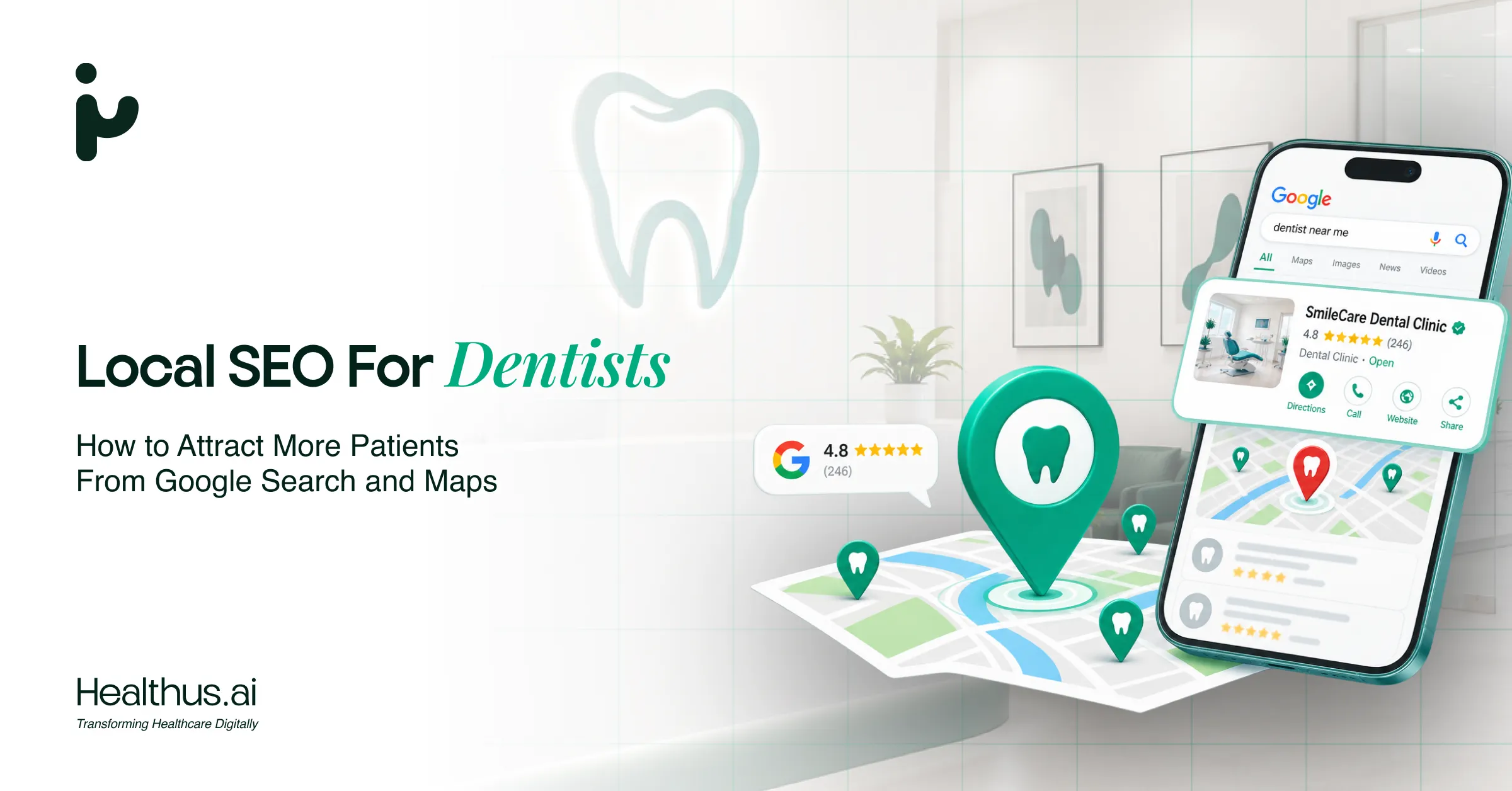
- The Local Map Pack (3-Pack): that box near the top with three practices, a mini map, star ratings, and contact info.
- Organic local results: the regular website listings underneath it.
Land in both spots and you’ve essentially won the first impression. A strong local footprint shows a searching patient that you’re legitimate, easy to reach, and active in the community. Miss that mark, and the practice two blocks over gets the call instead, even if your service is objectively better.
- Get Your Google Business Profile Right
Everything downstream starts with your Google Business Profile (formerly known as Google My Business). It’s the data source that Maps and local search pull directly, so a sloppy setup here undermines everything else you do.
- Keep your NAP identical everywhere: Name, address, and phone number; these need to match, word for word, across your website, your GBP listing, every directory you’re on, and your social profiles. It sounds trivial, but writing “Block A” on one platform and “A” on another is enough to make search algorithms treat them as two different businesses, which quietly erodes your ranking authority.
- Pick categories with intention: Your primary category (dentist, cosmetic dentist, paediatric dentist, orthodontist, whatever fits) determines which searches even see your profile in the first place. Secondary categories like Dental Clinic, Emergency Dental Service, or Teeth Whitening Service provide a fuller view without diluting your main focus.
- Describe your services like a clinician, not a copywriter: List out what you actually do: root canals, implants, preventative cleanings, and aligner consults, in plain, factual language. Skip the superlatives. Patients (and reviewers and dental boards) tend to notice when a service description starts sounding more like a sales pitch than a description of care.
- Structure Your Website Around Local Intent
Search engines need to understand not just what you do but also where you do it, and your site’s structure is how you communicate that.
- Give major treatments their own pages: Cramming implants, Invisalign, and whitening onto one generic “Services” page wastes an opportunity. A dedicated page at something like /services/dental-implants can be built specifically around that treatment’s search terms, which a shared page simply can’t compete on.
- Build separate pages for each location, if you have more than one: A multi-location practice, or one serving several distinct neighbourhoods, benefits from individual landing pages that include:
- An embedded map pointing to that specific office
- Real directions: landmarks, parking notes, the small details patients actually want
- Office-specific phone numbers and hours
- Local business schema tailored to that address
- Add healthcare schema markup: Dentist or medical business structured data essentially hands search engines a cheat sheet: hours, accepted insurance, practitioner credentials, and address, so nothing gets misread or left out of a search result.
- Earn Trust Through Reviews Without Crossing HIPAA Lines
Reviews carry real weight, both with patients deciding where to book and with the algorithms deciding who to show. But collecting and responding to dental reviews comes with privacy tripwires that most local businesses never have to think about.
Patient Completes Treatment
↓
Automated Review Request Sent (Email/SMS)
↓
Patient Leaves Review on Google Business Profile
↓
Practice Drafts Compliant, Generalised Response (No mention of clinical details, names, or PHI)
↓
Published Response Builds Local Trust
- Ask consistently, not in bursts: An automated SMS or email nudge after each appointment works better than sporadic review pushes, and algorithms tend to favour a steady trickle of reviews over sudden spikes anyway.
- Never confirm clinical details in a public reply, even if the patient already did: This issue trips up practices constantly. If a reviewer writes “thanks for fixing my root canal on Tuesday”, replying with anything that acknowledges the treatment turns a friendly gesture into a HIPAA problem.
A response like “Thanks, John! We were happy to perform your root canal on Tuesday and get rid of that tooth pain.” It feels warm but discloses protected health information the moment you confirm what was treated. Something like “Thank you for sharing your feedback; we aim to give every patient compassionate, high-quality care” says thank you just as sincerely, without confirming anything clinical at all.
- Local Content and Medical E-E-A-T
Because health decisions fall under Google’s “Your Money or Your Life” standards, dental content gets held to a higher bar than your average blog post. Google wants to see real EEAT experience, expertise, authoritativeness, and trustworthiness behind anything that could influence a health choice.
- Write for your city, not the internet at large. Posts like “How to Handle a Dental Emergency in Bangalore” or “Understanding Dental Insurance Options in Mumbai” pull in patients who are searching before they’ve decided who to book with, and they position your practice as the local authority in the process.
- Put a real dentist’s name behind clinical content. This means:
- Having every clinical article written or reviewed by a licensed dentist
- Showing a visible byline with actual credentials (DDS, DMD)
- Backing health claims with citations from peer-reviewed research or recognised dental associations, rather than just asserting them
- Clean Up Your Citations and Directory Listings
Your visibility doesn’t stop at Google. A consistent presence across other platforms reinforces your local relevance and adds to your overall authority.
- Keep profiles current on the directories that matter: Healthgrades, Zocdoc, WebMD Care, Vitals, your local Chamber of Commerce, and similar sites. An outdated listing with a wrong phone number does more harm than no listing at all.
- Look for and remove any duplicate listings: old addresses, retired phone numbers, and abandoned profiles from a rebrand years ago. All of these fragment your authority and confuse patients trying to find you. A periodic audit is worth the time it takes.
Sounds tough? Let Healthus.ai handle it for you!
Explore our 360° healthcare marketing solutions for your dental practice.
Agency Checklist: Dental Local SEO Readiness
Before you launch a local search push for a dental practice, run through these steps:
✔ NAP Consistency: practice name, address, and phone number match exactly across every channel
✔ GBP Category Accuracy: the primary category reflects the core offering; secondary categories are precise, not padded.
✔ HIPAA-Compliant Review Policy: staff know how to respond publicly without touching clinical details.
✔ Medical E-E-A-T Compliance: pages show real dentist credentials, bylines, and reviews disclosures
✔ Structured Schema Applied: The dentist schema is embedded across the site.
Building a Compliance-First Dental Marketing Engine
Winning local search isn’t really about stacking keywords anymore. It’s a balancing act: SEO fundamentals on one side, genuine patient experience and clinical oversight on the other. A practice that builds its digital presence on medical accuracy and transparency doesn’t just rank better; it earns the kind of trust that keeps patients local for years, not just for one search.
Protecting that reputation starts with treating clinical credibility as the foundation and not an afterthought.
Ready to Scale Your Dental Practice’s Local Patient Acquisition?
Book a strategy call with Healthus.ai today to build a compliant, high-converting local search engine tailored for your healthcare practice.
Frequently Asked Questions (FAQs)
Most practices start seeing movement in map rankings and search impressions somewhere between 3 and 6 months in. How fast depends on your local competition, how old your domain is, how consistently you’re generating reviews, and how thorough the technical work on your site actually is.
Usually it comes down to an unverified Google Business Profile, the wrong category, NAP details that don’t match across directories, or a profile suspended over a policy issue. Newer practices also just haven’t built up enough citation authority or review volume yet to compete in a crowded map pack.
No. Trading discounts, gift cards, or free treatment for a review breaks both Google’s guidelines and FTC rules on fair advertising. Reviews must remain voluntary and unincentivised; otherwise, you risk penalties or having them pulled entirely.
General SEO chases broad, often national search terms, “types of dental bridges”, for instance. Local SEO narrows in on geography: “emergency dentist near me”, “teeth whitening in [City].” It leans on Google Maps, city-specific content, and local citations to bring in patients who are nearby and ready to book.
HIPAA blocks practices from sharing or even implying Protected Health Information across public channels without a patient’s explicit sign-off. Practically, that means you can’t confirm someone’s a patient in a public comment, can’t use patient names or conditions in marketing copy, and can’t run retargeting tools that track specific medical conditions.