





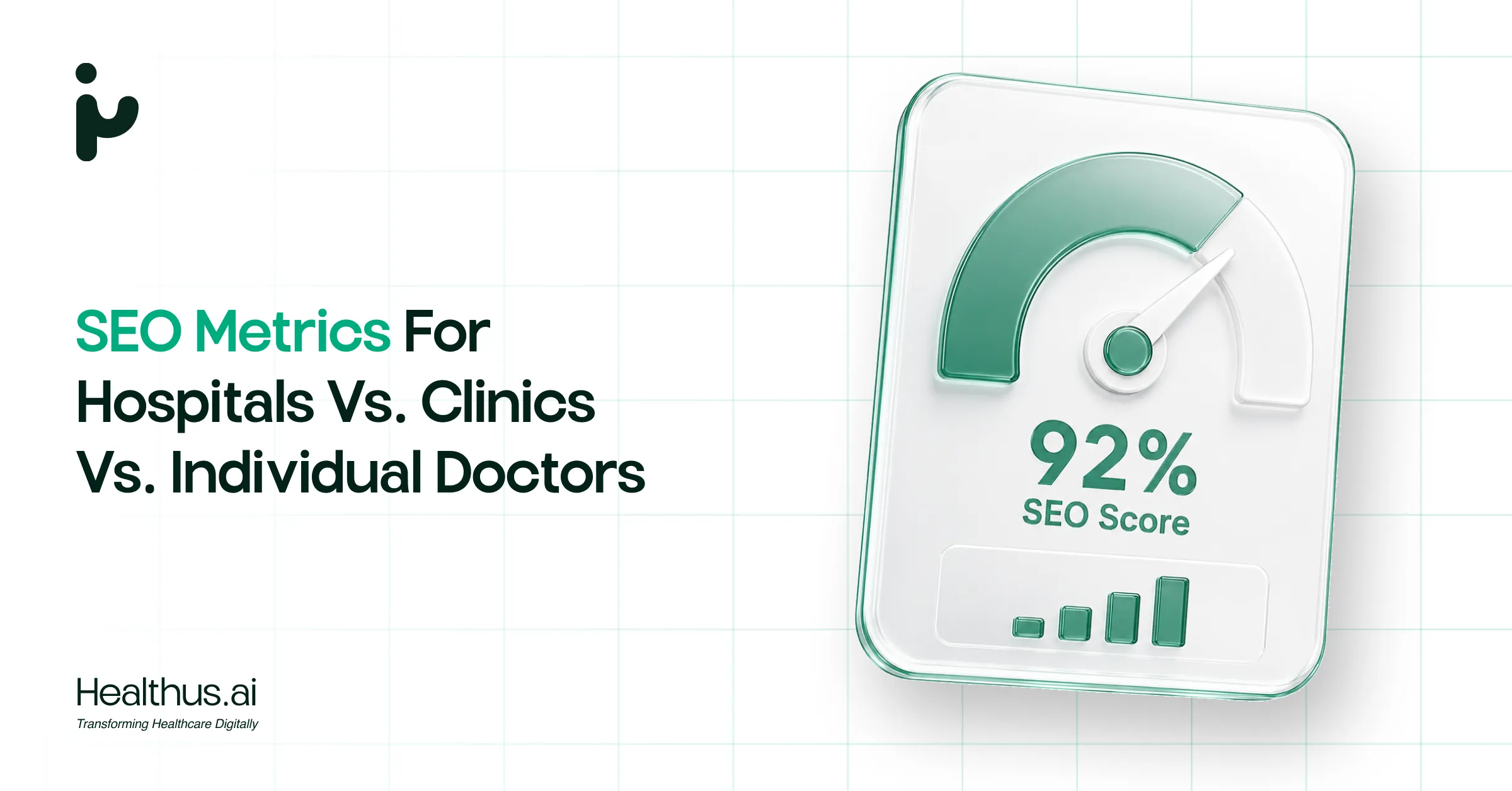
In healthcare digital marketing, specifically for healthcare SEO, a one-size-fits-all reporting template just doesn’t hold up against operational reality. A major regional hospital system running hundreds of beds has almost nothing in common (digitally speaking) with a suburban group practice and even less with a solo private physician working out of a single office.
Measuring search performance means matching your key performance indicators (KPIs) to the actual scale and audience of your organisation. Track general organic traffic or generic rankings without that context, and you’ll end up with numbers that look just fine on a slide but say almost nothing about what’s actually driving growth. This is exactly why choosing the right SEO performance metrics matters so much in healthcare marketing.
At Healthus.ai, we build SEO performance frameworks around organisational scale from the start, so hospitals, clinics, and individual doctors are each measuring the SEO metrics that move their specific growth targets.
The Core Distinction: Scope, Intent, and Attribution
Why do the right SEO metrics change so much across organisation types? Here’s a look at how differently patients search depending on what they need:
| Entity Type | Primary Search Intent | Core Strategic Focus |
| Hospitals | Emergency, Trauma, Brand, ER | Authority, Service Lines & Reach |
| Group Clinics | Speciality, Procedure, Local Maps | Local Pack, High-Intent Conversion |
| Solo Physicians | Credentials, Reviews, Specifics | Provider Authority, Personal Branding |
Each tier has its own search footprint, and each one needs an analytics model built specifically for it, with metrics in SEO chosen to reflect that footprint.
1. Hospital SEO Metrics: Service-Line Revenue & Institutional Reach
Hospitals and large health systems are managing sprawling digital footprints: multiple locations, specialised departments, and emergency facilities, all at once. For hospital marketing leadership, broad site-wide numbers tend to bury the departments that are actually underperforming.
Key Metrics to Track:
- Service-Line Organic Traffic (By Category): Skip the site-wide aggregate. Break performance down by clinical department: cardiology, oncology, orthopaedics, paediatrics, and so on. These are some of the most important SEO metrics for a hospital marketing team to monitor on a monthly basis.
- Multi-Location Google Business Profile (GBP) Impressions: Map visibility across every emergency centre, urgent care satellite, and outpatient clinic, tracked together.
- Featured Snippet & AI Overview Market Share: How often does hospital domain content actually show up inside direct answer boxes for complex conditions and treatment protocols?
- Digital Patient Referral Conversions: Online scheduling activity for tertiary care services that need a specialist referral.
Primary Hospital Metric Matrix:
Hospital Service Line Growth = Organic Appointments for Target Department X 100
——————————————————————
Total Digital Appointments for Target Department
Hospital Strategy Tip: Hospital Strategy Tip: Group your Google Search Console data into directory folders (e.g., /cardiology/ vs. /orthopedics/). This allows your analytics team to evaluate whether high-margin surgical departments are gaining search traction independently of routine outpatient visits, and it makes your SEO tracking metrics far easier to audit department by department.
2. Group Clinic SEO Metrics: Local Map Dominance & Direct Bookings
Multi-provider and multi-speciality group clinics highly emphasise local search traffic. Someone searching for a group practice is usually after something specific: convenient, quality local care for a symptom, or a routine speciality appointment.
Key Metrics to Track:
- Local Map Pack Ranking (Top 3 Visibility): What percentage of your target local keywords, “dermatologist near me” and “best paediatric clinic [city]”, actually land you in Google’s Map Pack? Reviewing your Google SEO metrics here on a weekly basis helps catch ranking drops early.
- Direct Action Conversions (Click-to-Call & Directions): Calls initiated straight from a local map listing, plus navigation requests.
- New vs. Returning Patient Conversion Rate: Separate existing patients logging into a portal from new prospects booking a first evaluation.
- Local Directory NAP Consistency Score: Name, address, and phone number data, staying perfectly in sync across every medical search engine and directory.
Primary Clinic Metric Matrix:
Local Conversion Rate (%) = Map Calls + Online Bookings X 100
—————————————-
Total Local Map Impressions
Clinic Strategy Tip: Pay close attention to map pack interaction data. For group practices, more than half of all patient enquiries happen right there on the Google Business Profile, before anyone even lands on the clinic’s actual website. Running these numbers through a reliable SEO metrics checker each month can help flag any sudden dips in visibility.
3. Individual Doctor SEO Metrics: Provider Reputation & Niche Authority
Solo practitioners and independent physicians work in a much more personal search environment. Prospective patients are often searching by the doctor’s actual name, specific board certifications, or a particular surgical technique they’ve heard about.
Key Metrics to Track:
- Branded Provider Search Volume: Searches for the doctor’s name specifically (“Dr Amit Chakraborty” or “Dr Amit Chakraborty Head and Neck Cancer Specialist”)
- E-E-A-T & Credibility Indicators: Engagement on the provider bio page: review views, board certification clicks, and media mention links.
- Patient Review Velocity & Sentiment Rating: Monthly volume and average star rating of new reviews across Google and verified healthcare platforms.
- Niche Keyword Rankings: Visibility for specific procedures (“minimally invasive treatments for acne”) rather than broad, generic terms.
Primary Provider Metric Matrix:
Provider Reputation Score = Positive Verified Reviews X 100
—————————————-
Total Published Reviews
Doctor Strategy Tip: Get a dedicated physician schema markup set up and optimised on the professional profile page. It tells search engines directly that this is a credentialed medical professional affiliated with specific accredited institutions. Tracking these key metrics for SEO alongside your review speed gives a clearer picture of provider-level growth.
Explore our healthcare SEO and other 360° solutions for healthcare marketing
Comparative Breakdown: Matching Metrics to Entity Type
Use this table to structure your monthly executive analytics dashboard and keep everyone focused on what actually matters:
| SEO Metric Focus | Hospital Systems | Group Clinics | Individual Physicians |
| Primary KPI | Service-Line Revenue Growth | Local Map Appointments | Branded Provider Enquiries |
| Top Technical Need | Enterprise Site Architecture | Multi-Location Schema | Personal Profile Schema (E-E-A-T) |
| Geographic Target | Regional / Statewide / Nationwide | 10–15 Mile Radius | 5–10 Mile Radius / Local |
| Content Strategy | Deep Clinical Resources | Condition & Treatment Pages | Bio, Credentials & FAQs |
| Primary Conversion | Inpatient/Outpatient Booking | Direct Call / Online Portal | First Consultation Booking |
This table is a useful starting point whenever you’re deciding which metrics to measure seo success against for your specific organisation type.
Navigating Modern Search Trends Across All Tiers
No matter the size of the organisation, today’s healthcare search engines put heavy weight on verified expertise and data security.
- Authoritative Clinical Citations
Health-related content gets evaluated under strict quality guidelines. Whether it’s a hospital health portal, a clinic blog, or a doctor’s own site, the content needs clear author credentials and reviewer signals; something as simple as “Medically reviewed by [Doctor Name], MD” goes a long way.
- Privacy-Safe Conversion Tracking
Whether you’re tracking conversions for a massive hospital network or a single-doctor clinic, the data collection has to comply with HIPAA and federal privacy standards. Dynamic call tracking and form analytics need server-side protection to keep protected health information (PHI) safe.
Metric Setup Checklist for Healthcare Marketers
Before launching any new campaigns, make sure your tracking framework actually matches your operational structure and that your SEO measurement metrics are set up correctly from day one:
- Entity Identification: Metrics are matched to your organisational scale (hospital vs. group practice vs. individual healthcare professional)
- Conversion Separation: Routine portal logins from existing patients are filtered out of new patient acquisition numbers
- Local Tracking Integration: Google Business Profile call and direction actions feed into your primary dashboard
- E-E-A-T Tracking: Provider bio interaction metrics are being monitored as credibility signals
- Compliant Analytics Setup: Form submissions and dynamic call tracking never store or transmit unencrypted PHI
Align Your Measurement Strategy with Real Clinical Outcomes
Tracking the wrong metrics is how marketing reports end up completely disconnected from what’s actually happening at the clinic. Match your SEO KPIs to your organisation’s actual type, and every optimisation effort starts pulling in the same direction, which is sustainable patient growth and real institutional credibility.
At Healthus.ai, we design tailored, HIPAA-compliant measurement systems built around your organisation’s specific scale, service lines, and clinical goals, using the SEO performance metrics that matter most to your business.
Ready to build a precise, revenue-aligned SEO measurement system for your healthcare organisation?
Book a strategy call with Healthus.ai today to optimise your digital performance tracking.
Frequently Asked Questions (FAQs)
The 80/20 rule means 80% of your patient conversions stem from 20% of your content. In healthcare, high-intent procedure pages, doctor bios, and local map listings drive nearly all booked appointments compared to general blog posts.
Local SEO for doctors optimises a practice’s digital presence to rank in local search results and Google Maps. It relies on optimising Google Business Profiles, maintaining consistent directory details, and managing patient reviews to capture nearby patients needing care.
Healthcare SEO connects patients searching for symptoms and treatments with accredited medical providers. By optimising technical site performance and publishing medically reviewed content, healthcare brands guide searchers directly from query to appointment.
The 3 C’s of SEO are Content, Code, and Credibility. Content delivers clinical E-E-A-T-backed answers to patient queries, code handles technical speed and schema markup, and credibility builds domain authority through verified medical citations, links, and reviews.
SEO is evolving into Answer Engine Optimisation (AEO) rather than being replaced by AI. As search platforms use AI summaries, modern SEO requires structured schema and clinical credibility so AI models cite your organisation as a trusted source.