






A hospital website today is expected to do far more than simply provide information. It should attract patients, build trust, and convert visitors into enquiries or appointments. Yet many hospitals struggle with one common problem despite having a website, they are not generating meaningful leads.
In a highly competitive environment driven by digital marketing in hospital ecosystems, visibility alone is not enough. Without the right structure, strategy, and optimisation, even a well-designed website can fail to perform.
Understanding the gaps in performance and how modern digital solutions in healthcare can fix them is essential for improving medical lead generation and long-term growth.
Top Reasons Hospital Websites Fail to Generate Patient Leads
When a hospital website is not generating leads, it means that visitors are not converting into enquiries, appointment bookings, or calls. Traffic may still exist, but the website fails to guide users toward action.
This issue is common in healthcare websites that lack proper funnel structure or are not aligned with modern digital hospital marketing strategies. In most cases, the problem is not visibility but conversion optimization.
Why Is Your Hospital Website Not Attracting the Right Patients?
One of the biggest reasons for poor performance is irrelevant traffic. Many hospitals invest in basic digital marketing in hospital campaigns without targeting the right audience.
Common issues include:
- Generic keyword targeting
- Lack of local SEO optimization
- Poor audience segmentation
- Weak content strategy
Without precise targeting, the website attracts visitors who are not actively looking for medical services, leading to low lead generation in healthcare.
How Does Poor Website Design Impact Medical Lead Generation?
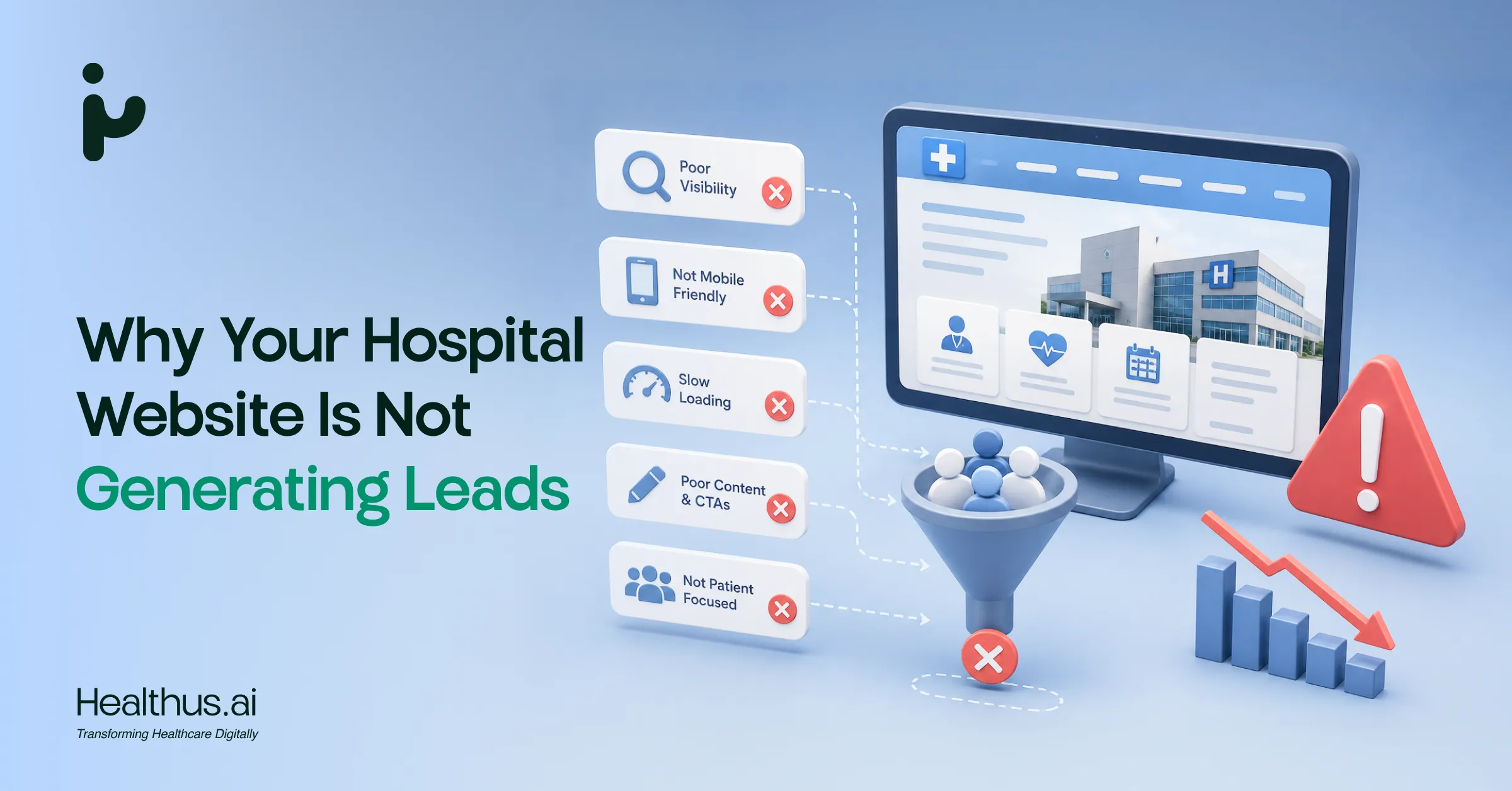
Website design plays a major role in conversion. A cluttered, outdated, or confusing interface can discourage users from taking action.
In many cases, poor digital hospital marketing execution results in:
- Slow loading speed
- Complicated navigation
- Non-mobile-friendly layout
- Lack of clear call-to-action buttons
These issues directly reduce medical lead generation because patients abandon websites that feel difficult to use or untrustworthy.
Hospital Website Not Converting? Key Problems and Solutions
Content is one of the most critical elements in healthcare websites. However, many hospitals fail to create content that builds trust or answers patient concerns.
Weak content often results in low engagement despite traffic generated through digital solutions in healthcare.
Common content issues include:
- Too technical or medical jargon-heavy
- Lack of patient-focused language
- No clear explanation of services
- Missing trust-building elements like testimonials
Effective content should guide patients toward booking appointments or making enquiries.
How Do Digital Solutions in Healthcare Improve Lead Generation?
Modern digital solutions in healthcare help hospitals move beyond static websites into intelligent, conversion-driven platforms.
These solutions typically include:
- AI-powered chat assistants
- Automated appointment booking systems
- CRM integration for patient tracking
- Personalized landing pages
- Analytics-based optimization
When implemented correctly, these tools significantly improve lead generation in healthcare by simplifying the patient journey from interest to action.
Why Is SEO Not Bringing Quality Hospital Leads?
Search engine optimization is essential, but poor execution often leads to irrelevant or low-intent traffic.
Often, hospitals invest in digital marketing in hospital strategies without focusing on conversion-based SEO.
Common SEO mistakes include:
- Targeting broad keywords instead of service-specific terms
- Ignoring local search intent
- Poor internal linking structure
- Outdated content that does not match patient needs
Without strategic SEO, even strong traffic fails to convert into meaningful leads.
Hospital Website Not Generating Leads? Here’s What’s Wrong
User experience (UX) is one of the strongest factors influencing conversion rates. Patients expect quick access to information and easy navigation.
Poor UX directly impacts lead generation in healthcare by increasing bounce rates.
Key UX problems include:
- Confusing service pages
- Lack of visible contact options
- Excessive pop-ups or distractions
- Non-responsive mobile design
A smooth and intuitive experience encourages users to take action, improving conversion rates significantly.
What Role Do Healthcare Lead Generation Companies Play?
Many hospitals rely on healthcare lead generation companies to improve visibility and patient acquisition.
These companies specialise in the following:
- Running targeted ad campaigns
- Optimizing conversion funnels
- Managing online reputation
- Improving digital hospital marketing performance
However, success depends on selecting a partner who understands both clinical services and patient behaviour. Poor execution can lead to wasted budgets without meaningful results.
Why Are Hospital Websites Not Optimised for Mobile Users?
A large percentage of users access healthcare websites through mobile devices. If the site is not mobile-friendly, it directly reduces conversions.
Common mobile issues include:
- Unreadable text sizes
- Broken layouts
- Slow page loading
- Difficult navigation menus
Since mobile experience is a core part of digital solutions in healthcare, ignoring it leads to significant loss of potential patients.
How Does Trust Influence Medical Lead Generation?
Trust is the foundation of healthcare decision-making. Patients will not book appointments unless they feel confident in the hospital’s credibility.
Trust issues often arise due to:
- Lack of doctor profiles or credentials
- No patient reviews or testimonials
- Outdated website appearance
- Missing security indicators
Strong trust signals are essential for improving medical lead generation and increasing appointment conversions.
What Are the Common Conversion Gaps in Hospital Websites?
Even when traffic and design are adequate, conversion gaps can prevent leads from being generated.
Typical issues include:
- No clear call-to-action buttons
- Complicated appointment booking forms
- Lack of urgency-driven messaging
- No follow-up system after enquiry
Fixing these gaps is essential for improving performance through digital solutions in healthcare.
How Can Hospitals Improve Lead Generation Effectively?
Improving performance requires a structured approach combining strategy, design, and technology.
Key improvements include the following:
- Optimizing website structure for conversions
- Enhancing content quality for patient intent
- Strengthening local SEO strategy
- Implementing automation tools
- Partnering with experienced healthcare lead generation companies
When these elements work together, hospitals can significantly improve lead generation in healthcare.
Conclusion
A hospital website may fail to generate leads not because of lack of traffic but due to poor strategy, weak user experience, and missing conversion systems. In today’s competitive healthcare environment, simply having a website is not enough.
With the right approach to digital hospital marketing and the integration of advanced digital solutions in healthcare, hospitals can transform their websites into powerful patient acquisition tools. From SEO to user experience and automation, every element plays a role in improving medical lead generation.
Hospitals that invest in structured optimisation and patient-centric designs will consistently outperform those relying on outdated digital practices.
If your hospital website is attracting visitors but failing to convert them into enquiries, it’s time to fix what’s holding you back. From poor user journeys to missed SEO opportunities, small gaps can lead to big losses in patient leads.
Ready to turn your website into a lead-generation engine? Choose Healthus.ai to identify what’s not working and build a high-performing, patient-focused website that drives consistent enquiries and measurable growth.
Frequently Asked Questions
This is usually due to poor SEO, weak design, slow speed, and unclear call-to-actions, which fail to support lead generation in healthcare.
Use SEO, local optimisation, strong CTAs, and digital solutions in healthcare, like online booking and chat support.
An effective hospital website is fast, mobile-friendly, and patient-focused. It should have clear calls-to-action, simple navigation, SEO-optimised content, and trust signals like doctor profiles, reviews, and certifications to encourage enquiries.