






Nobody reaches for a print directory anymore when a rash won’t go away or a knee starts giving out. More than four out of five healthcare journeys now begin with a phone and a specific search: “board-certified dermatologist near me”, “urgent care clinic in Mumbai”, or “best paediatrician in Hyderabad”. The provider that shows up first often gets the call to book an appointment.
For medical practices and specialist clinics, capturing that kind of high-intent traffic on Google Maps and organic search has become the most reliable engine for new patient growth. But healthcare marketing has its own set of rules compared to most industries. State licensing boards, HIPAA, and Google’s own health-content standards all apply in addition to the usual SEO advice.
This guide walks through a compliance-first approach to building local search performance that actually grows a practice, without putting your licence or your patient’s privacy at risk.
Understanding Local Patient Search
Geography still decides most appointments. Physical distance is usually the first filter that patients apply before considering anything else, such as reviews, credentials, or insurance, unless they need highly specialised care or are okay with a telehealth visit.
Google splits local healthcare results into two zones:
| Search Placement | Primary Function | Conversion Impact |
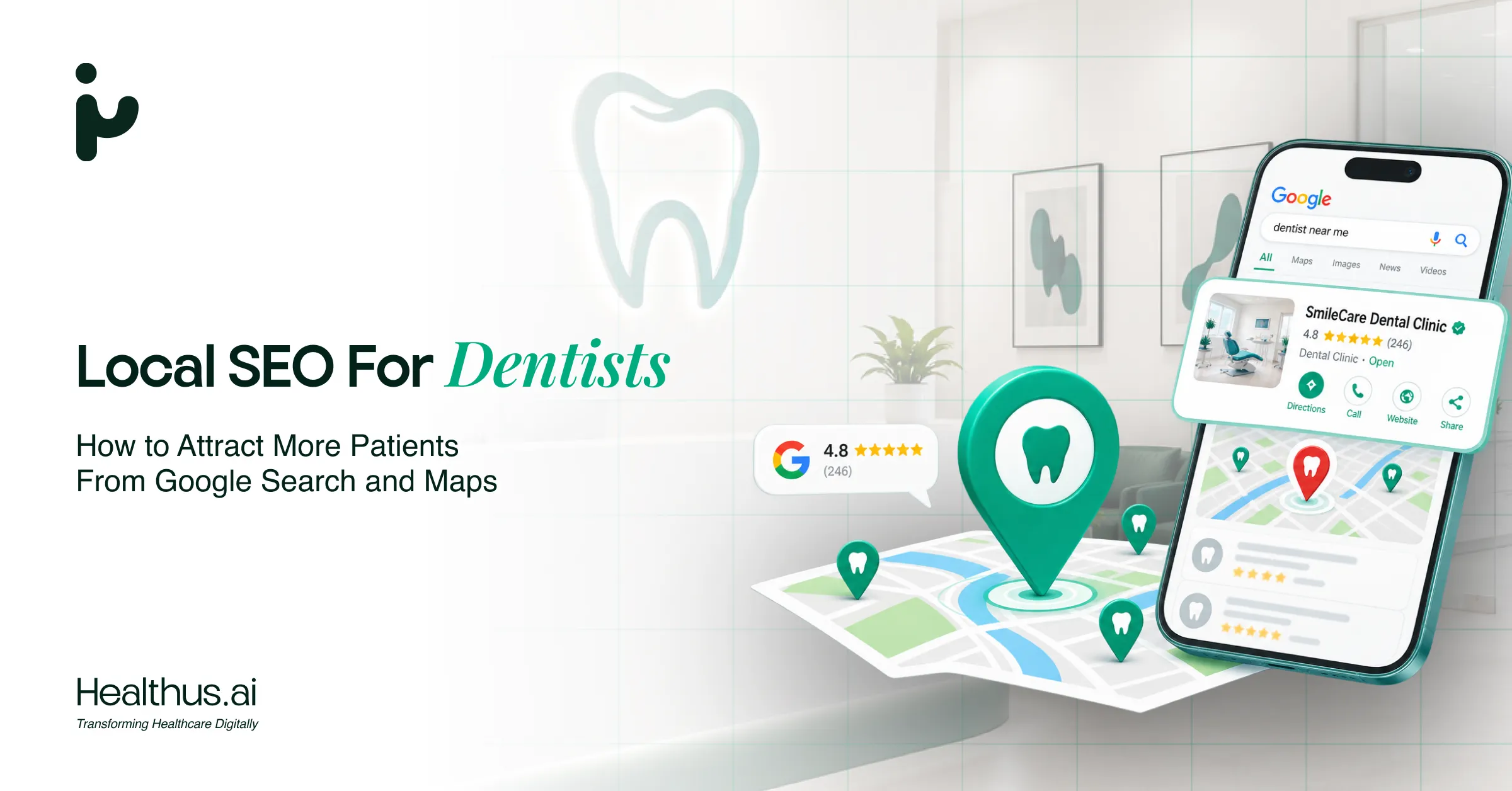
| Google Local Map Pack | Shows the top 3 local clinics with an interactive map, ratings, and a click-to-call button | Captures urgent-need patients looking for a same-day or fast appointment |
| Organic Search Rankings | Surfaces localised website pages, practitioner profiles, and medical FAQ content | Builds long-term authority and reaches patients still researching specialist care |
Show up strongly in both, and a practice signals trust and accessibility before a patient even picks up the phone. Miss one, and that patient often ends up at a competing clinic instead.
Step 1: Turn Your Google Business Profile Into a Conversion Engine
Your Google Business Profile is effectively your practice’s front door online; it feeds directly into Maps, local packs, and voice search.
- Audit NAP consistency. Your exact business name, street address, and main appointment line need to match across state medical registries, health directories, and your website. Something as small as “Street” versus “St.” creates enough friction to confuse the algorithm.
- Set up facility and practitioner profiles correctly: A group practice should keep one umbrella facility listing, say, “Metro Heart & Vascular Center”, while giving each attending physician a separate practitioner profile linked to their bio page on the site.
- Refine your categories: The primary category should match your core discipline (orthopaedic surgeon, for example), while secondary fields capture sub-specialities like sports medicine clinic or joint replacement surgeon.
Step 2: Build a Website Structured for Local Intent
To rank consistently for neighbourhood-level searches, your site needs to hand search engines structured, location-specific clinical information.
- Create condition-specific pages instead of one big services page: A dedicated page like /specialties/knee-replacement or /conditions/chronic-back-pain can target far more granular, high-intent local queries than a generic overview page ever could.
- Give every branch location its own optimised page: For multi-location practices, each site should include:
- An embedded Google Map for that exact facility
- Arrival instructions, transit access, parking, the practical stuff
- Localised contact details and clinic-specific hours
- Validated MedicalClinic schema in the backend
- Healthcare schema markup: Physician or MedicalClinic structured data acts as a direct feed to search crawlers, so board certifications, locations, accepted insurance, and hours get indexed accurately instead of guessed at.
Step 3: Protect Your Reputation and HIPAA Standing in Reviews
Reviews have a significant impact on both rankings and conversions, but managing them in healthcare involves legal boundaries that most other industries do not have to consider.
- Build a systematic, non-incentivised feedback loop: automated SMS or email invitations after each appointment are effective for gathering honest feedback. Never trade discounts, perks, or giveaway entries for a review that crosses both FTC rules and Google’s guidelines.
- Keep public replies strictly private: Don’t confirm or deny that a reviewer is a patient, and don’t reference clinical details, appointment dates, or health conditions in a public response, even if the reviewer brings them up first.
A safe, compliant response looks something like this: “Thank you for your feedback. Our practice is dedicated to delivering high-quality, compassionate care to every individual we serve. We appreciate you sharing your experience with our team.” It expresses genuine appreciation without confirming anything clinical.
Step 4: Build Medical E-E-A-T Into Your Content
Because medical search queries fall under Google’s Your Money or Your Life standards, health content is held to a noticeably higher bar than average; it needs real experience, expertise, authoritativeness, and trustworthiness behind it.
- Use real physician bylines: Every medical guide or clinical page should carry a visible byline from a licensed doctor (MD, DO), linked to a full bio page covering board certifications, residency, and hospital affiliations.
- Cite peer-reviewed sources: Anchor health claims and treatment explanations to peer-reviewed journals or recognised authorities like the CDC, NIH, or ACC, not just to your own clinical say-so.
- Publish content that speaks to your actual community: Something like “Navigating Heat Illness During Summer in Mumbai” or “Paediatric Vaccination Schedules in Bangalore” reaches local search traffic while reinforcing that your practice knows the region and not just the medicine.
Step 5: Clean Up Local Citations Across Medical Platforms
Beyond your site and GBP, keeping accurate listings across trusted healthcare platforms adds real domain relevance and trust.
- Claim and verify the major directories: Healthgrades, Zocdoc, WebMD Care, Vitals, and Doximity. An unclaimed or outdated profile on any of these is a missed opportunity at best and a source of confusion at worst.
- Audit and merge duplicate records regularly: Old addresses, listings for physicians who’ve retired, and duplicate profiles from a past rebrand, these all dilute your ranking signals and mislead patients. A quarterly check keeps things clean.
Local SEO Checklist for Clinics
Before launching a local visibility push, check your SEO practice against these:
✔ Digital NAP Verification: practice name, address, and phone number match 100% across every web property
✔ Category Alignment: the primary GBP category reflects the exact clinical speciality.
✔ HIPAA Review Safeguards: staff trained on strict rules against PHI in public replies
✔ Structured Data Implementation: validated physician or MedicalClinic schema active site-wide
✔ E-E-A-T Verification: clinical pages authored or reviewed by board-certified doctors with visible credentials
Scale Your Local Practice With Clinical Precision
Attracting nearby patients through Google Search and Maps isn’t just a technical SEO exercise; it takes clear communication and strict regulatory discipline working together. A practice that builds its digital presence around clinical integrity ends up with more than better rankings; it earns a reputation the community keeps coming back to.
Sustainable growth starts with putting medical truth and patient privacy at the centre of the marketing strategy and not in corners.
Ready to Expand Your Local Patient Base?
Schedule a strategy consultation with Healthus.ai today to build a compliant, high-converting local search acquisition model tailored specifically for your medical practice.
Frequently Asked Questions (FAQs)
Most practices see measurable gains in map pack impressions and phone enquiries within 3 to 6 months of a structured local SEO campaign. Real-world results vary based on regional competition, domain age, review consistency, and how complete your profile already is.
Yes. Google explicitly allows individual practitioners to run personal profiles alongside the main facility listing, as long as they’re patient-facing and actually seeing patients at that address during posted hours. It’s one of the simplest ways to expand a practice’s total search coverage.
HIPAA prohibits disclosing Protected Health Information without explicit patient authorisation. Practically, that rules out acknowledging a patient-physician relationship in a review reply, targeting patients based on sensitive health conditions, or sending clinical form data over unencrypted channels.
Traditional SEO targets broad, national informational searches like “what causes lower back pain”, for instance. Local SEO narrows in on geography, targeting searches like “back pain specialist in Mumbai”, and leans heavily on Google Maps listings, localised content, and directory citations to do it.
No. Offering gift cards, discounts, or contest entries in exchange for feedback violates both FTC regulations and Google’s terms of service. Review requests must remain voluntary and unbiased, or the practice risks penalties or profile suspension.