





A Healthus.ai business guide, built from research into India’s preventive healthcare, diagnostics and wellness regulatory landscape, for entrepreneurs and clinicians planning to open a preventive health clinic.
What You’ll Learn From This Guide
|
If you are planning to start a preventive healthcare centre in India, this guide walks you through what preventive healthcare covers, which preventive healthcare services patients actually want, and what it takes to set up and run the business. It also covers the practical decisions that matter before you invest, including compliance, equipment, staffing, pricing and how patients will actually find you.
What Is a Preventive Health Clinic?
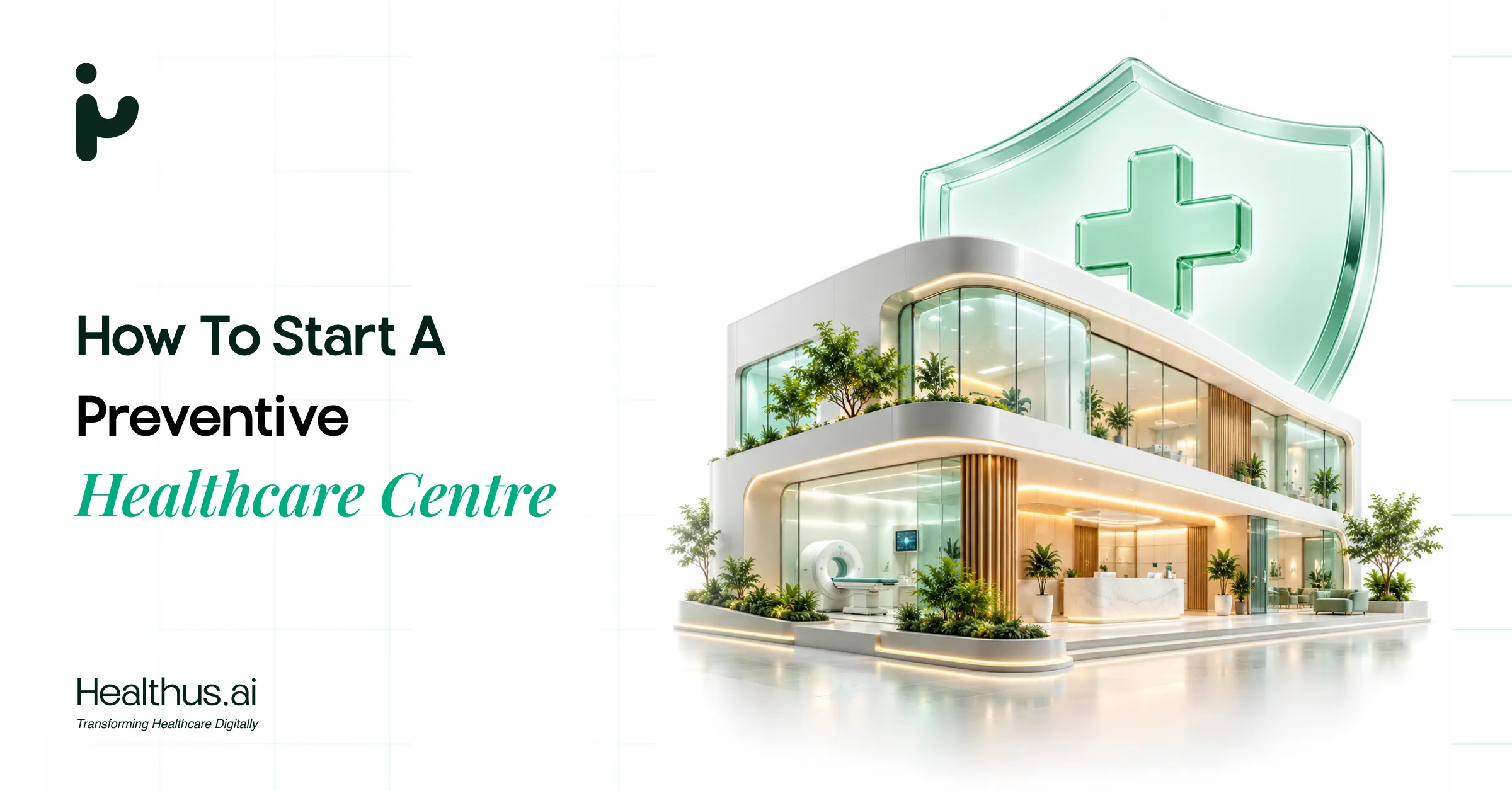
A preventive health clinic is a healthcare facility built around checkups, screening and early risk detection rather than treating illness after it appears. It typically combines a general physician consultation, basic and advanced diagnostic tests, and a follow-up plan to manage risk factors such as high cholesterol, high blood sugar or high blood pressure. Unlike a hospital OPD, a preventive health clinic is built around a structured checkup package and a clear next step for the patient, which is also the kind of clarity that helps a new clinic grow and attract new patients.
What Preventive Healthcare Services Does a Clinic in India Offer?
A preventive healthcare centre usually brings together a defined set of checkup packages. This can include a full body health checkup, blood sugar and lipid profile testing, ECG and cardiac risk screening, cancer screening for age-appropriate groups, vaccination programmes, BMI and body composition checks, and lifestyle counselling on diet, sleep and exercise. The exact mix of preventive healthcare services depends on your target patients, your city, and what your clinic can test in-house.
“A preventive healthcare centre is not just a lab with a waiting room. Patients don’t come back for a report, they come back because someone explained what the report means and told them what to do next. For anyone planning a preventive healthcare centre in India, that follow-up conversation is the actual product, not the blood test.”
— Nadeem Ahmed, Founder & CEO, Healthus.ai
Planning to launch or grow a preventive healthcare centre? Talk to Healthus.ai about building a healthcare focused digital strategy that helps your clinic reach the right patients and grow online.
Step 1: Choose Your Preventive Healthcare Business Model
You can run a preventive healthcare centre in India as a standalone diagnostic-led clinic, a doctor-led checkup clinic inside an existing hospital or polyclinic, or a hybrid model with in-person testing and remote consultations for follow-ups. Choose the model based on your city, your capital, and how much diagnostic equipment you plan to own yourself, and understanding how patients actually search for doctors and care online will tell you a lot about which model your target locality can support.
| Business Model | What You Can Offer |
| Standalone Diagnostic-Led Clinic | Full body checkup packages, blood tests, ECG, and in-house pathology lab are best suited to a busy residential or commercial locality. |
| Hospital-Linked Preventive Clinic | Checkup packages backed by hospital specialists and imaging, useful for patients who want a referral pathway ready if a test flags a problem |
| Hybrid Preventive Health Model | One physical centre for testing, supported by phone or video follow-ups for lifestyle counselling and report review |
Whichever model you pick, be realistic about what your locality can pay. A comprehensive annual checkup membership priced at INR 15,000 to 25,000 works in a metro suburb with corporate offices nearby, but the same package needs a simpler, lower-priced version in a tier two city. Many clinics now run two or three package tiers side by side, a pattern similar to how medical tourism marketing segments different patient groups.
Step 2: Research the Preventive Healthcare Market in India
Before you invest, research about who is already paying for preventive healthcare in your city and what they are choosing today. Corporate wellness checkups, insurance-linked annual health checks and standalone diagnostic chains have all grown in India over the last few years, but demand is not spread evenly across every locality, which is exactly the kind of gap local SEO for doctors and clinics can help you find before you commit to a location.
| What to Research | What to Look For | Why It Matters |
| Target patients | Working professionals aged 30 to 55, corporate employees, people with a family history of diabetes or heart disease | Shapes your pricing, package design and clinic location |
| Existing diagnostic and checkup centres nearby | Package pricing, test turnaround time, and how clearly they explain reports | Shows what already exists and where you can genuinely stand out |
| Patient goals | Catching diabetes or high blood pressure early, annual health tracking, insurance-mandated checkups | Helps you design packages people actually want, not just a long test list |
| Local diagnostic infrastructure | Which labs and imaging centres nearby can support blood work, X-ray, ECG or ultrasound at reasonable turnaround? | Determines whether you build an in-house lab or partner with one |
Step 3: Plan Your Preventive Health Clinic Space
Your clinic layout should follow the patient flow you plan to offer, from registration to sample collection to consultation. A basic preventive health clinic needs a reception, one or two consultation rooms, a sample collection area, and a small waiting area, while a larger centre offering X-ray or ultrasound needs dedicated space with proper radiation shielding. These decisions are easier to plan once you have mapped out how to increase patient volume at the scale you actually want.
If you plan to install X-ray, ultrasound or ECG equipment, confirm electrical load, room shielding and licensing requirements with your equipment vendor before signing a lease, since fixing this after the space is built is expensive and sometimes not possible. Parking and easy access matter here, since most preventive healthcare visits are planned in advance. It is important to understand this pattern because some clinics struggle to grow patient volume even from a good location.
Step 4: Investment and Setup Cost for a Preventive Healthcare Centre in India
A preventive healthcare centre needs less capital than a hospital, but diagnostics and staff still make up most of the cost.
| Cost Head | Basic Diagnostic Clinic (₹) | Mid-Size Preventive Centre (₹) | Full Multi-Specialty Preventive Centre (₹) |
| Interior and civil work | 4 to 8 lakh | 15 to 25 lakh | 30 to 50 lakh |
| Lab setup or pathology partnership | 2 to 4 lakh | 6 to 10 lakh | 10 to 18 lakh |
| ECG and basic diagnostic equipment | 1 to 2 lakh | 3 to 5 lakh | 6 to 10 lakh |
| X-ray or ultrasound (owned) | Not included | 15 to 25 lakh | 30 to 50 lakh |
| Health checkup software and record system | 1 to 2 lakh | 2 to 4 lakh | 4 to 7 lakh |
| Licensing, registration and compliance | 1 to 2 lakh | 2 to 4 lakh | 4 to 7 lakh |
| Staff hiring and training (first 3 months) | 4 to 8 lakh | 10 to 15 lakh | 18 to 28 lakh |
| Marketing and launch | 3 to 6 lakh | 6 to 10 lakh | 12 to 18 lakh |
| Total estimated investment | ₹16 to 32 lakh | ₹59 lakh to ₹98 lakh | ₹1.14 to ₹1.88 crore |
These are planning ranges. Most new preventive healthcare centres in India launch without owning imaging equipment, partnering with a nearby radiology or diagnostic centre for X-ray and ultrasound instead, since owning imaging equipment can otherwise be the single biggest cost in the whole setup.
Step 5: Get the Right Licences for Your Preventive Health Clinic
This is the step most founders underestimate, and it is where clinics lose the most time and money after opening.
Clinical establishment registration.
Under the Clinical Establishments Act 2010, every clinic, polyclinic and diagnostic laboratory must register with the district authority. The Act has been adopted by some states and not others, so confirm your state’s position before you assume anything.
Medical leadership.
Your clinic needs a designated medical officer or director who is a registered medical practitioner and a qualified pathologist or radiologist if you run lab or imaging services in-house.
Biomedical waste management.
Any facility handling blood samples or diagnostic waste needs authorisation under the Bio-Medical Waste Management Rules, along with a tie-up with a licensed waste disposal agency.
Radiation safety clearance.
If you install X-ray equipment, you need clearance from the Atomic Energy Regulatory Board, in addition to your clinical establishment registration.
Telemedicine compliance.
Any remote follow-up or report review over phone or video must follow the 2020 Telemedicine Practice Guidelines, which require the doctor to state their registration number and follow a defined consent protocol.
Data protection.
Patient health data is sensitive personal data under the Digital Personal Data Protection Act 2023, so your intake forms, EHR and any online booking system need explicit, purpose-specific, revocable consent.
NABL and NABH accreditation.
Voluntary, but NABL accreditation for your lab and NABH accreditation for your clinic are the quality benchmarks Indian insurers, corporate wellness buyers and patients increasingly look for.
None of these registrations are paperwork you can add later once patients start walking in, and getting them wrong is one of the common healthcare marketing mistakes that shows up later as an ad account suspension or a review flagged for a claim your licence does not support.
Step 6: Build a Clinical Team for Your Preventive Healthcare Centre
Your staffing needs to match what your checkup packages promise. At minimum, plan for a medical officer or general physician, a lab technician or pathologist depending on whether you run tests in-house, a nurse for sample collection and basic procedures, a dietician or lifestyle counsellor for follow-up advice, and a patient coordinator who owns scheduling and reminders.
Step 7: Price Your Preventive Healthcare Services
Pricing in this category usually works in two layers, a one-time checkup package and a repeat annual or membership plan. In India, clinics that combine both tend to build steadier revenue than clinics selling single tests, similar in spirit to how patients decide whether a clinic is worth trusting long before they ever see a price list, based on trust signals they picked up earlier.
- An entry checkup package, built around basic blood work, BMI, blood pressure and a physician consultation
- A comprehensive annual health checkup, layering in ECG, imaging where needed, detailed blood panels and a follow-up review
- Add-on services, such as vaccination, physiotherapy referrals or dietician consultations, priced individually
Frame your pricing conversation around an outcome the patient actually cares about, catching high blood sugar early, or knowing their heart risk before it becomes a problem.
Step 8: Market Your Preventive Healthcare Centre
Preventive healthcare is something people put off until a doctor tells them to get it done, so your marketing needs to explain why the checkup matters before asking anyone to book it. Deciding between paid and organic leads is equally important.
| Marketing Area | What to Focus On |
| Educational Content | Explain what a specific test actually measures and why it matters, before asking for a booking. |
| SEO, GEO, AEO and AIO | Build content for both traditional search and AI-driven discovery. |
| Local SEO | Target city- and locality-specific searches like “preventive health clinic near me” and optimise your Google Business Profile for healthcare. |
| Conversion-Focused Website | Your website should build trust and turn visitors into enquiries. See why hospital and clinic websites fail to convert visitors. |
| Schema and Structured Data | Schema markup for doctors and services helps search engines and AI systems understand your clinic correctly. |
| Retention and Remarketing | Build annual membership reminders and repeat testing programmes to increase patient lifetime value. |
Build your content around education, not promises. This approach also tends to perform better once you start measuring what your healthcare SEO is actually returning.
Common Mistakes First-Time Preventive Healthcare Centre Founders Make in India
- Building a long list of tests without explaining what any of them mean, which leaves patients confused.
- Launching in a state before checking whether the Clinical Establishments Act applies there, which is expensive to unwind later
- Treating NABL or NABH accreditation as a later problem, when insurers and corporate clients often ask for it in the very first conversation
- Skipping biomedical waste authorisation, which is one of the most commonly missed licences for smaller clinics
- Underinvesting in follow-up calls and reminders, since a preventive healthcare centre’s real value sits in getting patients to come back next year.
Quick Summary
| Area | What You Need to Know |
| Meaning | Preventive healthcare focuses on catching risk early through checkups, screening and lifestyle counselling, before disease sets in. |
| Core licence | Clinical Establishments Act registration, where your state has adopted it, is mandatory regardless of the type of clinic. |
| Additional clearances | Biomedical waste authorisation is mandatory, and AERB clearance is needed if you run X-ray equipment. |
| Trust signal | NABL for labs and NABH for clinics are the accreditations Indian patients and insurers actually recognise |
| Telemedicine | Any remote consultation or report review must follow the 2020 Telemedicine Practice Guidelines |
| Data compliance | Patient health data needs explicit, revocable consent under the DPDP Act 2023. |
| Investment range | Roughly ₹16 lakh for a basic diagnostic clinic, up to nearly ₹2 crore for a full multi-speciality preventive centre |
| Break even | Typically 18 to 30 months, faster for clinics that build annual membership renewals early |
Build and Grow Your Preventive Health Clinic With Healthus.ai
Getting the licensing, diagnostics and staffing right gets your preventive health clinic ready to operate. The next challenge is getting the right people to discover your clinic and understand why regular health assessments and early monitoring matter. A strong digital presence can help potential patients find your clinic, compare their options and take the next step. For a new centre, a focused healthcare SEO strategy and local SEO for doctors and clinics can also help you reach people actively searching for healthcare services in their area.
Preventive healthcare depends heavily on education because many people do not seek care until they notice a problem. Your content should explain the value of screenings, health assessments, early detection and regular monitoring in simple language. A well-planned healthcare content funnel can answer these questions at different stages of the patient journey, while how to optimise healthcare content for AI search engines can help your clinic remain visible as patients increasingly use AI tools to research health information. This should work alongside a clear patient acquisition strategy that makes it easy for interested visitors to move from research to enquiry and appointment.
That is where Healthus.ai can help. We work with healthcare brands on SEO, GEO, AIO, performance marketing and patient acquisition, with strategies built around how people actually search for and choose healthcare providers. If you are launching a new centre, a structured 90-day clinic marketing plan can help you build visibility and generate your first wave of enquiries, while healthcare SEO ROI helps you measure whether your digital efforts are translating into meaningful patient growth.
Healthus.ai can help you build your healthcare brand, improve search visibility and generate qualified leads through SEO, GEO, AIO and performance marketing.
References
Ministry of Health and Family Welfare, Government of India, Clinical Establishments (Registration and Regulation) Act, 2010.
Ministry of Environment, Forest and Climate Change, Bio-Medical Waste Management Rules, 2016.
Board of Governors in supersession of the Medical Council of India, Telemedicine Practice Guidelines, 2020.
Ministry of Electronics and Information Technology, Digital Personal Data Protection Act, 2023.
Frequently Asked Questions
Starting a preventive healthcare centre in India can cost anywhere from around ₹16 lakh for a basic diagnostic-led clinic to close to ₹2 crore for a full multi-speciality centre with imaging equipment.
No, you do not need to personally be a doctor to own the business, but the clinic must have a designated medical officer who is a Registered Medical Practitioner.
No, both are voluntary. Clinical Establishments Act registration is mandatory wherever your state has adopted the Act, along with biomedical waste authorisation.
Start with basic blood tests, BMI and blood pressure checks, ECG, and a physician consultation, then add imaging, cancer screening or specialist referrals once you understand local demand.
A preventive healthcare centre is built around structured packages and a follow-up plan to manage risk over time, while a general hospital checkup is usually a one-time visit without a built-in return cycle.
Most preventive healthcare centres in India take around 18 to 30 months to break even, faster for clinics that build annual renewal packages from the start.
A diagnostic centre mainly runs tests, while a preventive health clinic combines testing with a physician consultation, risk assessment and a follow-up plan. Many preventive healthcare centres in India run both under one roof.
Focus on high-intent local searches like preventive health clinic near me, optimise your Google Business Profile, and publish simple explainer content for common tests, alongside traditional SEO for how AI search engines now answer health questions.